

Best Woods for Archtop Guitar Tone
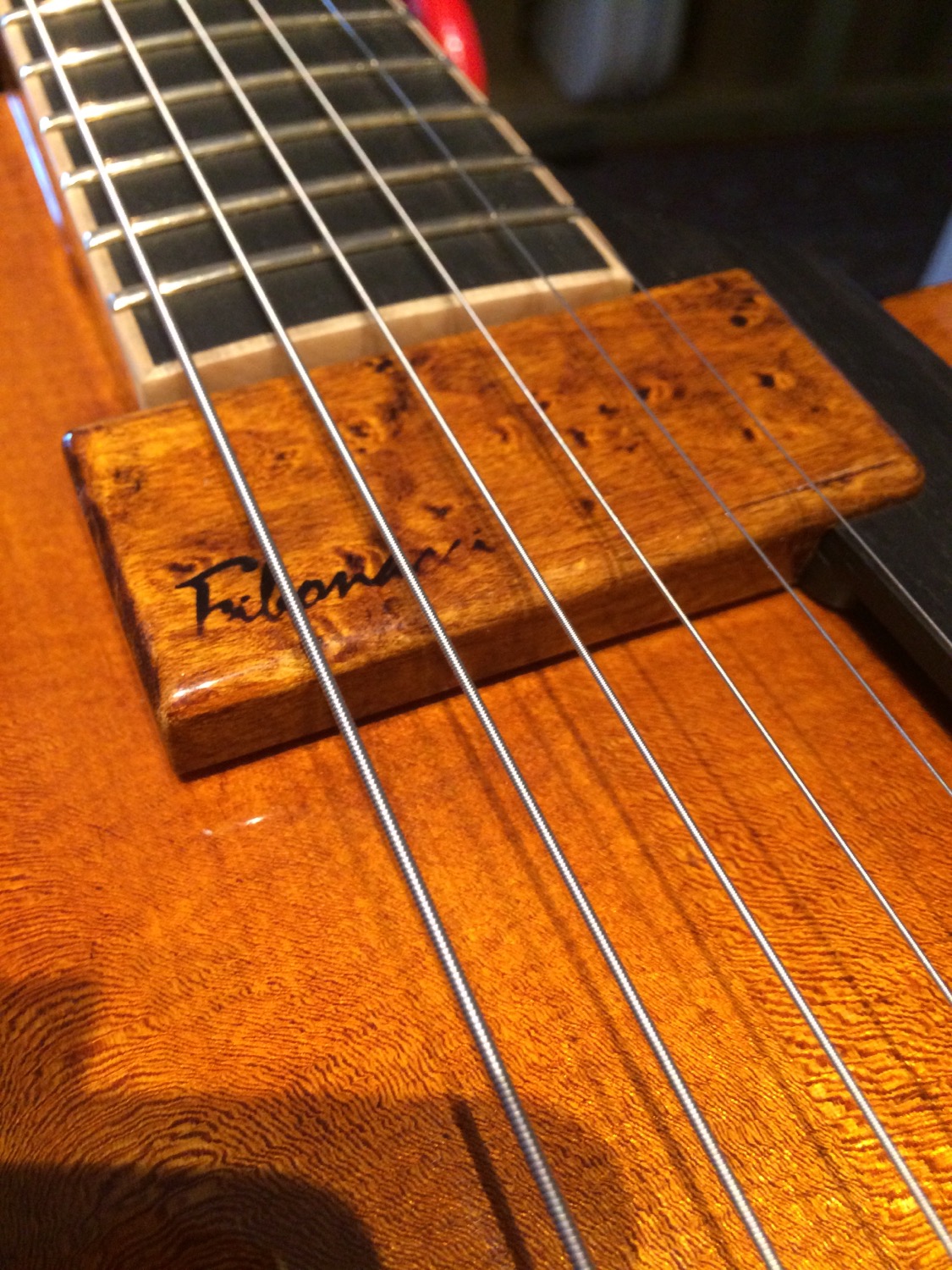

A carved archtop tells you very quickly whether the wood choice was the correct one. Strike a single note acoustically and the instrument either gives back a clear, immediate voice or it hesitates, compresses and clouds over. That is why the question of the best woods for archtop guitar construction is not a matter of fashion. It is central to projection, note separation, dynamic range and the way the instrument behaves under the hands.
For serious players, there is no single winning recipe. Archtops are highly sensitive systems. Top, back, sides andneck all interact with the carve, plate thickness, body size, bracing, scale length, hardware and finish. A timber that performs superbly in one build can become less convincing in another. The right approach is to understand whateach wood tends to contribute, and why experienced makers choose certain combinations again and again.
Best woods for carved archtop guitar tops
The top is where most of the musical conversation begins. On a carved archtop, the soundboard is not merely a surface. It is the engine of the instrument. Its stiffness-to-weight ratio,internal damping and grain structure strongly affect attack, headroom and harmonic shape.
Spruce

If one wood has earned its place at the centre of the archtop tradition, it is spruce. Not because it is conventional, but because it remains exceptionally effective. A well-selected spruce top offers speed, clarity and a broad dynamic envelope. It can be played lightly and remain articulate, yet it will also tolerate a forceful right hand without collapsing into harshness.
European spruce and Alpine spruce are especially valued for refined response and overtone complexity. They often suit players who want nuance, bloom and a certain elegance in the upper register. Sitka spruce, by contrast, tends to bring slightly greater structural forgiveness and can produce a powerful, direct voice with excellent projection. Neither is universally superior. The choice depends on the brief.
For a purely acoustic archtop or a lightly amplified instrument, spruce is difficult to surpass. It offers the balance of elasticity and strength that carved plates require. When carved and graduated with care, it gives an archtop that unmistakable combination of snap and air.
Cedar and alternatives
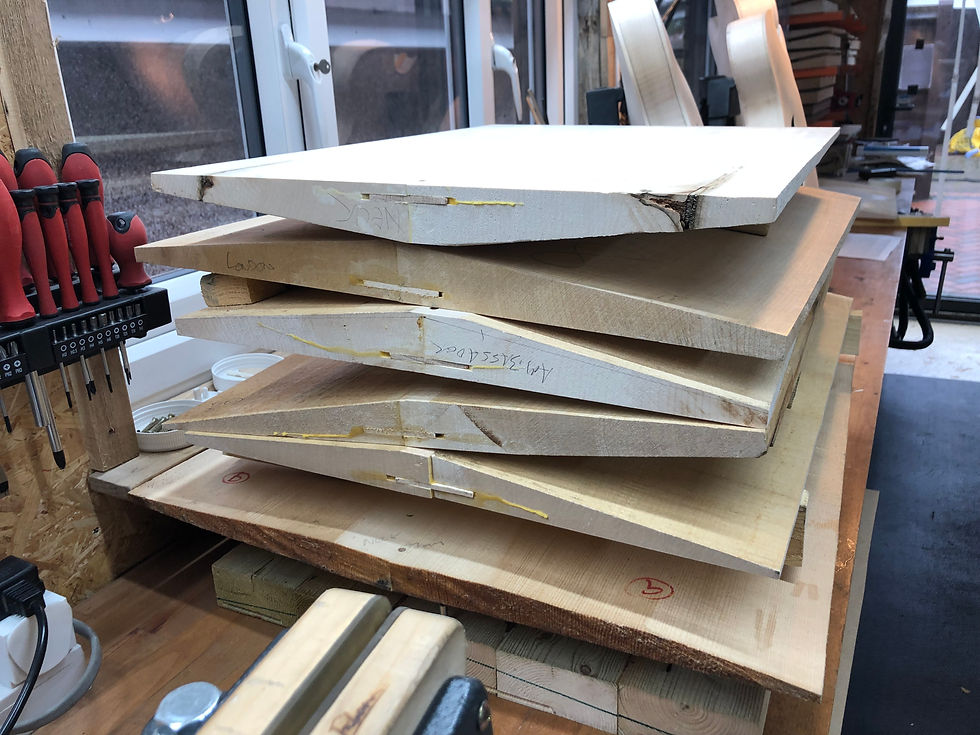
Cedar appears less often in traditional archtop work, and for good reason. It is generally less stiff across the grain and behaves differently under carving. Some players enjoy its quick response and warmth, but in archtop form it can lack the authoritative attack and structural character that many expect from the format.
Other softwoods and non-traditional top materials occasionally enter the discussion, but at the high end of carved archtop building, spruce remains the benchmark because it consistently supports the architecture and tonal purpose of the instrument.
The role of maple in archtop guitars
If spruce is the heart of many archtops, maple is the frame that keeps the voice focused. It is the dominant choice for backs, sides and often necks because it contributes brightness, definition and structural reliability without excessive damping.
Maple back and sides

Hard maple has long been favoured for archtop backs and rims because it reflects energy rather than absorbing toomuch of it. In practical terms, that means a cleaner note, stronger separation between voices and a more immediate, projecting character. For jazz playersworking with extended chords, this matters. The instrument stays intelligible.
Flamed European maple is prized not only for appearance but also for its tonal behaviour in a well-executed build. It can produce an articulate, fast response with an elegant top-end shimmer. American hard maple often delivers similar authority, sometimes with a slightly more muscular and dry presentation. Again, these are tendencies rather thanrules.
A carved maple back can add punch and focus, especially when paired with a responsive spruce top. Laminated maple backs and sides have their own place, particularly for more feedback-resistant electric archtops, but in a boutique carved instrument the attraction of solid maple is its liveliness and complexity.
Maple necks

Maple is also a compelling neck wood for archtops. It is stable, strong and tonally consistent with the rest of the instrument. A maple neck generally supports clarity and attack, helping theguitar feel immediate and precise. When players describe an archtop as quick or responsive, the neck wood is part of that equation.
Mahogany, walnut and other tonal directions
Although spruce and maple define much of the classic archtop vocabulary, they are not the only credible options. Different woods can be used to shape a more specific tonal personality.
Mahogany

Mahogany tends to soften the edges of the note compared with maple. It can introduce warmth through the midrange and a slightly less glassy treble response. On certain archtops, that can be highly attractive, particularly for players seeking a rounder amplified jazz sound.
The trade-off is that mahogany usually does not produce the same incisive acoustic cut as maple. If the priority is maximum projection and separation in an unplugged setting, maple often remains the stronger choice. If the goal is a more relaxed and vocal quality, especially in a smaller guitar, mahogany can be very successful.
Walnut

Walnut sits in an interesting middle ground. It can offer more warmth than maple while retaining commendable definition. Some players hear it as slightly earthier, with a controlled top end and a focused low register. It can suit archtops intended for versatileuse, where the player wants sophistication without the sharper edge that maple sometimes brings.
Walnut is not as historically dominant in archtop building, but that does not diminish its merit. In the right design, it can produce an instrument with individuality and poise.
Ebony, rosewood and the smaller parts that matter

When discussing the best woods for archtop guitar design, it is easy to over-focus on the body and ignore the components the player actually touches. Fingerboard, bridge and tailpiece material all affect feel and response.
Ebony remains the premium standard for fingerboards and bridges on serious archtops. It is dense, stable and precise under the fingers. Tonally, it tends to preserve attack and definition rather than blunting them. For an instrument where articulation is prized, that isexactly what you want.
Rosewood can bring a slightly warmer feel and response, and some players enjoy that softer edge. But on a refined archtop intended for maximum detail, ebony usually provides the cleaner result. It also offers a visual authority that suits the instrument class.
Solid carved woods versus laminated woods
This is where the conversation becomes more useful than simple species rankings. The best wood is not onlyabout species. It is also about format.
A carved solid spruce top with carved solid maple back and sides can deliver depth, complexity and acoustic presence that laminated construction rarely matches. The note has more contour. The guitar feels lighter, resonant, and more alive in the hands. For players who valuetouch sensitivity and a broader dynamic spectrum, carved solid timber is the obvious choice.
However, laminated woods are not inferior by default. In heavily amplified archtops, laminated maple can help control feedback and produce the dry, direct attack some players prefer. If the instrument is primarily a stage tool at volume, that can be a sensible design decision.
The mistake is to discuss tonewoods without discussing the intended use. A concert-level acoustic archtop and a stage-focused electric archtop do not need the same priorities.
What matters beyond species

Two guitars built from the same named woods can sound markedly different. That is because timber selection is only the beginning. Cut, seasoning, grain orientation, density, carving accuracy and plate tuning all shape the final result.
A mediocre piece of spruce will not outperform an exceptional one simply because the label says spruce. Likewise, heavily figured maple may look spectacular but still need careful selection if it is to function convincingly in a carved instrument. Experienced luthiers do not choose wood by catalogue description alone. They choose it by stiffness, weight, tap response, consistency and suitability for the exact build.
So which woods are best?

For most premium carved archtops, the most convincing answer is still spruce for the top, maple for the back, sides and often the neck, with ebony for the fingerboard and bridge. That combination has endured because it works - not just historically, but acoustically and structurally.
Even so, there are valid departures. Mahogany can produce a more rounded and intimate voice. Walnut can offer balance and individuality. Laminated maple can be the right answer for a player who needs controlled amplified performance. The finest outcome comes not from chasing a mythical perfect wood, but from matching the timber to the purpose of the instrument with complete discipline.
At Fibonacci Guitars, that principle sits at the centre of serious archtop building. The wood must justify itself in sound, feel and long-term stability, not merely on paper. Through the process of market position and testing is why Fibonacci Guitars offers the range ofguitars it does. But nothing is set in stone and personal choices can be accomodated.
If you are choosing an archtop at this level, listen for the note after the note - the way it opens, holds and falls away. Good wood is audible. Great wood, in the right hands, makes the whole instrument feel inevitable.


What about Myrtle wood for sides and back? It has a somewhat unique voice.