

What Sets a Boutique Archtop Guitar Maker Apart
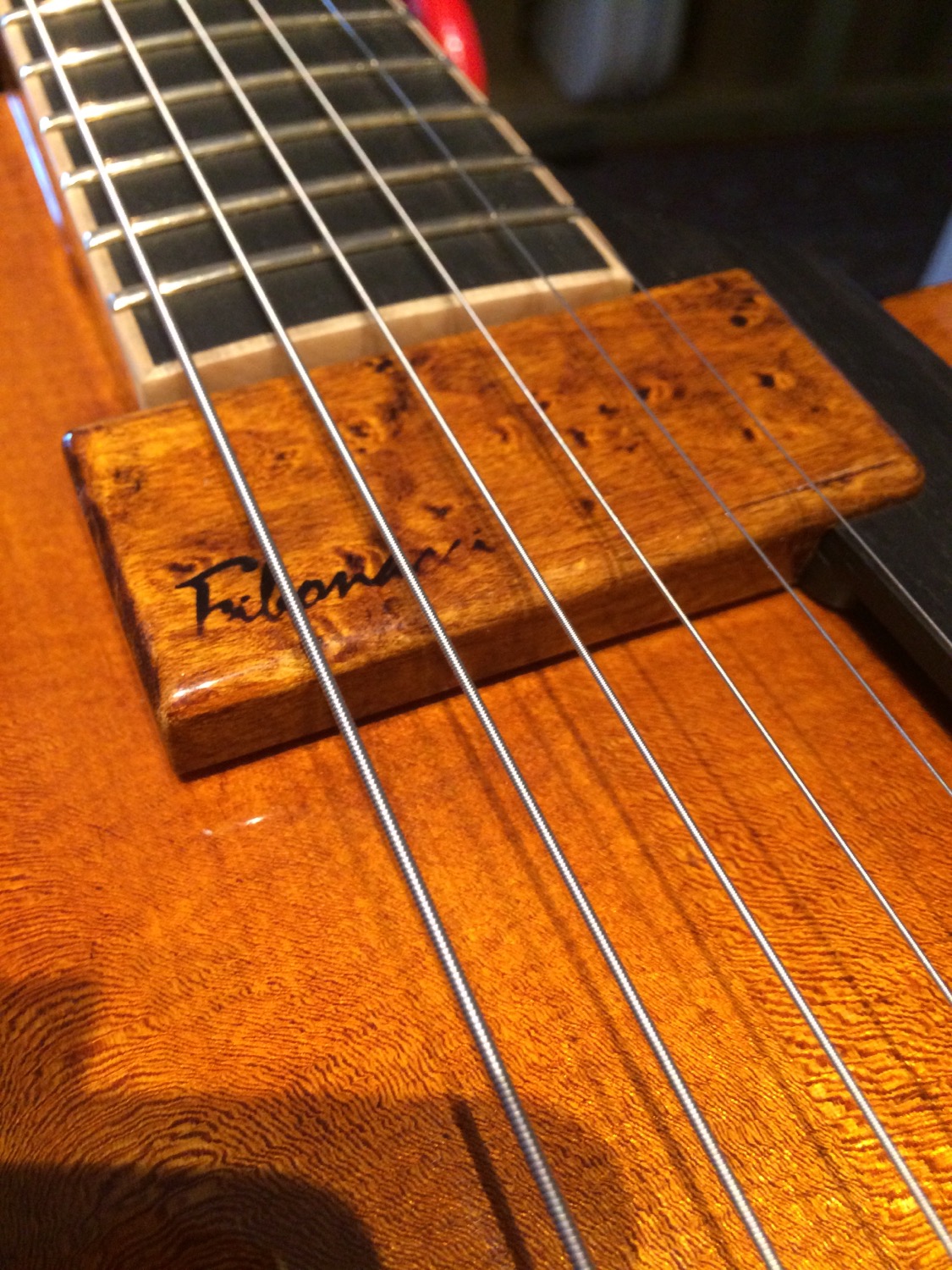

A boutique archtop guitar maker is not just a marketing label, a boutique builder has a fundamentally different approach to design, materials and manufacture. For experienced musicians and collectors, the distinction matters because an archtop is unusually sensitive to small decisions. Top graduation, finish thickness, bridge fit, neck angle, tone wood selection, lacquer or oil application, and pickup integration all affect how the instrument behaves. In a mass-production setting, those details are often constrained by speed and consistency targets. In a boutique workshop, they remain central.
What a boutique carved archtop guitar maker actually does differently

The most obvious difference is scale of production. A boutique archtop guitar maker works in low volumes, which allows far closer control over each stage of the build. That is not simply a matter of exclusivity. It means the instrument can be evaluated as an individual piece rather than processed as a unit within a production batch.
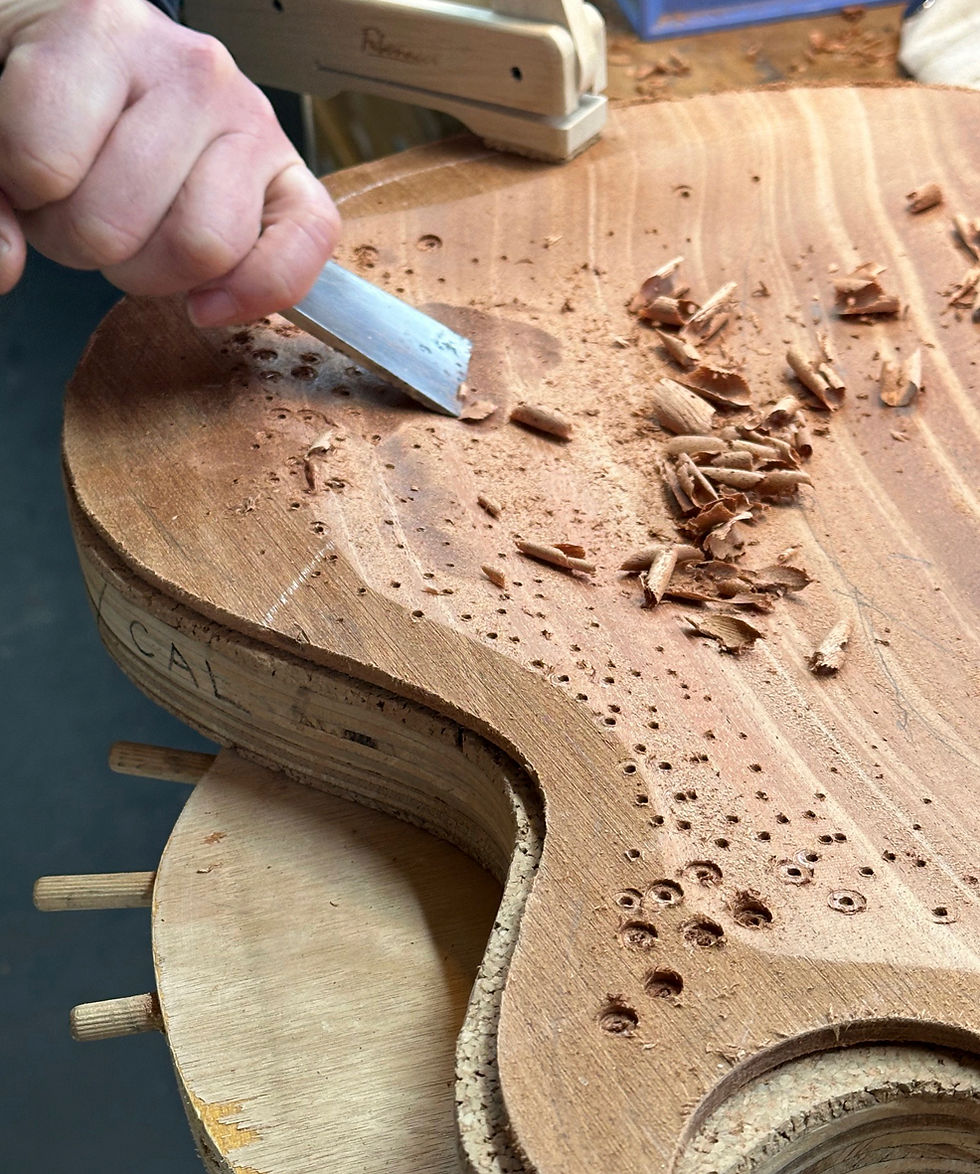
On a carved archtop, this has direct tonal consequences. Carved plates are never identical, even when cut from the same species. Density varies. Grain varies. Stiffness varies. A builder working at boutique scale has the time and skill to respond to those variables, adjusting thicknesses and voicing choices to suit the tone wood in hand. A factory process tends to narrow those decisions into repeatable averages.
That trade-off is worth stating plainly. Large-scale production can deliver solid instruments at accessibleprices, and for many players that is perfectly reasonable. But once a musician begins to hear and feel the difference between a generic laminated archtop and a carved archtop that has been individually assessed, the appeal of boutique work becomes much clearer.
Why the materials matter more on a carved archtop
Every fine guitar depends on material quality, but the carved archtop is less forgiving than laminated archtops and solid-body designs. The top is not merely decorative structure. It is an active acoustic engine. If the soundboard lacks the right stiffness-to-weight ratio, or if the carving does not suit the tonewood, the guitar may look impressive but still feel restrained.
A high-calibre workshop will usually be selective not only about species, but also about origin, cut and seasoning. Hand-selected UK and European tonewoods, properly stored and evaluated, offer a level of predictability that cheaper supply chains often do not. Components matter as well. Bridge materials, tailpiece design, fret wire quality and hardware tolerances all influence how resonant and efficiently the instrument transfers energy.
Finish is another area where boutique standards show. Thick synthetic finishes suppress resonance. By contrast, nitrocellulose lacquer or oil finish can preserve more of the instrument's natural response while allowing the wood to remain the visual centrepiece. Neither option is automatic proof of quality, of course. Application matters more than brochure language. But in the right hands, finish becomes part of the tonal equation rather than a cosmetic afterthought.
The role of carving, voicing and set-up

The word handmade is used too freely in the guitar trade. What serious buyers should care about is not sentiment, but meaningful hand control where it affects performance.
Carving and voicing sit at the heart of that. A carved archtop top and back must be shaped not only for appearance, but for tension, projection and balance across the register. Too stiff, and the instrument can feel tight and choked. Too light, and it may lose focus or structural confidence over time. Good carved archtop making is a constant negotiation between acoustic openness and mechanical stability.
Set-up deserves equal respect. On a premium carved archtop, the neck construction should be quarter-sawn and feel intentional, either one-piece or laminated depending on client preference, the fretwork and quality of fret wire exact, the bridge accurately profiled to fit to the arched top, and the action balanced for the player's likely use. A purely acoustic jazz player may want a different response from someone using a floating pickup for amplified work or recording. Boutique workshops are better placed to account for those use cases because they are not trying to force every guitar into the same default specification.
The best makers rely on real-world testing, not theory alone. Instruments should be assessed in playing conditions, through amplifiers, in studios and under microphones. Development informed by actual performance tends to produce better guitars than development driven solely by catalogue features.
Boutique build quality is not just cosmetic

There is a persistent misconception that boutique means decorative appointments, figured maple and exclusivity premiums. Those may be part of the picture and come down to personal taste, but they are not the core value. The true advantage is disciplined build quality without the compromises that scaled manufacturing often introduces.
That includes clean joinery, accurate neck geometry, stable binding work, properly seated frets and hardware installation that respects the instrument rather than simply complete assembly. It also includes consistency of process. A workshop with complete hands-on control of manufacturing can maintain standards across the instrument rather than outsourcing critical stages to disconnected third-party suppliers.
A well-made carved archtop also tends to age better, remain more stable and offer greater confidence when travelling between climates or entering professional use. No wooden instrument is immune to environment, and any honest maker should say so. But careful construction and sensible material choices stack the odds in the owner's favour.
When boutique is worth the investment
Not every player needs a boutique instrument. That is the honest answer. If a carved archtop is an occasional second or third guitar for casual use, a well-chosen production model may be entirely adequate.
The value changes when the instrument needs to do more. For professional musicians, the extra cost often buys reliability, responsiveness and tonal sophistication that become obvious under microphones and in ensemble settings. For collectors, it buys provenance, scarcity and a stronger connection to the maker's standards. For advanced enthusiasts, it buys the satisfaction of owning an instrument built with intention at every stage.
There is also the question of range. A serious boutique workshop can offer different levels of craftsmanship and exclusivity without abandoning its core standards. That matters because buyers do not all want the same degree of ornament, specification or rarity. What they should expect, whatever the tier, is a coherent build philosophy rather than a diluted product.
How to judge a boutique archtop guitar maker

The strongest indicator is transparency. A credible maker should be able to explain where materials come from, how the guitars are built, what is carved rather than pressed, how finishes are applied and how the instruments are tested. Vague luxury language is no substitute for technical clarity.
Buyers should also look at whether the workshop retains control over the whole process. If key parts of the instrument manufacture are outsourced with minimal oversight, the boutique claim becomes less meaningful. Likewise, details such as warranty support, documentation, dealer guidance and worldwide fulfilment are not peripheral.They indicate whether the maker understands ownership as a long-term relationship rather than a one-off transaction.
Reputation among serious professional players matters. testimonials A guitar that photographs well is not necessarily one that performs at a high level. The most useful validation comes from musicians who use the instrument critically - on stage, in the studio and over time.
In that respect, a company such as Fibonacci Guitars reflects what informed buyers increasingly look for: low-volume production, complete workshop oversight, genuine carved construction, carefully chosen materials and product development shaped by practical musical use.
The difference you hear is usually the difference you cannot fake

At the top end of the market, the visible details are easy to admire. Flame, binding, inlay and lacquer depth all have their place. Yet the lasting value of an archtop lies elsewhere - in the immediacy of the attack, the complexity behind a sustained note, the balance across the strings, and the way the guitar continues to reward a refined touch.
That is why the phrase boutique carved archtop guitar maker should mean more than rarity. It should signal independence of standards, close control of manufacture and the confidence to reject shortcuts that make production easier but the instrument weaker.
For players and collectors who already knowwhat a carved archtop can be, that difference is not subtle. It is the reason some guitars are merely owned, while others become part of a musician's working life for decades.


Comments