

Nitro Lacquer Versus Polyurethane Finish
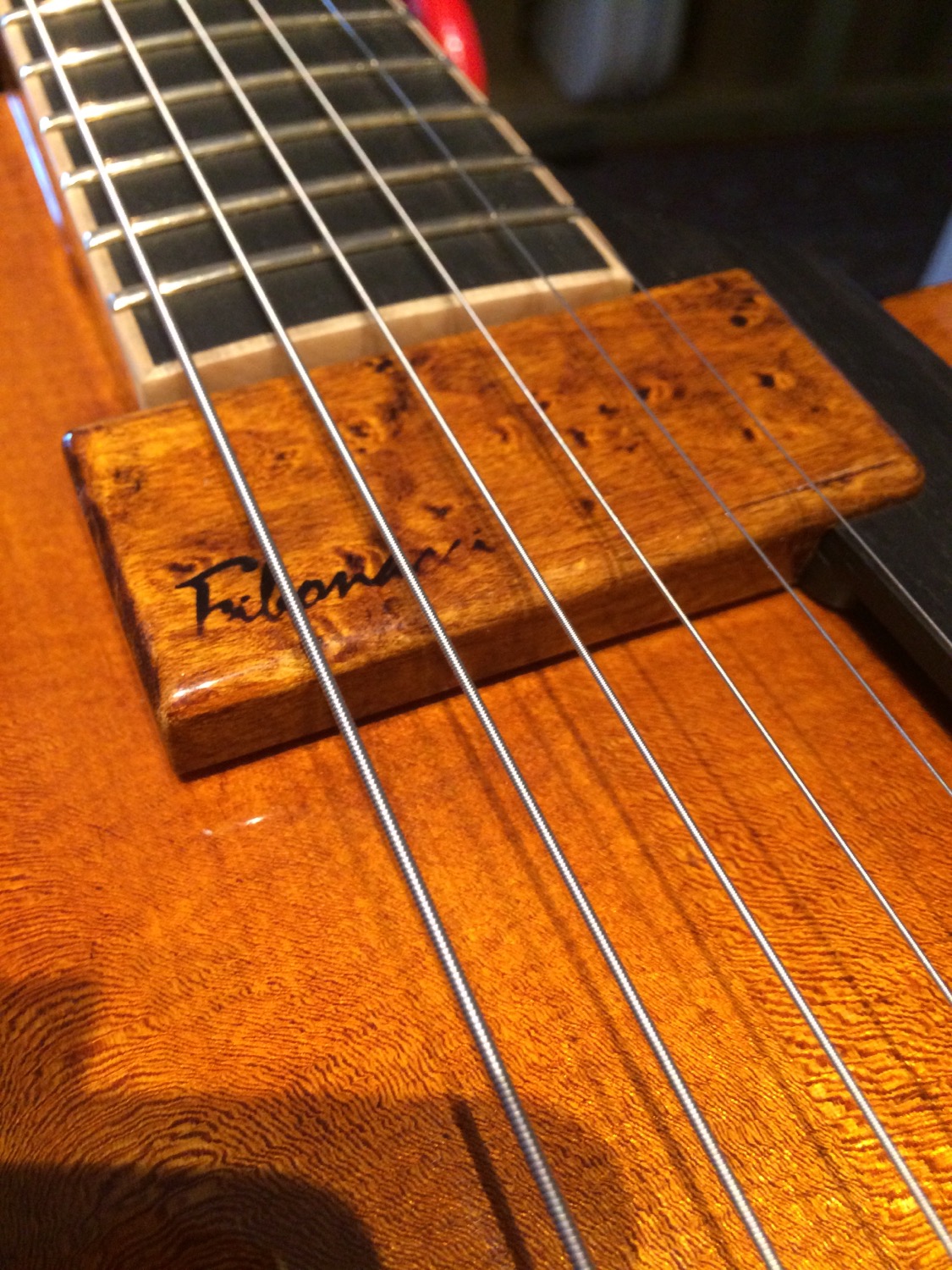

A hand carved archtop finish becomes the surface a player touches, the lens through which the timber is seen, and a protective layer that must live with changing seasons, stages, cases and years of music. The question of nitro lacquer versus polyurethane finish therefore deserves more than the familiar shorthand of ‘vintage’ against ‘modern’.
Both systems can produce beautiful, durable work when specified and applied with discipline. Yet they behave differently in the workshop and over decades of ownership. For a serious player or collector, that distinction reaches beyond appearance. It informs tactile feel, the way a finish matures, the character of repairs, and the relationship between a finely built instrument and its owner.
Nitro lacquer versus polyurethane finish: the essential difference

Nitrocellulose lacquer, usually shortened to nitro, is a traditional guitar finish applied in a number of very thin coats. The solvent flashes off as each coat dries, allowing subsequent coats (circa 12) to melt into the layer beneath. Once cured, nitro remains comparatively thin and can continue to change gently with age. Nitro application is a much slower process and commands a more controlled environment to the polyurethane process.
Polyurethane is a catalysed coating. Its components chemically cross-link as they cure, creating a harder, more resistant finish. It is available in different formulations, from very tough production-oriented finishes to more refined systems capable of a high gloss. Because of its practical strengths, polyurethane has made it a common choice where speed, consistency and resistance to daily wear are priorities.
The difference is not simply one of chemistry. A finish is the result of a complete process: preparation of the timber, grain filling, sealing, spraying technique, drying conditions, levelling and polishing. A poor nitro finish remains poor. A carefully applied polyurethane finish can be handsome and protective. The comparison becomes meaningful when the same standards of timber selection, preparation and workmanship are applied to both.
Feel and visual depth

A fine nitro finish is prized for its delicate feel. When applied sparingly and allowed sufficient time to cure, it can feel less like a separate shell around the guitar and more like a finished surface of wood. On a neck, many players appreciate the dry, immediate sensation that develops as the gloss is naturally played back over time.
Nitro also has a visual quality that suits highly figured maple, carved spruce and carefully selected European tonewoods. It can offer a deep, open-looking gloss without obscuring the timber’s chatoyance. Transparent finishes, bursts and subtle tints can appear particularly alive because the coating is thin and optically sympathetic to the material beneath.
Polyurethane often delivers a more glass-like surface. That can be exactly right for a player who wants a pristine, highly polished guitar that resists the marks of regular use. Some polyurethane finishes can feel slicker on the neck, particularly when new, although the final feel depends on the gloss level and how the neck has been finished and polished.
Neither appearance is universally superior. A collector may value the warmth and gradual individuality of nitro; a touring musician may prefer a harder finish that remains visually consistent through frequent transport and demanding performance schedules. The correct choice follows the intended life of the instrument, not fashion.
Does finish choice change tone?

Finish discussions often become exaggerated. A guitar’s primary voice comes from its design, carved plate graduations, arching, bracing, neck construction, hardware, setup and the quality of its woods. On an archtop, those foundations matter far more than any simplistic claim that one finish will transform the sound.
That said, finish mass and stiffness are not irrelevant. A heavily built coating can restrain the free movement of a responsive soundboard, especially when applied excessively. This is one reason discerning luthiers pay close attention to thin, controlled finishing schedules. The aim is to protect the instrument without treating a carefully tuned carved top as though it were a piece of furniture.
Nitro’s reputation for allowing an instrument to ‘breathe’ is often stated too literally. Wood does not breathe through lacquer in a musical sense. What experienced players may be responding to is a combination of restrained film build, a mature curing process, and the tactile and visual associations of traditional finishing. A thin polyurethane finish may also be acoustically appropriate, while a thick nitro application may not be.
For a premium archtop, the more useful question is: has the finish been chosen and applied in a way that respects the acoustic design? At Fibonacci Guitars, the finish must serve the instrument’s carved construction and musical purpose, rather than compensate for production shortcuts.
Durability, wear and ageing

Polyurethane wins the straightforward contest for resistance to many everyday hazards. It is generally more resistant to scratching, moisture, perspiration, mild chemicals and the incidental knocks that occur in ordinary use. For owners who need their guitar to retain a near-new appearance with minimal concern, it offers a compelling practical advantage.
Nitro requires more informed ownership. It can mark more readily, react with some rubber and vinyl materials, and suffer cosmetic damage from certain straps, stands, cleaning products or tightly fitting cases. Fresh nitro is particularly vulnerable, which is why curing time matters. A quality instrument should never be hurried through this stage merely to meet a production target.
Yet the very qualities that make nitro less impervious are part of its appeal. It wears rather than simply resists. With use, it can develop soft sheen changes, small marks and, in some conditions, checking: fine lines caused by movement and temperature change. For some owners this is undesirable; for others, it is an honest record of a guitar that has been played.
The right decision depends on temperament as much as use. If a blemish will distract from every performance, polyurethane may provide welcome reassurance. If the gradual patina of a cherished instrument adds to its meaning, nitro has a character that a harder, more stable finish does not attempt to imitate.
Repairability matters on a lifelong instrument

A boutique guitar should be considered over decades, not merely from the moment it leaves the workshop. This is one area where nitro has a notable advantage. Because new lacquer can melt into existing lacquer, a skilled repairer can often make local touch-ups and refinishing work blend more naturally. Invisible repair is never guaranteed, particularly where timber has faded or been damaged, but the finish system is comparatively sympathetic to careful restoration.
Polyurethane is harder to repair invisibly. Since it cures as a cross-linked film, new material does not merge in the same manner. A capable repairer can still achieve excellent results, but local work may require more extensive preparation and blending. Its toughness protects the finish from many incidents, but that same toughness can make later refinishing more involved.
This is worth weighing for instruments intended for professional use. Guitars travel, stages are unforgiving, and accidents happen. Durability reduces risk; repairability protects long-term serviceability. There is no single answer, but there is a genuine trade-off.
Care for each finish without overthinking it

Both finishes benefit from sensible handling: stable humidity, avoidance of extreme heat, a properly fitting case and a clean, soft cloth after playing. The distinction lies in the margin for error.
With nitro, keep the guitar away from plasticised rubber supports and do not leave it in contact with straps, stands or cable wraps of uncertain composition. Use finish-safe cleaning products sparingly and never place a cold instrument directly into a hot environment. Abrupt temperature changes are a common route to checking.
With polyurethane, ordinary care still matters, but the surface will usually tolerate daily life more readily. Avoid abrasive polishes and harsh household cleaners, which can dull even a hard coating. A durable finish is not an invitation to neglect the timber, joints and hardware beneath it.
Choosing the finish that suits the instrument and its owner

Choose Nitrocellulose lacquer when you value a traditional, thin finish with visual depth, a naturally played-in feel and graceful repair potential. It is especially compelling on an instrument built to reward long-term ownership, where signs of use are regarded as part of its continuing story. It is usually the case that nitro is expected to be the option when it comes to higher end guitars.
Choose polyurethane when maximum resistance, stable gloss and lower day-to-day anxiety take precedence. It can be an intelligent choice for hard-working guitars and owners whose ideal instrument remains visually immaculate despite a demanding schedule.
For a hand-built archtop, the finish should never be an afterthought or a marketing label. Ask how it has been applied, how long it has been allowed to cure, and whether the builder’s finishing approach respects the acoustic sensitivity of the guitar. The finest choice is the one that lets you play with confidence while preserving the particular character that made the instrument worth choosing in the first place.


Comments