

Floating Bridge Versus Fixed Bridge Explained
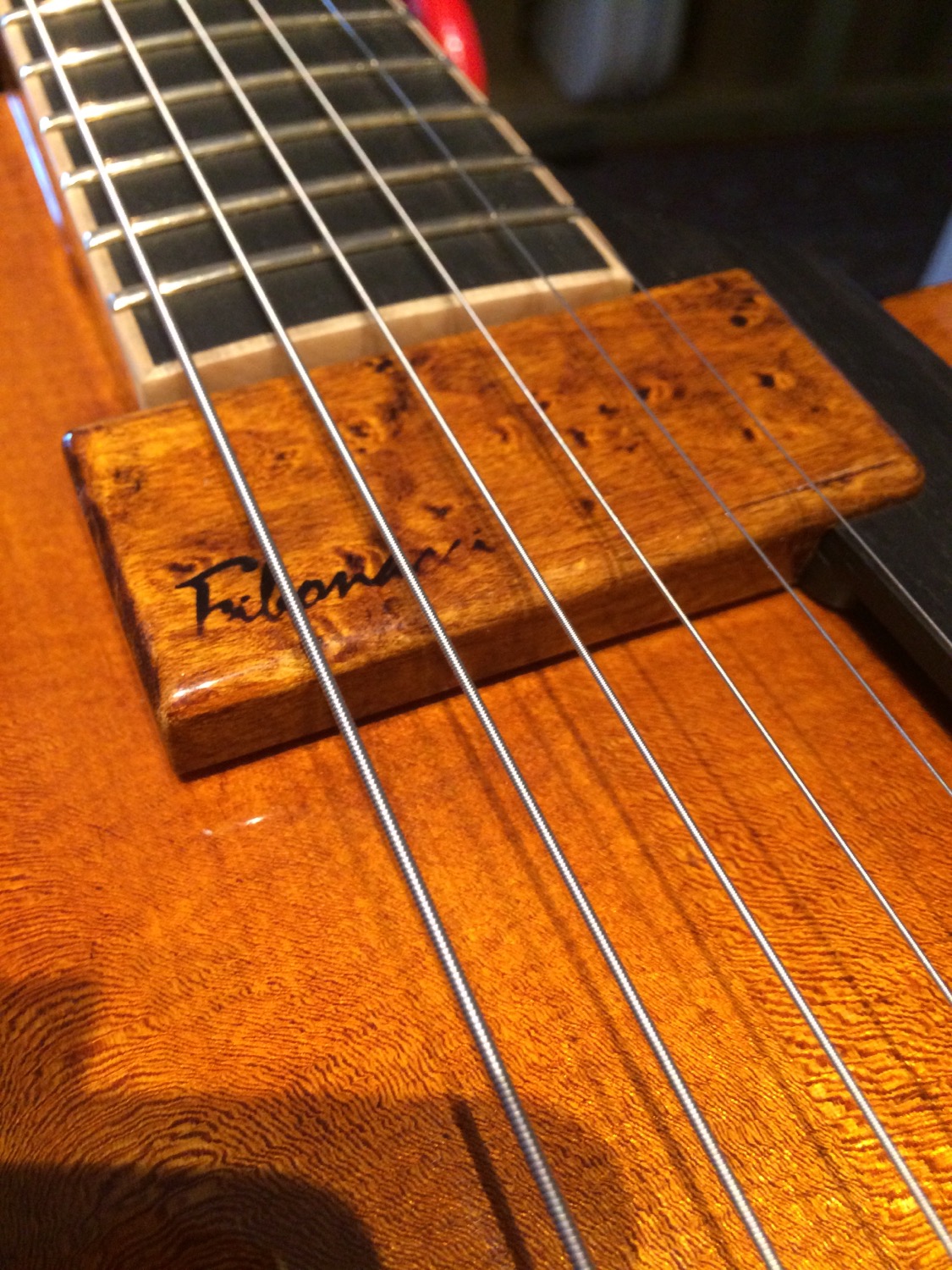

A carved archtop is not simply a flat-top guitar with a different outline. Its arched soundboard, moving air chamber and tailpiece-based string path make the bridge a central part of the instrument’s voice. The floating bridge versus fixed bridge question therefore deserves more than a simple verdict. It concerns how the guitar transfers string energy, how it is set up, and what a player expects from the instrument. The right choice is rarely about fashion. It is about matching the bridge design to the guitar’s construction, the desired tonal response and the demands of the music.
What a floating bridge means on an archtop

On a traditional archtop, a floating bridge is a two-part assembly. A carefully fitted wooden base sits directly on the carved top, while the saddle section sits above it. The bridge is held in position by string tension rather than being screwed, pinned or glued permanently to the soundboard. The strings usually run from a tailpiece, over the bridge and towards the headstock, creating enough downward pressure to keep the base secure if the base is correctly profiled.

The term can be misleading. The floating bridge does not move while the guitar is properly strung and set up. It is called floating because it is not physically fixed to the top. Its position is established during set-up to provide correct intonation, then maintained by the pressure of the strings.

This arrangement is fundamental to the classic archtop design. It allows the carved soundboard to vibrate with minimal interruption and avoids drilling into a top that has been graduated, tuned and voiced as an acoustic component. The bridge base must be shaped precisely to the individual arch of the soundboard. A generic base that touches only at a few points cannot transfer vibration efficiently and can leave both tone and stability compromised.
The bridge base is part of the acoustic system

A well-fitted wooden base is not merely a support for the strings. Its contact with the top influences attack, sustain, projection and the balance between bass and treble strings. Dense woods such as ebony tend to offer definition and a firm, immediate response. Rosewood andother suitable hardwoods can bring a subtly different emphasis, depending on their mass, stiffness and the particular guitar.

The saddle matters as well. Some players favour a traditional all-wood bridge for a warm, open acoustic character. Others prefer an adjustable metal saddle mounted on a wooden base, which permits more convenient action adjustment and often introduces a slightly more focused, articulate edge. Neither option is inherently superior. The correct choice depends on the instrument and its intended musical life.

What is a fixed bridge?

A fixed bridge is attached directly to the guitar body, commonly by screws, posts or adhesive. On many solid-body electric guitars, strings terminate at or pass through the bridge itself. The hardware is designed to remain in a permanent location, with saddles providing adjustments for intonation and action.
There are several fixed-bridge designs, from wraparound units to tune-o-matic style bridges mounted on threaded posts. Their shared principle is mechanical attachment to the body. This provides a verystable reference point and makes restringing, transport and frequent setup changes relatively straightforward.
On an archtop, however, a fixed bridge changes more than convenience. Anchoring hardware to a carved, resonant soundboard adds mass and introduces local stiffness. That may suit a purpose-built electricarchtop, particularly one designed for higher-volume amplified work, but itdoes not preserve the same acoustic behaviour as a traditional floating arrangement.
A fixed bridge is also sometimes confused with a pinned floating bridge. In that case, the wooden base remains a floating-style base in contact with the top, but locating pins prevent it moving during string changes. It is not the same as a bridge mounted directly to the soundboard, though it offers some of the practical security associated with a fixed design.
Floating bridge versus fixed bridge: tonal character

The tonal distinction is best understood as adifference in energy transfer and soundboard freedom, not as a rigid rule about good and bad tone.
A floating bridge generally supports the immediate, airy and complex response associated with a finely made archtop. The tailpiece carries the string anchoring point, while the bridge transmits vibration down into the carved top. With no permanent bridge hardware fixedthrough the soundboard, the top is free to react as designed. Players oftenhear a more acoustic quality in the note, with woody fundamentals, quick bloom and a sense of space around chords.
A fixed bridge can provide a more direct, concentrated sound. Its greater mechanical connection to the body may favour sustain, punch and a more controlled attack, especially through an amplifier. For players using higher gain, louder stage monitoring or a more solid-body-informed vocabulary, those qualities can be useful.
Yet construction quality outweighs broad assumptions. A poorly fitted floating bridge will not deliver the expected openness, just as a heavily overbuilt fixed bridge can make an otherwise responsive guitar feel restrained. The carving of the top, bracing, neck angle, tailpiece design, strings and pickup installation all contribute. Bridge choice should be considered as one part of a complete instrument rather than as an isolated specification.
Setup, intonation and day-to-day stability

A fixed bridge has an obvious practical advantage: its position cannot be disturbed accidentally. This is reassuring for players who change strings frequently, use varied string gauges or travel extensively. Individually adjustable saddles can also make precise intonation work more convenient, particularly with modern string sets and highly accurate tuning expectations.
A floating bridge requires more care, but this is not a weakness. Before removing all strings, an experienced owner will mark the bridge base position lightly with low-tack tape or note its location relative to the f-holes. During restringing, it is sensible to change strings one at a time or maintain enough tension to prevent the bridge shifting. Once strung to pitch, intonation should be checked and the bridge adjusted as necessary.
The key requirement is a stable, properly fitted base. When the base matches the top accurately and the strings break cleanly over the saddle, the bridge should remain entirely dependable in normal use. A bridge that rocks, creeps forward or leans excessively needs professional attention. It may indicate poor fit, unsuitable string geometry or an incorrect setup.
Action adjustments need a measured approach

Many floating bridge assemblies use thumbwheels to raise or lower the saddle. They are useful for fine seasonal adjustments, but they are not a substitute for a complete setup. Neck relief, nut height, fret condition, bridge-base fit and string gauge must all work together.
Lowering an archtop’s bridge excessively may reduce break angle over the saddle and tailpiece, weakening the guitar’s response. Raising it too far can make the instrument tiring to play and mayreveal an underlying issue with neck geometry. A premium archtop deserves measured adjustments by someone who understands carved-top instruments.
Which bridge suits your playing?

For the player seeking the unamplified depth,dynamic range and traditional feel of a carved archtop, a floating bridge remains the natural choice. It belongs to a design language refined for generations: a responsive carved top, a tailpiece, a precisely fitted wooden bridge and a voice that changes with touch.
For a guitarist whose priority is firm mechanical stability, rapid setup changes and amplified performance at substantial volume, a fixed bridge or pinned design may be more appropriate. This is particularly true where the guitar has been engineered around that hardware from the outset. Retrofitting a fixed bridge to an acoustic archtop simply for convenience is rarely a considered solution. It can alter the soundboard permanently and may diminish the qualities that made the instrument desirable.
Collectors should also consider originality. On a finely made archtop, the bridge is part of the maker’s tonal and visual intent. A correctly chosen wooden base, properly proportioned saddle and sympathetic tailpiece complete the instrument in a way that generic replacement hardware cannot. At Fibonacci Guitars, this relationship between carved soundboard, bridge fit and musical response is treated as workmanship, not decoration.
The most rewarding choice is the one that lets the guitar speak in its intended voice. Give the bridge design the same scrutiny as the timber, carving and finish, and it will repay that attention every time a chord is allowed to ring.


Comments