

Oil Finished Archtop Guitar: Is It Right For You?
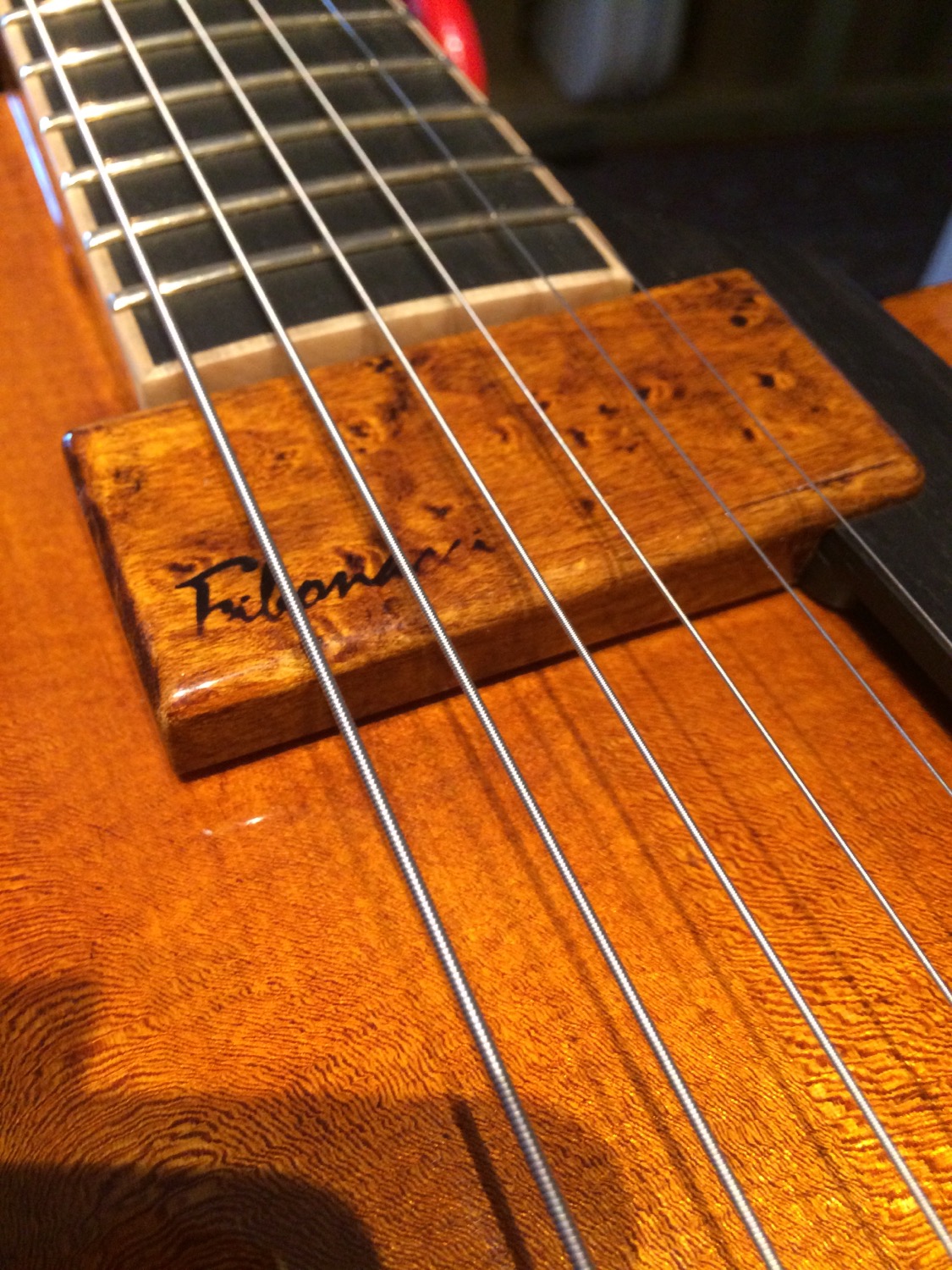

The first thing most discerning players notice about an oil finished archtop guitar is not only the look. It is the feel. The neck feels more immediate that many factory finishes never quite achieve, and the timber retains a tactile honesty that speaks immediately of craftsmanship rather than coating. For players who care as much about response and refinement as they do about cosmetics, that distinction matters.
An oil finish is often misunderstood. It is sometimes treated as a simpler or lesser alternative to lacquer, as though less visible build must imply less sophistication. In reality, a properly executed oil finish can be every bit as deliberate as a high-grade lacquered finish, but it serves a different purpose. It preserves more of the natural character of the wood, leaves the instrument with a distinctly organic surface, and appeals to players who prefer restraint over gloss.
What an oil finished archtop guitar really offers

On an archtop, finish is not merely decorative. It contributes to how the instrument performs to the touch, how it ages, and to a degree how freely the timber is allowed to speak. An oil finished archtop guitar tends to present the grain with a softer, more natural sheen rather than a hard reflective film. That can be especially compelling on carved plates and carefully selected tonewoods, where visual depth is already present in the material itself.
The tactile quality is equally significant. Many players describe an oil-finished neck as faster, though that word can be imprecise. What they usually mean is that the neck feels less sticky, less insulated, and more immediate. In performance settings where subtle control matters, that sensation can become part of the instrument’s appeal rather than a minor detail.
There is also the matter of ageing. Oil finishes typically wear in a way that many enthusiasts find attractive. Rather than cracking or chipping in the manner of lacquer surfaces, they tend to develop a lived-in patina almost immediately. That ageing is not a flaw if the guitar is built for long-term ownership. It is part of the relationship between player and instrument.
Oil finish versus lacquer on an archtop

This is where nuance matters. There is no universal winner.
A traditional lacquer finish, particularly nitrocellulose, remains a highly respected choice on premium carved archtops for good reason. It offers a classic visual presentation, can be polished to a remarkable depth, and has a long-established place in fine guitar making. On the right instrument, it delivers elegance and protection in equal measure.
An oil finish approaches the brief differently. It is usually chosen by players and makers who want a more understated, wood-led result. The appearance is often less formal than gloss lacquer, but no less premium when applied with care. If anything, it places more emphasis on the quality of the carving, the grain, and the precision of the final handwork because there is nowhere to hide.
In practical terms, lacquer generally provides a stronger barrier against moisture, abrasion and incidental handling. Oil finishes, while entirely suitable for serious instruments, ask a little more of the owner. They reward proper care and a degree of awareness. For the right buyer, that is not a disadvantage. It simply reflects the fact that a boutique carved archtop is not a disposable object.
From a tonal perspective, broad claims should be treated cautiously. Finish is only one part of a much larger acoustic system involving carving, graduations, tonewood selection, set-up, hardware, neck geometry and strings. Even so, some players and luthiers favour thinner, less obtrusive finishes because they believe they allow the guitar to feel more alive from day one. Whether that difference is dramatic or subtle depends on the instrument.
Why some players actively seek an oil finished carved archtop guitar

The appeal is rarely superficial. Serious players sometimes choose an oil finished archtop guitar because they value one or more specific characteristics.
The first is touch. On both neck and body, the finish has an immediacy that suits musicians who spend long hours with the instrument. There is less sense of playing on top of a coating and more sense of contact with the material itself.
The second is aesthetic discipline. Oil finishes tend to suit players who admire the natural authority and undulations of figured maple, spruce and other fine tonewoods without wanting an overly dressed presentation. The result can look exceptionally refined, but in a quieter, more confident way.
The third is authenticity of wear. Collectors and professionals often appreciate instruments that mature gracefully rather than remain cosmetically frozen. A gently evolving surface can reinforce the individuality of a handmade archtop.
That said, preference depends heavily on use. A player who spends most of the year under changing stage conditions, in and out of transport, may prioritise the additional protection of lacquer. A studio musician or private collector may lean towards oil for its feel and natural appearance. Neither decision is inherently more correct. It is a matter of values and context.
Care and maintenance expectations

Anyone considering an oil finish should be realistic about ownership. These guitars are not difficult to maintain, but they do benefit from attentive handling as they have less protection than what a lacquer finish offers.
Routine care is straightforward. Wipe the instrument down after playing, especially the neck and contact points, and store it properly in a stable environment. Sweat, grime and abrupt humidity shifts are unhelpful to any fine archtop, whatever the finish, but an oil surface offers less of a sealed barrier than a lacquer coating.
Over time, some oil-finished instruments may benefit from occasional refreshment depending on the exact finishing systemused by the maker. This is one reason it is wise to buy from a serious workshop or authorised dealer network that can provide clear aftercare guidance. A premium instrument deserves support to match.
It is also worth noting that maintenance should never be improvised. Owners sometimes assume oil finish means any household or off-the-shelf treatment is acceptable. It is not. The chemistry of guitar finishes is specific, and poor products can dull the surface, contaminate the timber, or complicate future servicing.
Craftsmanship matters more with oil

An oil finish can be unforgiving of mediocre work. Thick gloss can sometimes mask minor visual inconsistencies, but a more transparent, low-build treatment reveals the underlying quality of the timber preparation, carving and sanding. That is why oil finishes tend to work best in the hands of makers who already hold themselves to exacting standards.
On a properly built archtop, that transparency is a virtue. The surface shows the confidence of the maker. The edges, transitions, recurve, neck shaping and grain all remain legible. For connoisseurs, this is part of the appeal. You are not simply seeing a finish. You are seeing the instrument.
This is also why boutique production suits the format so well. Where manufacturing is low-volume and every stage remains under close control, the finish can be judged as part of the whole rather than treated as a generic final step. Fibonacci Guitars, for example, builds in a way that places material choice, handwork and real-world performance ahead of scaled compromise, which is precisely the environment in which nuanced finishing choices become meaningful.
Is an oil finish the best choice for your archtop?


If you want a pristine, high-gloss presentation with maximum surface protection and a familiar traditional look, nitro lacquer may well be the better route. If you value tactile immediacy, understated visual character and a finish that allows the craftsmanship of the woodwork to remain front and centre, oil becomes deeply persuasive.
The key is to choose with clear expectations. An oil finished archtop guitar is not trying to imitate lacquer. It is offering a different ownership experience - one that feels more intimate, more material-led and, for many serious players, more personal.
The best archtops are never defined by a single specification, but by how intelligently every decision serves the instrument. If an oil finish appeals to you, that instinct is worth trusting, provided the guitar behind it is built to a standard worthy of the wood beneath your hands.


Comments