

Best Archtop Guitar for Professionals
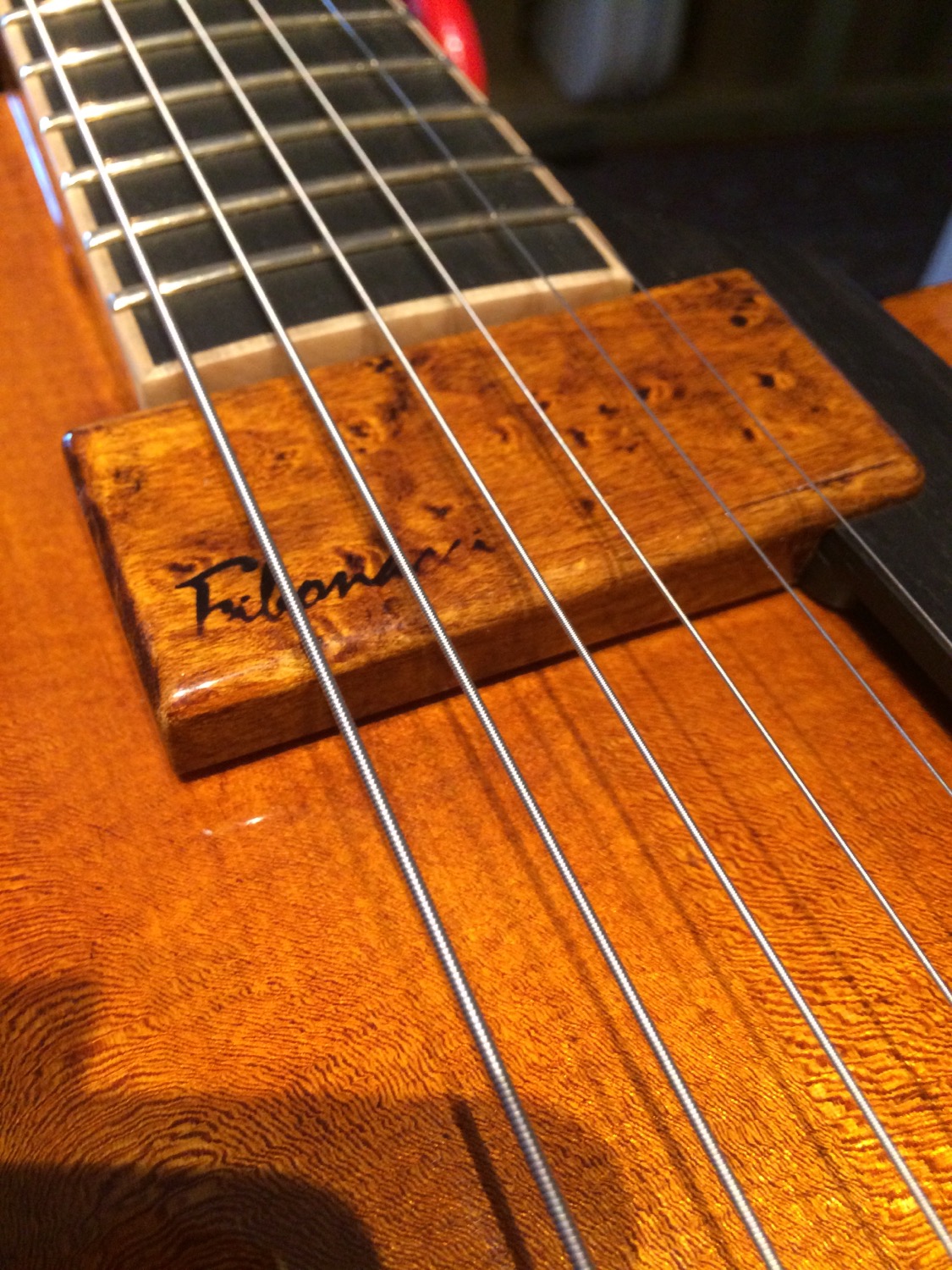

A professional player rarely needs more guitar. What they need is more precision - more control in the right hand, more authority in the midrange, more consistency under microphones, and more confidence that the instrument will respond exactly as intended. That is why the search for the best archtop guitar for professionals is not really about brand prestige alone. It is about finding an instrument whose construction, voicing and setup hold up under serious musical demands.
At this level, broad claims are not enough. Two guitars may share similar dimensions, comparable tonewoods and pretty appointments, yet behave very differently in the studio, on stage, or in the hands of a player with an exacting touch. A professional archtop must earn its place through response, balance and refinement, not marketing language.
What makes the best archtop guitar for professionals?

The answer begins with the top. In a true high-end archtop, the soundboard is not simply shaped to look correct. Its carve, graduation and stiffness profile determine how the guitar speaks. A well executed carved archtop gives the note a clear front edge, followed by depth and bloom rather than a flat, generic thump. For jazz players, this often means separation within chord voicings and a vocalquality on single note lines. For session musicians, it means an instrumentthat records with less effort and less corrective processing.
Back and side construction matters as well, though not in isolation. Maple remains a classic choice because it supports projection, note definition and a focused low end. European and UK-sourced materials, when selected properly, can deliver exceptional consistency and musicality. The crucial point is that the builder understands how each piece of timber behaves rather than relying on species names as shorthand for quality.
Neck geometry is another dividingline between a merely expensive guitar and a genuinely professional one. A fine archtop should feel composed in every register. Intonation must remain dependable up the neck, the relief must support a clean attack without choking expression, and the neck profile should encourage long sessions without fatigue. Professionals notice these details quickly because poor geometry reveals itself under pressure.
Why factory specifications are not the whole story

Many archtops look persuasive on paper. Solid carved spruce top, carved flamed maple back, ebony fingerboard, floating pickup - all familiar and desirable terms. Yet specifications do not tell you how carefully the top was voiced, how stable the neck is, or whether the setup was finished by somebody who understands what an accomplished player actually requires.
Scaled manufacturing introduces compromise, even at ambitious price points. Tolerances have to be broad enough to keep production moving. Components may be good, but they are often chosen for supply consistency before tonal distinction. Finishing schedules are built around throughput. None of that makes a guitar unusable, but it does explain why a boutique instrument frequently feels more alive, more direct and moreresolved.
This is where experienced playersbecome selective. The best carved archtop guitar for professionals is rarely the one with the longest feature list. It is usually the one with the fewest compromises between material, design and final adjustment.
The professional test: acoustic voice first

Even if you intend to use a carved archtop amplified most of the time, its acoustic character still matters. Astrong unplugged voice tells you that the structure is working efficiently.Notes should leave the guitar cleanly. Chords should retain inner detail rather than collapsing into a congested wash. The bass should be controlled, not woolly, and the treble should carry presence without turning brittle.
An archtop that sounds subdued acoustically can still be serviceable through an amplifier, but it gives you less to work with. Pickups translate what the instrument offers. They do not create complexitythat is not already there. A truly professional instrumentshould have an acoustic identity worth preserving.
Responsiveness is especially important. The guitar should reward small changes in attack. Light comping, stronger single-note articulation and dynamic chord melody passages ought to produceclearly different results. If every touch yields the same narrow response, the instrument will feel limiting over time.
Choosing between carved tonewood and pressed laminated construction

For professionals, this is one of the most important distinctions. Pressed laminated tops can be effective, durable and more affordable, and some players prefer their controlled behaviour in louder settings. But a carved archtop generally offers greater nuance, richer overtone content and a more individual voice. It also tends to reveal the skill of the maker far more clearly.
That said, carved construction is not automatically superior if it is done indifferently. A poorly voiced carved top may feel stiff, uneven or excessively temperamental. A finely executed pressed laminated instrument can outperform it in practical use. The trade-off is straightforward: pressed construction often gives predictability, while carved construction, at its best, gives complexity and sophistication.
A professional should decide based on repertoire and environment. If you spend most of your time in highly amplified contexts, your priorities may lean towards control and feedback resistance. If your work includes studio recording, small ensemble performance or uncompromising acoustic sensitivity, carved construction becomes far more compelling.
Electronics, hardware and setup at the top end

Premium archtops are judged harshly by their weakest component. A resonant body fitted with uninspiring electronics becomes frustrating very quickly. Floating pickups remain a preferred choice for many jazz professionals because they preserve more of the acoustic top movement than a heavily mounted unit. The reward is openness and articulation. The compromise is that they may be less forceful than some fixed magnetic designs, depending on the application.
Bridge material and fit are equally significant. An ebony bridge that is properly profiled to the carved top supports transmission, clarity and tuning stability. Tailpiece design also affects feel and response more than many buyers expect. On a refined instrument, these are not decorative after thoughts. They are part of a complete tonal system.
Then there is the setup, which noserious player should treat as secondary. Fretwork must be exact. Nut slotsmust be cut with precision. The bridge must sit correctly, and action must reflect the guitar's voice as well as the player's style. A professional-grade archtop should arrive feeling finished, not merely assembled.
Best archtop guitar for professionals: what to listen for

When assessing candidates, listen for four qualities above all. First, note separation. In complex voicings, can you hear the chord structure clearly? Secondly, dynamic range. Does the guitar expand with your touch, or does it flatten out? Thirdly, tonal centre. Strong archtops tend to have a coherent core voice rather than disconnected bass, mids and treble. Finally, sustain with purpose. You do not want endless bloom at the expense of definition. You want a note to carry, then resolve cleanly.
It is also worth considering whether the guitar flatters only one style of playing. Some instruments sound impressive in a quick demonstration because they emphasise a certain midrange colour or immediate attack. Over longer ownership, that can become restrictive. The best professional instruments remain interesting without becoming mannered.
Craftsmanship, exclusivity and long-term value

At this level, value cannot be reduced to purchase price. A professionally built archtop should offer structural integrity, dependable support and a standard of workmanship thatremains evident years later. Clean binding work, disciplined neck joins, well-cured finishes and properly seasoned tonewoods are not luxuries. They are signs that the instrument was built with long-term stability in mind.
Exclusivity also has real meaningwhen it is tied to process rather than scarcity theatre. Low-volume production allows closer control over timber selection, carving, voicing and final inspection. That is far more meaningful than a limited serial number attached to a guitar built to broad factory tolerances.
For players and collectors alike,provenance matters. An instrument developed through genuine workshop discipline, tested in real recording conditions and supported through an authorised dealer network carries assurance that mass-market production seldom matches. In that respect, makers such as Fibonacci Guitars occupy a distinct position: not because they chase volume, but because they refuse the compromises volume requires.
The right choice depends on the player

There is no single professional archtop for every professional player. A touring guitarist working at higher stage levels may prioritise feedback control and electronic reliability. A recording artist may choose a more lightly built instrument with greater acoustic openness. A collector with playing standards to match their eye may place equal weight on tonal complexity, finish work and rarity.
What should not change is the standard. The best archtop guitar for professionals must be responsive, structurally disciplined, tonally sophisticated and set up to perform from the outset. If any one of those pillars is weak, the instrument may still be attractive, but it is unlikely to remain indispensable.
The right archtop does more than sound good in isolation. It keeps revealing quality as your demands increase, which is usually the clearest sign that you have chosen well.


Comments