

Best Archtops for Collectors to Watch

A serious collection rarely begins with pricealone. The instruments that endure - musically, historically and financially are usually those built with conviction, by makers who refused easy compromises. That is exactly why the search for the best archtops for collectors demands more than a list of famous names.
Collectors of archtop guitars are not simply buying an ornament. They are assessing voice, construction, provenance, scarcity and the kind of workmanship that remains evident decades after thefirst string set was fitted. The right instrument can be a benchmark of luthiery, a reliable recording tool and a piece of design history at once. The wrong one can be an expensive lesson in fashion, over-restoration or misplaced nostalgia.
What makes the best archtops for collectors

An archtop becomes truly collectible when several qualities meet at the same point. The first is build integrity. Carved plates, thoughtful bracing, accurate neck geometry and disciplined finishing all matter more than decorative flourish. A guitar may look impressive in photographs, but collectors who understand the category tend to favour instruments that reveal precision under close inspection.
The second is maker significance. Some guitars carry value because they come from a decisive period in a renowned workshop. Others matter because they represent a smaller builder working at an exceptional level, with low production numbers and a clear point of view. Collectibility is not reserved for the largest historic names. In fact, many serious buyers now look closely at boutique makers whose standards are evident and whose output remains tightly controlled.
Then there is musical relevance. An archtop that sounds superb only in theory is far less interesting than one that performsconvincingly in the room, under microphones and in a professional setting. Instruments with real working credibility tend to age better in the market because they are respected by players as well as investors.
Condition, of course, is central, but condition is not always a simple matter of originality at any cost. A well-executed neck reset or refret on an older archtop can preserve use and value. By contrast, poor repairs, overspray, replaced parts of uncertain origin and structural shortcuts can diminish even a historically important guitar.
Vintage giants and why they still matter
No conversation about collector-grade archtops can ignore the great American houses of the 1930s through to the 1950s. Gibson L-5s, Super 400s and selected Epiphone Emperor, Deluxe and Triumph models remain among the most recognisable and sought-after examples in the field. At their best, these instruments combine tonal authority with historical importance in a way few categories of guitar can match.
That said, not every vintage example deservesautomatic reverence. The market often compresses nuance, and collectors should resist treating model names as guarantees. Year, factory period, wood choice, scale length, pickup history and repair record all affect desirability. A clean, well-preserved instrument from a favoured period will always commandattention, but a compromised example can quickly become difficult to justify once sentiment is removed.
There is also the practical issue of ownership. Some vintage archtops are now so valuable, delicate or idiosyncratic that they become occasional instruments rather than dependable companions. For certain collectors, that is acceptable. For others, the better acquisition is a guitar with equal seriousness of build but fewer historical fragilities.
Modern luthier-built archtops deserve serious attention

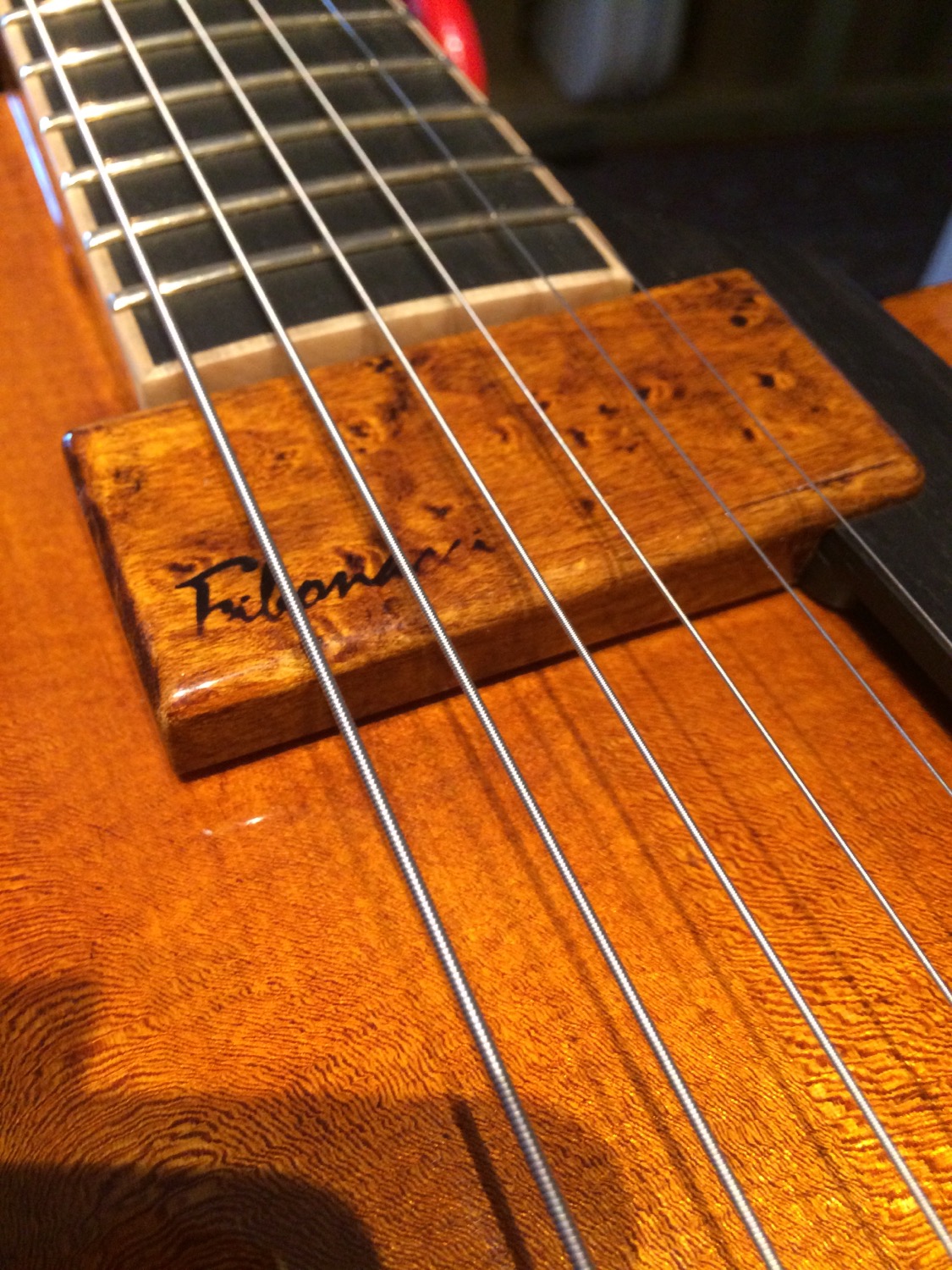
If your idea of collectibility still stops atpre-war America, you may be missing where the category has matured. Some of the best archtops for collectors are being built in the modern era by independent makers and boutique workshops with complete command over design, materials and finishing. These instruments often offer a more transparent expression of craftsmanship because their makers are not scaling output to satisfy a massmarket.
A modern collector-grade archtop should show evidence of intent in every major decision. Carved soundboards and backs, carefully selected tonewoods, high-grade hardware, clean fretwork, accuratesetup and refined finishing all indicate a workshop that builds to a standard rather than a price point. Low-volume production also matters. Scarcity alone does not create value, but rarity combined with excellence usually does.
This is where provenance takes on a differentshape. Instead of a famous swing-era catalogue entry, the appeal may lie indocumented workshop practices, traceable materials, artist use, and a makerwhose reputation rests on consistency rather than nostalgia. For collectors who appreciate artisan work, that can be every bit as compelling.
The trade-off between originality and usability

Collectors often talk as if originality and playability sit on opposite sides of the room. In reality, the strongest instruments balance both. An archtop with untouched frets, a collapsing neck angle and an unstable top may be original, but it is hardly ideal. Likewise, a heavily altered instrument that has lost its essential character can cease to be collectible even if it now plays easily.
The sensible question is whether any intervention was necessary, sympathetic and expertly executed. A professional refret using appropriate wire may support long-term ownership. A neck reset carried out to preserve correct geometry can be a mark of stewardship rather than damage. By contrast, refinishing, crude routing for electronics, altered bracing or replacement parts without provenance usually weaken collector confidence.
For modern builds, the equation is slightly different. Here, collectors should examine whether the instrument was made with longevity in mind from the outset. Finish type, structural design, humidityresilience, case quality and after-sales support all matter. Premium ownership is not just about the guitar leaving the bench in perfect order. It is about whether the instrument remains dependable over time.
Which archtops tend to hold collector interest best

Broadly speaking, there are three routes collectors take. The first is the blue-chip vintage route: historically significant instruments from recognised golden periods. These remain desirable, but entry costs are high and expertise is essential.
The second is the distinguished boutique route: modern handmade archtops from workshops known for exacting standards and limited output. This path often appeals to collectors who want elite craftsmanship, musical usefulness and a clearer ownership history.
The third is the artist-associated route: signature or closely identified models with genuine professional relevance.This works best when the underlying instrument is excellent in its own right. Artist connection can add significance, but it should not be expected to rescue a mediocre build.
For many buyers, the second category is especially compelling today. A finely built contemporary archtop can offer extraordinary workmanship without the uncertainty that often shadows older instruments. Where a maker controls production carefully, uses premium materials and rejects factory shortcuts, collectibility can develop from substance rather than hype. That is a healthier foundation.
How to assess an archtop before buying

Photographs and reputation are only the beginning. If possible, inspect the carve quality, neck joint, binding work, finish consistency and interior cleanliness. Ask direct questions about repairs, cracks, refrets, replaced tuners, pickup modifications and humidity history. Serious sellers should welcome serious questions.
If the guitar is modern, ask about wood sourcing, manufacturing location, finish type, hardware origin and what level of handwork is involved. There is a substantial difference between an instrument assembled from outsourced parts and one built under full workshop control. Collectorspaying for artisan quality should expect clarity.
Play the instrument if you can. An archtop should reveal balance, projection and composure, not simply a decorative silhouette. Even for collectors who buy selectively and sparingly, musical response remains one of the best indicators that the instrument was built properly.
Best archtops for collectors in the years ahead

The most promising archtops for future collectors are unlikely to be those produced in the largest numbers or promoted with the most noise. They will be the instruments made with restraint, with superiormaterials, with audible integrity and with an unmistakable level of hand craftsmanship. They will also come from makers who understand that exclusivity means very little without standards to support it.
That is why discerning buyers increasingly look beyond heritage badges alone and towards workshops capable of building at the highest level today. A boutique archtop made without scaled-manufacturing compromise, and with full attention to materials, setup and finishing, is not merely a present-day luxury. It can be tomorrow's landmark instrument.
The wisest collector is rarely the one chasing whatever is loudest in the market. It is the one recognising quality early,while it is still expressed in wood, workmanship and judgement rather than auction-room mythology.


Comments