

Does Hand Carving Change Guitar Tone in Archtops?
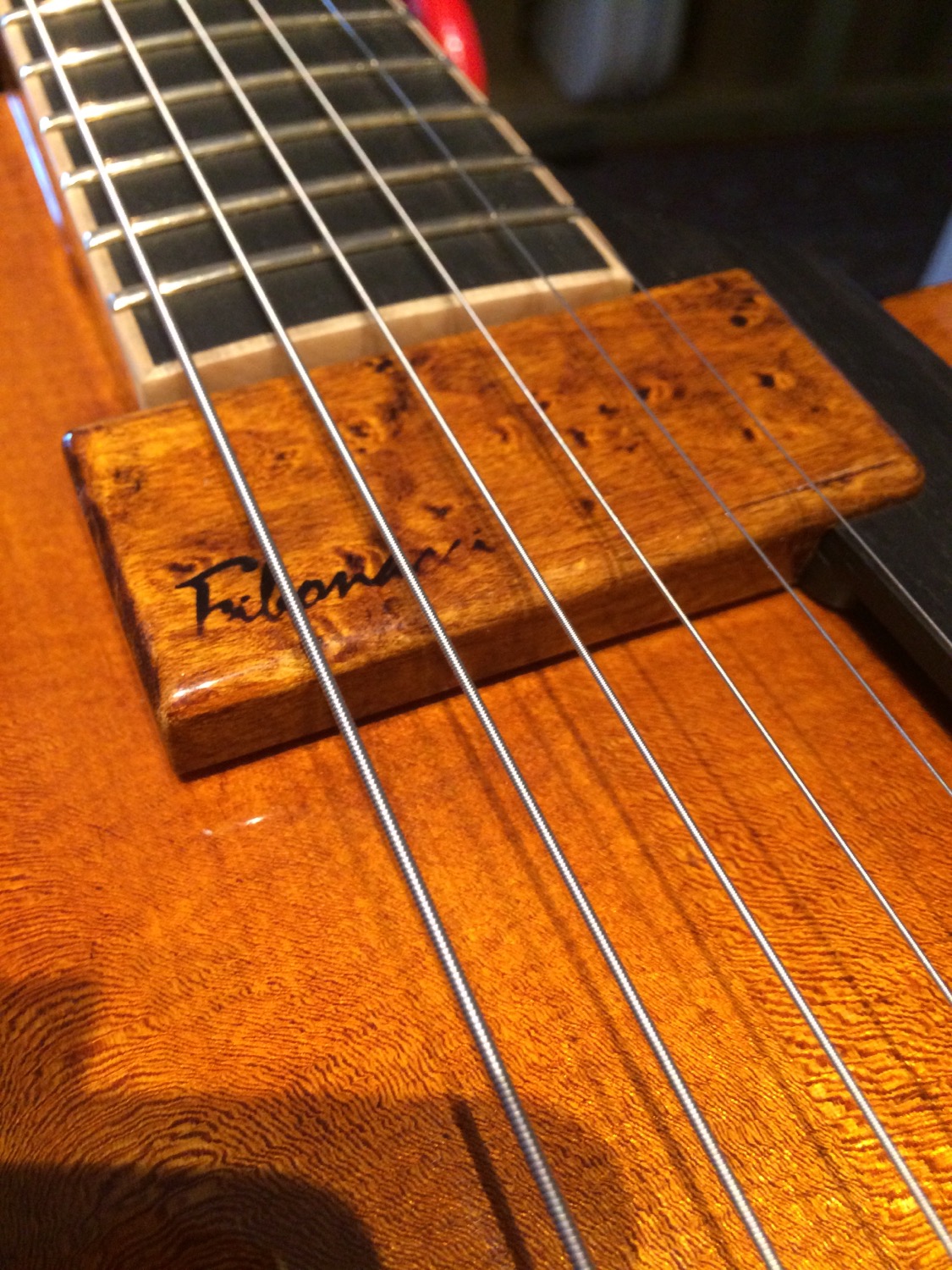

A carved archtop can only be a millimetre different from another and behave like a wholly different musical instrument. So, does hand carving change guitar tone? Yes, but not because the mark of a hand tool is inherently magical. It changes tone because hand carving gives the luthier continual control over the thickness, arch, stiffness and response of each individual piece of wood.
For a serious player, this distinction matters. The finest archtops are not assembled from interchangeable parts. They are tuned structures, where the soundboard, back, bracing, neck joint, hardware and setup must work together. Hand carving is one of the principal ways a maker can shape that relationship with precision.
Does Hand Carving Change Guitar Tone?

A hand-carved top or back allows a luthier to respond to the actual wood on the bench rather than to a predetermined set of measurements alone. Two spruce tops may share the same species, dimensions and visual grade, yet differ in density, grain stiffness, tap response and internal consistency. If both are machined to exactly the same profile, they may not produce the same result.
The purpose of hand carving is to work towards an acoustic outcome. As material is removed, the maker can assess the plate's flex, weight, stiffness and resonance. Subtle adjustments to the arching and graduation can influence how readily the top moves, how it supports the fundamental note and how it develops overtones.
That does not mean every hand-carved guitar will automatically sound better than every machine-made instrument. Excellent instruments can be produced with modern machinery, particularly where its accuracy supports a thoughtful design. The difference is that hand carving preserves the opportunity for informed judgement at every stage. It permits the maker to accommodate the character of the wood rather than forcing every plate into a fixed production formula.
Tone Begins With the Plate, Not the Tool
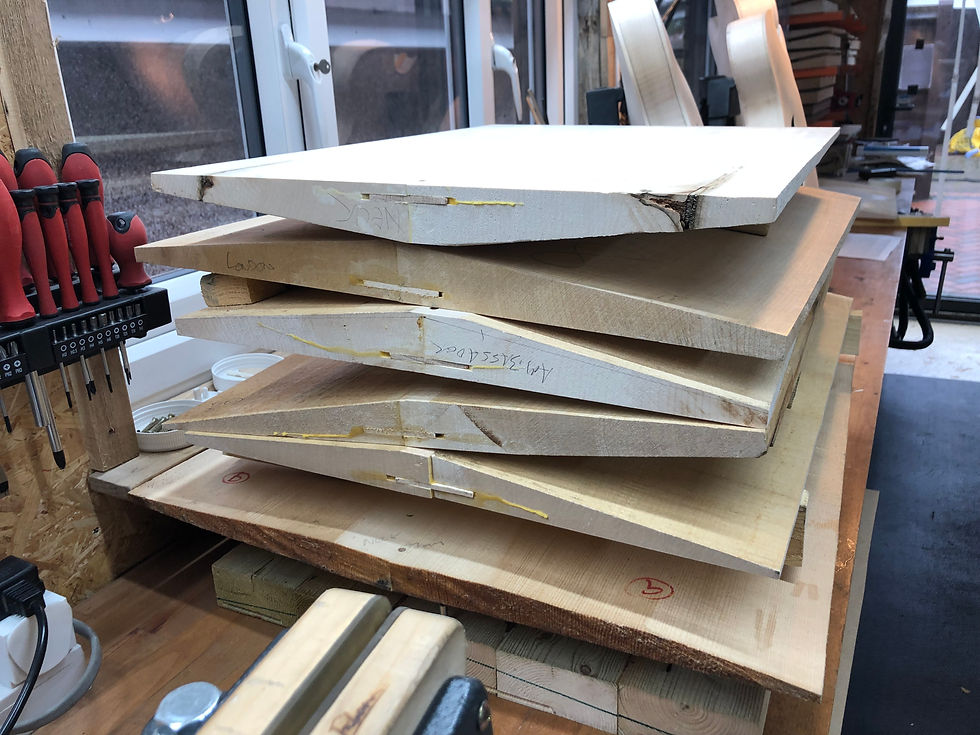
The carving tool itself is not the source of tone. A gouge, finger plane or scraper does not impart a special sonic signature simply by touching the timber. What matters is the plate that remains after carving: its shape, mass distribution and capacity to vibrate in a controlled way.
On an archtop, the soundboard is a stressed, curved acoustic diaphragm. Its arch provides strength, while its graduation determines how different areas contribute to movement. A heavier central area may provide focus and support. Carefully relieved sections around the recurve can allow the plate to breathe more freely. Too much stiffness can make a guitar feel resistant or overly tight; too little can reduce clarity, headroom and structural security.
The back is equally significant, though its role differs. A well-voiced carved back can reflect and interact with the top, influencing projection, warmth, sustain and the sense of depth beneath the note. In a finely made archtop, the top and back should not be treated as isolated components. Their relationship is part of the instrument's acoustic identity.
Why Graduation Has Such a Strong Effect

Graduation is the controlled variation in thickness across a carved plate. It is among the most consequential elements of archtop construction, and it is where an experienced hand can make a meaningful difference.
A plate cannot be judged by thickness alone. Saying that a top is carved to a particular measurement reveals very little without knowing the species, density, arch height, bracing pattern and intended musical purpose. A top that is ideal for articulate amplified jazz playing may not be appropriate for a player seeking greater acoustic volume and immediate attack.
The luthier therefore works with a balance of measurable information and tactile judgement. Calipers establish accuracy. Flexing the plate reveals its resistance. Tapping can indicate how it is responding as material is removed. None of these tests should be romanticised as a shortcut to perfection, but together they help the maker make disciplined decisions before the guitar is closed.
This is also why a premium handmade archtop can retain a distinct voice from instrument to instrument. The design language remains consistent, but the final voicing respects the individual wood. That degree of variation is not a flaw. When managed by a skilled maker, it is part of what gives a hand-built instrument its character.
Arching, Recurve and the Movement of the Top

The arch is not merely an aesthetic feature inherited from violin family instruments. Its height and contour govern strength and influence the way the plate moves. A higher, more pronounced arch generally creates a different stiffness profile from a lower, broader one, even before graduation is considered.
The recurve - the transition between the arched central area and the outer edge - is particularly important. This is a responsive part of the plate, and small changes here can alter the top's sensitivity. A carefully formed recurve can contribute to a quick, expressive response. Taken too far, it may leave the plate insufficiently supported; left too rigid, it can restrict movement.
These decisions are rarely best made by a single universal number. They depend on the wood, the model, the bracing and the desired tonal direction. A maker building for clarity under a floating pickup may voice the structure differently from one pursuing a more open acoustic archtop sound.
Bracing Must Be Considered Alongside Carving

It is misleading to credit the carved plates alone for an archtop's tone. Braces are structural and acoustic partners to the top. Their placement, height, profile and final shaping influence how the soundboard vibrates and where its energy is controlled.
A stiff brace can add support and definition, but excessive stiffness may inhibit the top's liveliness. More refined shaping can encourage responsiveness, although it requires sound judgement to preserve long-term stability. The f-holes also affect the plate's integrity and air movement, while the neck joint and bridge transfer string energy into the body.
This is why hand carving is most valuable within a complete hand-built process. It allows the luthier to consider the plate, braces and assembled instrument as a system rather than as a sequence of separate manufacturing tasks.
What Hand Carving Cannot Change

Hand carving is influential, but it is not a remedy for unsuitable materials or poor design. Wood selection remains fundamental. Grain orientation, seasoning, density and stiffness set the boundaries within which the maker works. A beautifully carved top made from compromised timber will not fulfil its potential.
Nor can carving override the effect of hardware and setup. String gauge, bridge fit, tailpiece design, nut work and fret accuracy all change what the player hears and feels. On an electric archtop, the pickup, its placement, amplifier and player technique may be more immediately audible than a fine difference in acoustic voicing.
Yet the carved body still matters. It determines the acoustic platform beneath the amplified sound: the attack, bloom, sustain, feedback behaviour and physical response felt through the instrument. Players who spend time with finely made archtops often recognise this not as a single dramatic frequency change, but as greater coherence and a more revealing connection between touch and sound.
Consistency Without Mass-Market Compromise

The challenge for any boutique maker is to retain consistency without erasing the advantages of individual voicing. A respected workshop should have clear standards for materials, dimensions, structural integrity and finish, while allowing each plate to receive the attention it requires.
At Fibonacci Guitars, hand-built construction is not presented as a decorative claim. The value lies in the ability to make deliberate choices throughout the build, from carefully selected tonewoods through carved soundboards to final setup. That process serves the player first: a guitar should offer musical authority, dependable performance and an identity worthy of a lifetime's playing.
The Better Question to Ask When Choosing an Archtop

Rather than asking whether hand carving is automatically superior, ask what the maker is listening and feeling for during the process. Are the woods selected with purpose? Is the plate carved and graduated in response to its own properties? Does the bracing complement the intended voice? Has the completed guitar been assessed as an instrument, not merely checked as a finished object?
A hand-carved archtop rewards careful evaluation. Play it quietly, then with conviction. Listen to the note's first instant, its body and its decay. Notice whether the guitar gives more back as your touch becomes more precise. The finest examples make the construction question disappear, leaving only a persuasive, individual voice in the hands of the player.


Choosing between AI tools often comes down to small differences in features and pricing. tested AI tool comparisons lays out those distinctions in a way that is easy to follow.
Finding a single site that covers food, parenting notes, film reviews, and everyday outfit ideas is uncommon, since most blogs stick to one niche. A mixed lifestyle writing collection like this can be handy when you want varied reading without jumping between several bookmarks.
When you are short on time but need to identify which affiliate networks consistently deliver, a curated list based on real user reviews can be a strong starting point. The value lies not just in the ranking itself but in the underlying feedback that explains why certain networks stand out. This is especially relevant for newer affiliates who want to avoid trial-and-error with unproven programs. For a quick yet informed overview, exploring the highest-rated network list provides useful direction.
The debate over hand-carving versus CNC routing in archtop construction is fascinating, and this article does a great job of separating measurable physics from subjective feel. While the structural impact of carving method on tone is often subtle, the real difference lies in consistency and voicing. For luthiers weighing their options on tools and workflow, a comparison of AI assistant tools can offer a useful parallel in how precision and human judgment interact in creative production.