

Archtop Guitar vs Hollowbody: Key Differences
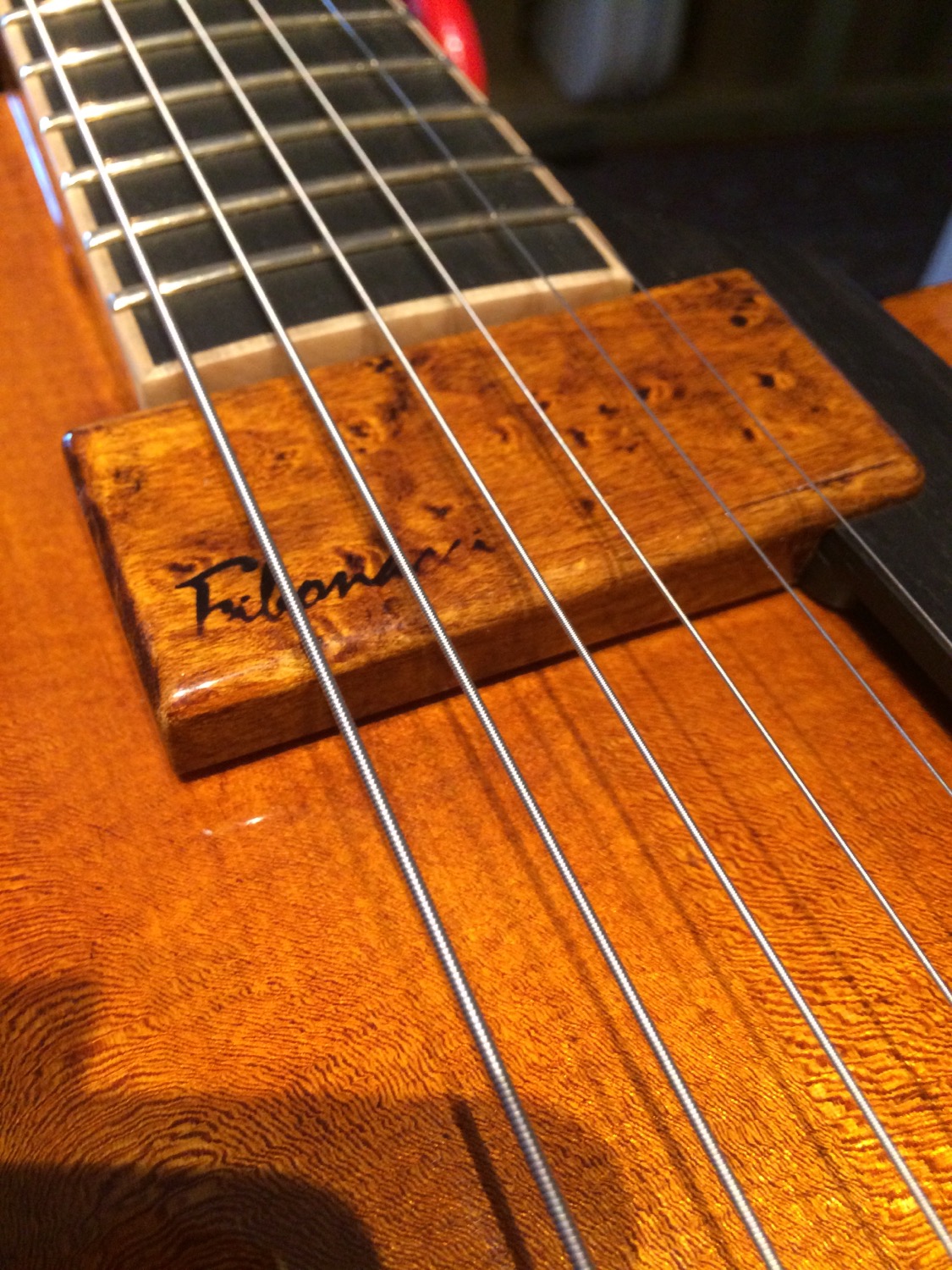

A guitarist plugs into a fine valve amp, strikes a single chord, and immediately hears the question answered by the room itself. The note either blooms with carved authority and focus, or it opens out with a softer, airier spread. That is where the archtop guitar vs hollowbody debate becomes meaningful.
For serious players, these terms are often used too loosely. Many guitars are described as hollowbody simply because they have no centre block. Yet an archtop is not merely a hollow guitar with f-holes. In the traditional sense, it is a more exacting instrument, shaped by carved or pressed arched plates, a floating bridge, a tailpiece and a voice that owes as much to violin family design as it does to the flat-top guitar.
Archtop guitar vs hollowbody: what is the actual difference?

The simplest answer is that all archtops are hollow instruments, but not all hollowbodies are true archtops.
A hollowbody guitar is a broad category. It includes many electric guitars with fully hollow construction, often built for visual elegance. Some have laminated tops and backs, set necks, tune-o-matic style bridges and construction methods closer to mainstream electric guitar manufacture.
A true archtop is a more specific proposition. Traditionally, it features an arched top and back, often carved from solid tonewoods, with a floating bridge and tailpiece rather than a bridge fixed directly into the top. That structure affects everything - attack, sustain, dynamic range, acoustic projection and the way the instrument reacts in hand.
This is why the two categories overlap, but they are not interchangeable. If you are comparing a carved archtop with a general hollowbody electric, you are comparing two instruments that may share a silhouette while serving rather different musical purposes.
Construction shapes the voice

The most important distinction lies in how the instrument is built.
A high-quality carved archtop is designed around the top as a working acoustic soundboard. The carved arch is not decorative. It gives the plate strength and control, allowing the luthier to tune thickness, stiffness and responsiveness with precision. Combined with a floating bridge and tailpiece, the string energy is transferred in a very direct way across the top. The result is often a fast, articulate attack and a strong fundamental note.
By contrast, many hollowbody electrics are built with laminated woods (plywood with a decorative veneer) and hardware mounted in a more conventional electric format. That is not inherently inferior - laminated construction can be highly effective, especially at stage volumes - but it usually leads to a different tonal profile. Acoustically, the sound may be narrower, harsher at the front edge, and less acoustically complex than a finely voiced carved archtop.
There are, of course, hybrids. Some hollowbody guitars borrow archtop styling while using modern electric architecture. Others move closer to jazz boxes in appearance but are voiced for amplified versatility rather than acoustic nuance. Serious buyers should look past the category name and examine the actual build method.
Carved plates versus laminated bodies

This is one of the most useful dividing lines.
Carved tops and backs tend to offer greater nuance, stronger note separation and a more individual voice. They respond with greater sensitivity to touch, which is one reason discerning jazz players and collectors hold them in such high regard. No two carved instruments are ever entirely alike.
Laminated bodies, on the other hand, can offer admirable stability, controlled feedback resistance and dependable consistency. For some players, especially those working at higher volume or across broader genres, that can be precisely the right choice.
The trade-off is straightforward. Carved archtops usually reward a sophisticated touch and a careful ear. Laminated hollowbodies may be more forgiving in louder, more practical stage settings.
Tone and feel in the hand

When players discuss archtop guitar vs hollowbody, they often focus on warmth. That is understandable, but warmth alone is too blunt a term to be useful.
A refined carved archtop typically produces a clear, woody voice with excellent definition between notes. Chords retain structure. Single-note lines have body without becoming vague. There is often less of the compressed, lingering bloom associated with some centre-block or laminate-based electrics, and more immediacy in the front of the note.
A general hollowbody electric often leans towards a narrower, more diffused response. That can be deeply musical. For blues, early rock and roll, soul, indie and mellow jazz styles, that dynamic can be exactly what makes the instrument attractive.
Feel matters as much as sound. A carved archtop often feels alive, with the top and back contributing a tangible acoustic feedback to the player. It invites nuance. It also reveals nuance, including inconsistencies in touch. Some musicians find that inspiring; others prefer the less demanding behaviour of a more conventional hollowbody electric.
Which styles favour each instrument?

The carved archtop remains closely associated with jazz for good reason. It offers clarity, balance and projection, whether played acoustically in a room or amplified with restraint. Complex chords, voice-led harmony and clean melodic phrasing all benefit from that focused response.
That said, a superb archtop is not limited to straight-ahead jazz In the right hands it can excel in swing, fingerstyle, film scoring sessions and any setting where tonal sophistication is valued over sheer output.
Hollowbody electrics generally cover a wider mainstream field. They appear across jazz, blues, rockabilly, classic pop and alternative music because they can sound characterful while remaining familiar to players coming from solid body electrics.
So the real question is not which is better, but what the music asks of the instrument. If you want maximum articulation and an acoustically informed voice, the carved archtop holds a clear advantage. If you need broad versatility with a more electric-guitar sensibility, a hollowbody may suit you better.
Archtop guitar vs hollowbody for amplified playing

Amplification changes the conversation.
A traditional archtop, particularly a lightly built carved instrument, can be extraordinarily expressive at moderate volume. The harmonic content is rich, the attack remains intact and the guitar keeps its identity through a quality amplifier. However, that same responsiveness can make it more sensitive to feedback in louder environments.
Many hollowbody electrics are designed with amplified practicality in mind. Laminated construction, heavier build choices and certain pickup configurations can help control resonance on stage. Again, this is not simply a matter of quality. It is a matter of purpose.
For recording, the equation often shifts back towards the carved archtop. A finely made carved instrument can sit in a mix with remarkable poise. It does not need to be forced into place because its note shape is already disciplined and musical. That kind of authority is difficult to fake.
What buyers should examine before choosing

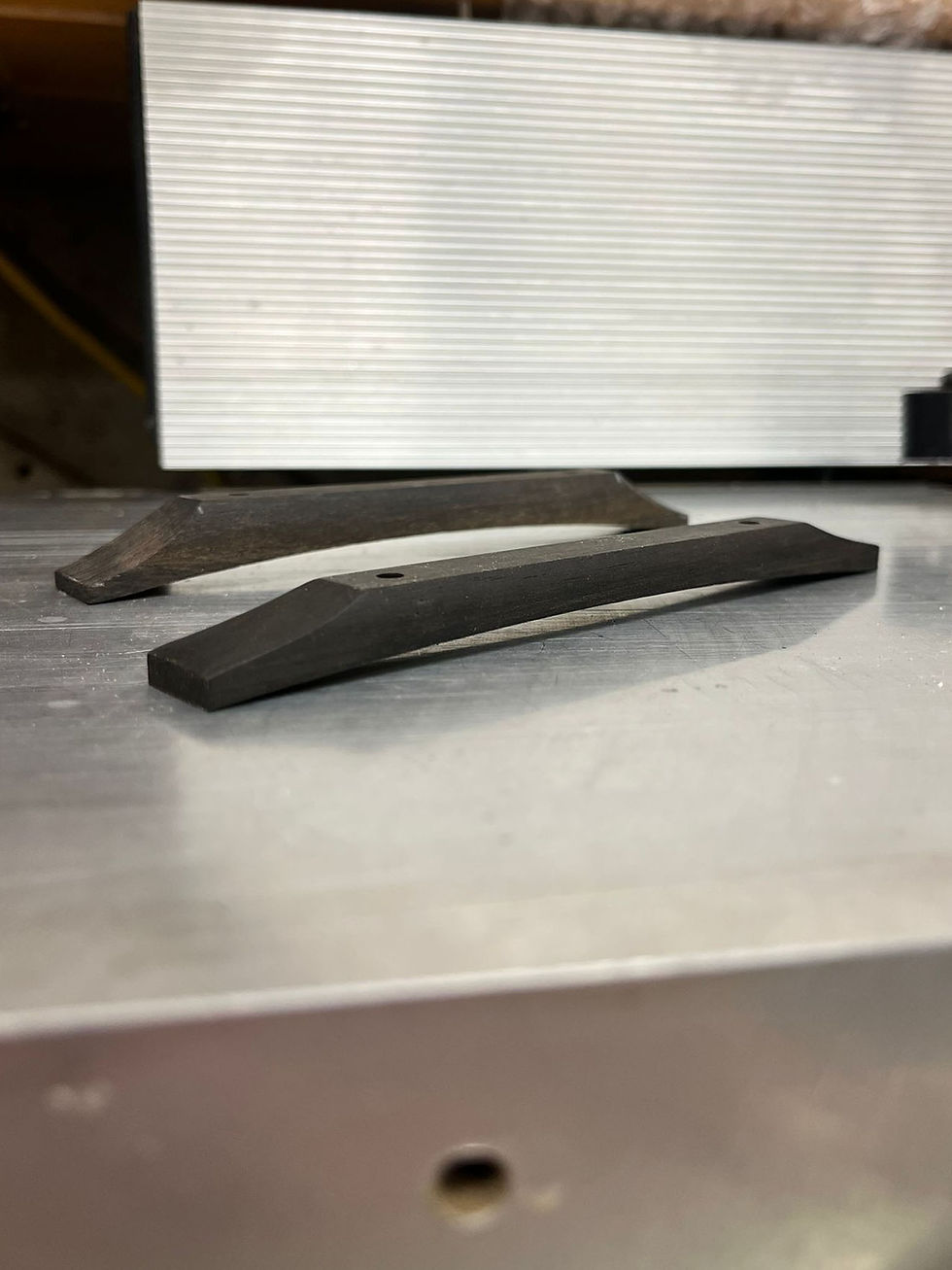
The wise buyer should resist marketing shorthand and assess the instrument on its merits.
Start with the top and back construction. Are they carved or laminated? Then look at the bridge and tailpiece arrangement, body depth, scale length and neck profile. These details affect not only tone, but comfort, projection and long-term suitability.
Listen to the acoustic voice before plugging in. A serious archtop should already tell you something substantial in the room. If the unplugged response is stiff, cloudy or uneven, amplification rarely transforms it into greatness.
Also consider your own technique. Players with a lighter, more controlled touch often extract extraordinary nuance from an archtop. Those who approach the instrument more like a rock or pop electric may initially feel more at home on a hollowbody built around amplified use.
At the highest level, craftsmanship becomes decisive. Material quality, hand-voicing, fretwork, neck set, finish thickness and setup all contribute to whether the guitar feels merely expensive or genuinely exceptional. This is one reason dedicated archtop makers such as Fibonacci Guitars place such emphasis on carved soundboards, carefully selected timber and fully hands-on production. On an instrument of this type, there is nowhere for compromise to hide.
So which should you choose?

Choose a carved archtop if you want tonal depth, precise articulation and the kind of acoustic intelligence that rewards mature playing. It is the connoisseur’s option, but not in a decorative sense. A proper carved archtop earns its status through performance.
Choose a hollowbody if you want a more electric context, broader stylistic flexibility or greater practicality at higher volume. A good one can be expressive, stylish and musically generous.
The difficulty is that many players try one or the other only briefly and decide too quickly. These instruments reveal themselves over time. The better the build, the more they respond to touch, setup and the player’s developing ear.
If your priority is simply owning a hollow guitar, either route may satisfy. If your priority is owning an instrument built with uncompromising attention to tonal architecture, response and craft, then the distinction becomes sharper. At that point, archtop guitar vs hollowbody is no longer a casual comparison. It is a question of whether you want a category, or a true instrument of character.
The best choice is the one that makes you play with more intent every time you pick it up.


Comments