

The Future of Boutique Archtops Is Handmade
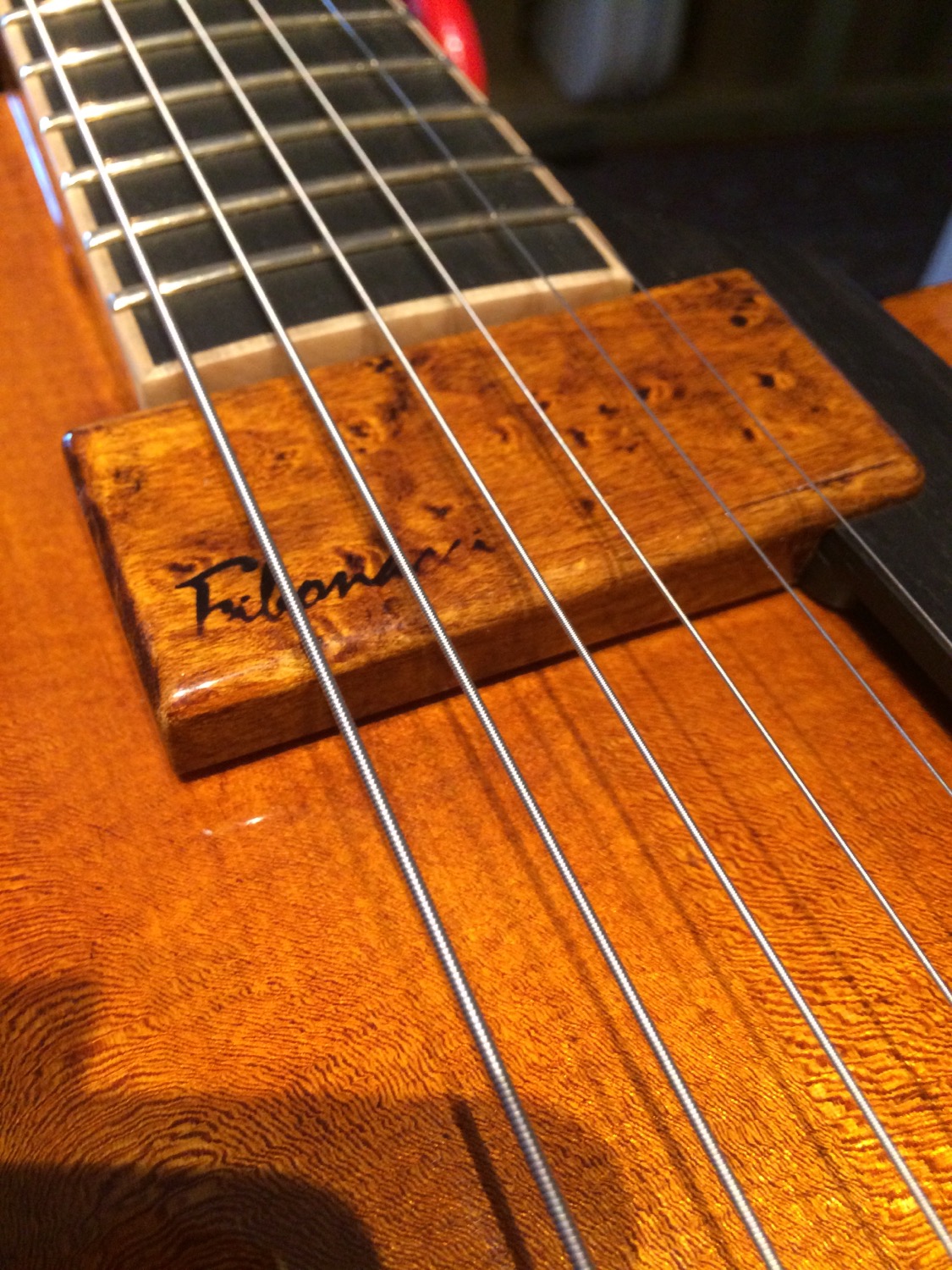

Carved archtops may occupy a tiny part of the guitar market, but it is an incredibly important part. The future of boutique carved archtops will be determined by makers who preserve the ability to create these things of both aesthetic and acoustic beauty while responding to the demands of modern players.
For serious musicians and collectors, this is encouraging. The archtop is not becoming a relic, nor does it need to imitate solid-body design in order to remain relevant. Its future lies in doing more precisely what a properly made carved instrument has always done: translating a player’s skill into a complex, controlled and unmistakably personal voice.
The Future of Boutique Archtops Depends on Judgement

Boutique carved archtops occupy a position that scaled production cannot easily reproduce. Their value is not simply scarcity, exotic timber or elaborate ornament. It is the accumulated judgement found in each decision: how a top is graduated, where its strength is retained, how the neck is set, how the hardware interacts with the instrument’s acoustic character, and when a finish has been applied lightly enough to allow the timber to sing.
A factory can manufacture consistency in dimensions. A skilled luthier can pursue consistency in response. Those are not the same achievement. Timber is variable by nature, particularly when working with responsive tonewood materials. Two soundboards of the same species may require different treatment to reach the same musical destination. The future belongs to workshops prepared to listen to each set of materials rather than forcing every instrument through an identical process.
That approach carries a cost. Low-volume production demands more time, more experienced hands and a refusal to accept convenient shortcuts. It also gives the player something increasingly rare: a guitar with a coherent identity, built as an instrument rather than assembled as a catalogue of fashionable options.
Carved Construction Will Remain the Centre of the Conversation

The distinction between a carved archtop and a laminated alternative will continue to matter, though it should not be reduced to a simple hierarchy. Well made laminates have legitimate strengths. They can offer impressive resistance to feedback at high stage volumes, dependable stability and a familiar amplified character. For some working situations, those qualities are exactly right.
Yet a carved soundboard remains the centre of the boutique archtop tradition because it allows the maker to shape response with unusual sensitivity. Thickness, arching, graduation and bracing can be considered as one system. The aim is not indiscriminate acoustic volume. It is useful, balanced movement: sufficient air and harmonic detail for the guitar to feel alive, with the focus needed for articulate amplified performance.
This matters more, not less, as players work across jazz, contemporary instrumental music, soul, pop, blues and studio sessions. The modern archtop must often move from a clean, intimate part to a denser arrangement without losing its place. A carefully voiced carved guitar has the potential to offer that range, provided the design is controlled rather than romanticised.
The best innovations will be discreet

The next generation of boutique instruments is unlikely to be defined by novelty for its own sake. A radically shaped body or a crowded electronic control layout may attract attention, but it does not automatically improve a guitar’s musical result. The more meaningful advances are often almost invisible.
They may include refined bracing profiles, more accurate neck geometry, lighter and more stable hardware, intelligently selected pickup positions, and finishes that protect without deadening the surface beneath. Developments in measurement and modelling can support these decisions, but they should remain tools in service of the ear and the hand.
The same principle applies to electronics. Players increasingly expect a guitar to perform reliably in a professionally amplified environment, yet many do not want an archtop’s acoustic nature replaced by a generic electric sound. Thoughtful pickup selection and installation will therefore become more important than ever. The right system should preserve clarity, reveal dynamics and allow the voice of the instrument to remain recognisable.
Materials Will Demand Greater Discipline

Responsible material selection is becoming a serious issue for every high-end instrument maker. The answer is not to treat traditional tonewoods as interchangeable, nor to make untested claims for every newly available alternative. It is to develop deeper knowledge of the materials that can be sourced responsibly, consistently and with full respect for their musical properties.
For British makers, carefully chosen UK and European woods offer considerable potential. They bring visual character, provenance and, when selected correctly, the stiffness, weight and resonance required for exceptional instruments. The best choice will always depend on the intended voice of the guitar. A player seeking a dry, immediate response may prefer a different combination from one who values a broader, more orchestral bloom.
The finish deserves equal scrutiny. Nitrocellulose lacquer and hand applied oil finishes each have their place, with different tactile and visual results. Neither should be used as a marketing shorthand. The relevant question is whether the finish has been applied with restraint and competence, allowing the wood, joinery and final set-up to do their work. On an archtop, excess in any layer of construction can have audible consequences.
The Recording Studio Is a Proper Test Bench

The recording studio is likely to have greater influence on boutique archtop development than the showroom floor. A guitar can feel compelling in isolation and still prove difficult to place in a recorded arrangement. Conversely, an instrument that appears modest at first can reveal exceptional focus once a microphone or amplifier exposes its fundamental note, overtone structure and dynamic range.
Real-world testing enables a maker to assess more than volume. It reveals how a guitar compresses under a stronger attack, whether bass notes remain defined, how upper-register lines sit against cymbals and vocals, and whether the amplified signal carries musical information rather than merely output. These are the details professional players hear immediately, even if they are not always easily expressed in a specification.
This is why workshop led development remains so valuable. It connects design decisions to actual musical use, rather than to assumptions about what players might want. At Fibonacci Guitars, the presence of a dedicated recording environment reflects the seriousness of that process: instruments should be proven where their tonal behaviour can be heard without disguise.
Ownership Will Matter as Much as Acquisition

A boutique archtop is a long-term instrument. Its future therefore includes the quality of the relationship around it: accurate documentation, responsible manufacturing support, appropriate warranty provision and access to knowledgeable advice as the guitar settles into a player’s working life.
This is particularly significant for collectors, but it is not only a collector’s concern. A performing musician needs confidence that an instrument has been built with correct materials, dependable components and the structural care to withstand regular use. A buyer commissioning or selecting a high-value guitar also deserves clear information, not vague claims of exclusivity.
There is a useful distinction here between luxury and lasting value. Luxury can be superficial if it resides only in figured timber, polished metal or a limited production number. Lasting value comes from workmanship that rewards close inspection and years of playing. The two can coexist, but only when visual refinement follows structural and tonal purpose.
Why the Boutique Carved Archtop Will Endure

The archtop has survived changing fashions because it offers a response that cannot be convincingly simulated by a template. Its sound is shaped by wood, air, geometry, touch and amplification in constant conversation. That complexity is precisely what attracts discerning players.
The future will favour makers with the patience to build fewer instruments well, the technical confidence to refine established forms, and the independence to reject compromises that erode performance. It will also favour buyers who judge a guitar not by how loudly it announces itself, but by how much it continues to reveal.
Choose an archtop with the same care you would bring to choosing a musical collaborator. Spend time with its response, ask informed questions about its construction, and listen for the qualities that remain after the first impression has passed. The right instrument should still have something worthwhile to say years from now.


There is a specific need for an email address that lasts just long enough to complete a multi-stage verification but not much longer. This service fills that niche perfectly with its fifteen-minute lifespan. It is particularly useful for forums or platforms that require you to confirm your email and then log in a second time. You avoid any long-term commitment while still having enough time to finish the setup. A fifteen-minute temporary inbox is a practical tool for such scenarios.