

What Makes an Archtop Premium? A Builder’s View

In woodworking, there is nothing else quite like building a guitar. A display cabinet only needs to look good andfunction as a display cabinet. Same with a table, a chair, a chest of drawers. But building a guitar is special. The intimate relationship between a player and a guitar is pretty demanding. And rightly so. The joints need to be perfect otherwise it may not function properly, the neck needs to be perfect otherwise tuning and playability may be an issue, the finishing has to be applied correctly otherwise it may not look correct, and the sound it produces needs to be great.
On a premium carved archtop, you can multiply these factors by a hundred. A premium archtop feels perfectly balanced and the neck sits naturally in the hand, with every joint, curve and detail being clearly evident. The cumulative result of design, materials, judgement, workmanship and final musical performance shows that someone took exceptional care in producing the instrument.
For the serious player or collector, the distinction matters because an archtop is not simply a hollow guitar. Its voice is shaped by a finely balanced acoustic system. Small decisions in the workshop can alter its projection, attack, warmth, sustain and resistance to feedback. A genuinely premium instrument reflects control of those decisions from timber selection to final set-up.
Premium carved archtop construction begins with the wood

The soundboard is central to an archtop's character. On a carved instrument, the top is graduated by hand: its thickness is varied across the plate to achieve an intended relationship between strength, responsiveness and tonal colour. That work cannot be reduced to copying a measurement from one guitar to the next. Each piece of spruce has its own density, stiffness and grain structure, and it must be assessed accordingly.
A top that is left too heavy may feel restrained and reluctant to respond. One taken too far can lose focus, become structurally vulnerable or prove difficult to control at stage volume. The goal is not maximum volume in isolation. It is a poised, musical response that gives the player a usable dynamic range.
The back and sides matter just asmuch. Figured maple is admired for its visual depth, but its value in a serious archtop lies in the way it can support clarity, note separation and projection. Other timbers bring different qualities. The important point is selection: timber must be chosen for its acoustic and structural suitability, not merely for how dramatic it appears under lacquer.
Premium builders also consider seasoning, cut and consistency. Properly prepared, hand-selected UK and European tonewoods give the luthier a dependable foundation. They are not aguarantee of a fine guitar by themselves, but inferior or poorly matched materials impose limits before the first tool touches the wood.
The carve, bracing and geometry must work as one

A carved archtop earns its place through function. Its arches distributes string tension and gives the plateboth strength and a distinctive acoustic behaviour. The arching profile, recurve around the edge, f-hole design and thickness graduation all interact. Alter one carelessly and the result may be visually impressive but musically incomplete.
Bracing is equally decisive. It supports the top, influences the way it moves and helps establish the guitar's tonal direction. A premium archtop does not need to follow one universal bracing pattern. Parallel bracing, for example, may favour a direct, punchy response associated with traditional jazz voices, while X-bracing can offer a broader, more open character. Neither is automatically superior. The right choice depends on the model, the desired sound and how the instrument is intended to be played.
This is where low-volume manufacture has a meaningful advantage. The maker can listen to the individual components, make informed adjustments and retain responsibility for the outcome. Scaled production relies on repeatable averages. Hand-building permits a more exact response to the particular timber on the bench.
Geometry deserves the same attention. Neck angle, bridge height, fingerboard plane and top arch must be resolved together. A guitar may look beautifully made yet feel compromised if the bridge has insufficient adjustment, the action cannot be set cleanly, or the strings do not drive the top efficiently. These are not glamorous details, but they are often where premium work separates itself from expensive-looking work.
A premium archtop feels precise, not precious

The finest archtops invite the player in. They should not demand excessive effort to produce their best sound, nor should refinement make them too delicate for professional use. The neck profile, fretwork, nut slots and bridge all shape the first physical impression of the instrument.
Precise fretwork is particularly revealing. Level, correctly crowned and polished frets allow a lower, cleaner action without choking notes or introducing unwanted buzz. A well-cut nut gives open strings the same assurance as fretted notes, supports stable tuning and avoids the stiffness that can make a fine guitar feel strangely unresponsive.
The bridge must also be treated as an acoustic component, not merely a height-adjustable support. Its material, fit and mass affect transmission into the top. On a carved archtop, a properly fitted wooden bridge makes full contact with the carved surface, helping the guitar speak with greater immediacy and balance.
Playability is personal, of course. A player seeking unamplified chord melody may choose a different set-up from a player who works through an amplifier in a loud ensemble. Premium does not mean every archtop should be set identically. It means the instrument has been designed and adjusted with a clear purpose, while retaining the refinement to meet the demands of its owner.
Hardware and electronics should serve the instrument

Premium specification is not a contest to fit the most expensive parts. It is about selecting components that are reliable, appropriate and sympathetic to the guitar's voice. Tuners should operate smoothly and hold pitch. Tailpieces should support the chosen string tension without adding unnecessary weight or instability. Binding, pickguards and metalwork should be cleanly fitted, durable and proportionate to the design.
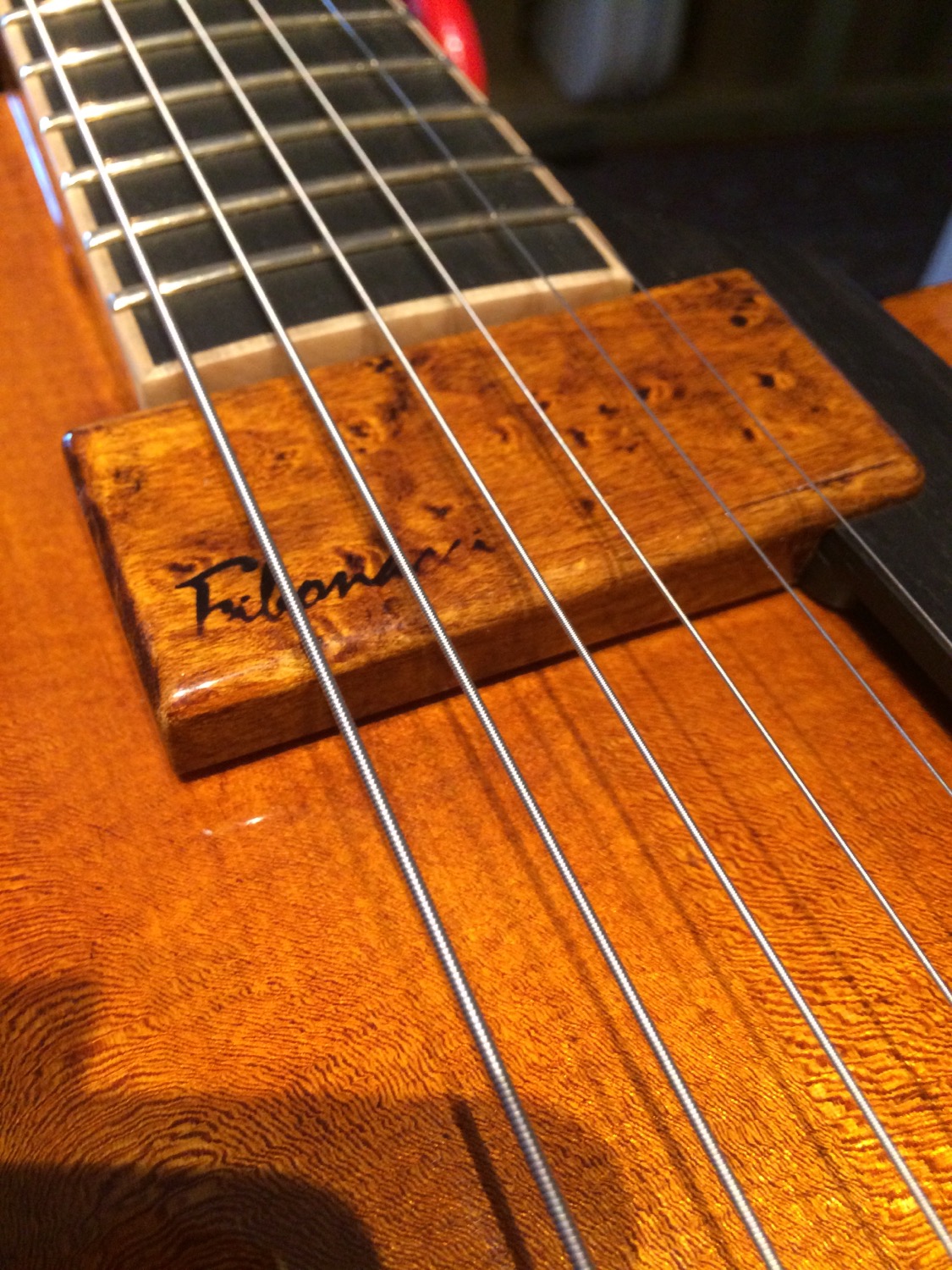
For electric archtops, pickup choice and placement deserve careful thought. A floating pickup can preserve more of the top's acoustic movement, while a body-mounted unit may provide a different balance of output, focus and control. Magnet type, winding and mounting method all affect the result. A premium build considers the amplified sound as part of the instrument's identity rather than treating electronics as an afterthought.
The same principle applies to internal wiring. Neat, serviceable work and quality components contribute to long-term confidence, particularly on an instrument expected to travel, record and perform for years.
Finish is protection and presentation

A fine finish should enhance the guitar, not bury it. Nitrocellulose lacquer and carefully applied oil finishes remain valued because they can allow the wood's texture and figure to remain present, while offering appropriate protection. The precise finish system is less important than its application: a finish that is too heavy can inhibit the responsiveness that the carving was designed to achieve.
Finishing is also where standardsbecome visible. Clean binding lines, even colour, restrained pore filling and a convincing polish are signs of patient preparation. Yet a flawless surface alone does not make an archtop premium. The more meaningful test is whether the finish complements the instrument's acoustic and visual character without becoming the point of the guitar.
The final test is musical, not cosmetic

A premium archtop should deliver a coherent voice. Individual notes ought to carry weight and clarity, chords should retain separation, and the guitar should respond to changes in pick attack and touch. There should be enough complexity to keep the player engaged, but not so much uncontrolled resonance that the instrument becomes vague ordifficult to amplify.
This is why real-world evaluationmatters. A guitar tested only at the workbench may reveal different behaviour in a recording environment or at performance volume. Feedback resistance, balance across the fingerboard and consistency under microphones and amplifiers are practical concerns, not secondary luxuries. At Fibonacci Guitars, development informed by studio use helps connect traditional archtop craft to the conditions in which modern players actually work.
Collectors may rightly value rarity, figure and provenance, but the strongest instruments offer more than display value. They possess a sense of resolution: the materials, construction and set-up appear to be working towards the same musical end. That is difficult to quantify on a specification sheet, yet immediately apparent when a player spends time with the guitar.
A premium archtop is therefore not defined by one feature, one price point or one decorative flourish. It is an instrument built without casual compromises, then judged by the standard that matters most: whether it continues to reward a discerning musician every time it isplayed.


Comments