

Hand Graduated Guitar Tops Explained
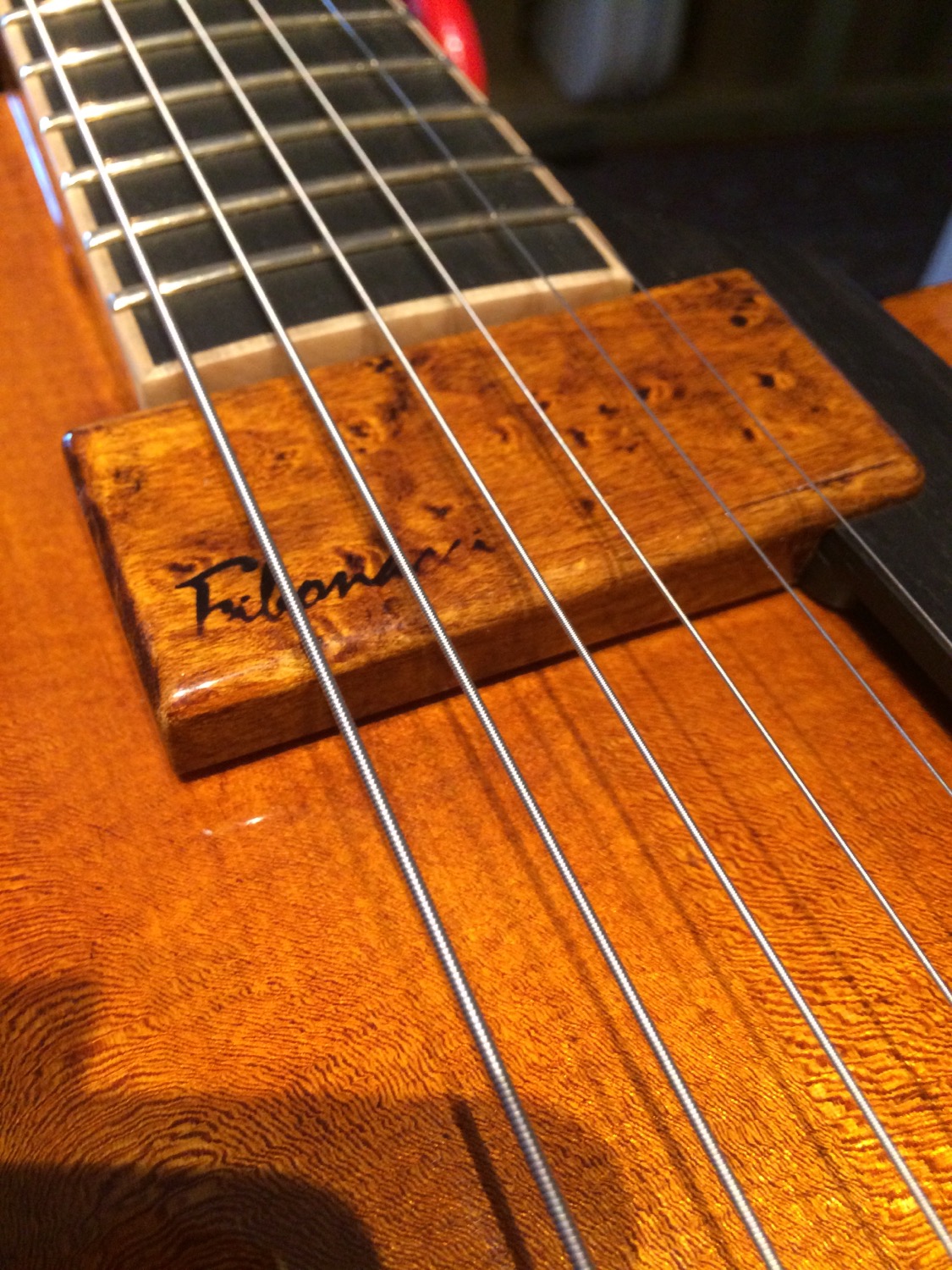

If you have ever played two carved archtops built from the same species, to the same outline, with the same hardware, yet found one markedly more alive, the difference often begins in the top. Hand graduated guitar tops explained properly means looking past brochure language and into the most decisive part of a fine archtops voice - how the soundboard is carved, thinned and tuned by an experienced luthier.
For serious players and collectors, this is not a decorative detail. The graduation of a top affects attack, headroom, bloom, balance across the strings, and the way an instrument behaves in real musical settings. On a premium archtop, the top is not simply made to a nominal thickness. It is worked until the individual piece of timber reaches the right relationship between stiffness, mass and flexibility.
What hand graduated guitar tops actually mean

In practical terms, graduation is the controlled variation of thickness across a carved soundboard. A hand graduated top is not left uniformly thick from edge to centre. Instead, the luthier removes material selectively, shaping different areas to encourage the right structural strength and acoustic response.
That selective thinning matters because wood is not uniform. Two spruce tops cut from the same tree can differ in density, grain spacing, stiffness and tap response. A factory process built around fixed dimensions may produce consistency on paper, but it cannot fully respond to those natural differences. Hand graduation exists precisely because fine timber demands judgement.
On an archtop guitar, the luthier will typically leave more substance where support and focus are needed, while refining other areas to free the plate and improve responsiveness. The exact approach varies according to arching profile, f-hole placement, scale length, intended string tension and the voice the maker is pursuing. There is no single magic measurement that suits every top.
Why a carved top cannot be treated like a standard part

A premium carved top is an acoustic component. Its job is to withstand string load while converting that energy into musical output. If it is too heavy, the guitar can feel resistant and slow to sing. If it is too thin, the result may be overactive, structurally compromised, or simply lacking the focus and authority expected from a serious archtop.
This is where hand work separates itself from standardised production. A luthier is not merely removing wood until a number is reached. He is reading the plate as it develops - feeling resistance under the tool, assessing how the top flexes, listening to the timber, and making informed decisions based on experience.
That experience is difficult to replace with automation alone. CNC machinery can establish a highly accurate starting point, and in the right workshop it can be a useful tool. But the final voicing of a top still requires the trained hands and ears of someone who understands what the material is doing in that moment.
Hand graduated guitar tops explained through tone

The easiest way to understand hand graduation is through what a player hears and feels. A well-graduated top tends to produce a more complex and controlled response. Notes start cleanly, carry substance through the midrange, and retain separation when chords become denser.
On an archtop, that often translates into a dry, articulate attack with enough warmth behind it to avoid sounding hard or sterile. Single note lines can feel immediate without becoming brittle. Chords can retain body without turning cloudy. The best examples offer projection and detail together, which is far harder to achieve than one without the other.
There are trade offs, of course. A top graduated for maximum sensitivity may respond beautifully at lower dynamic levels but give up a little headroom under aggressive playing. A slightly firmer graduation may produce greater authority and stability, particularly for players with a heavier right hand, but it can demand more from the player before the instrument fully opens up. Better is not always thinner. Better is appropriate.
The role of stiffness, weight and arching

Three factors sit at the centre of the discussion - stiffness, weight and arching. They are interdependent, and no serious explanation of graduated tops is complete without them.
Stiffness determines how strongly the top resists the pull of the strings and how efficiently it returns energy. Weight influences how quickly the plate responds and how much inertia it carries. Arching contributes enormous structural strength and strongly affects how the top moves. A well-arched plate can sometimes be graduated more finely than a flatter one, but that does not remove the need for restraint.
This is why copied measurements are unreliable when removed from context. A centre thickness that works beautifully on one model, with one arch profile and one piece of spruce, may be entirely wrong on another. Serious luthiery is not about repeating figures in isolation. It is about understanding relationships.
What the luthier is listening and feeling for

During hand graduation, an experienced maker is making continuous assessments. Some of those are tactile - how the plate flexes across and along the grain, where resistance concentrates, whether one side behaves differently from the other. Some are auditory - the tap character of the plate, the way the note develops, whether the response feels choked, loose or balanced.
None of this is mystical. It is skilled material judgement. The craft lies in recognising when the top still holds excess mass, when it has reached the right working range, and when removing more would begin to damage the balance between tone and long-term integrity.
That final point is crucial. Fine archtop building is not a contest to create the lightest top possible. A premium instrument must also remain stable, dependable and musically useful over time. The best luthiers understand where to stop.
Why wood choice changes the graduation approach

Spruce is the classic soundboard material for good reason, but even within spruce there are significant differences. European spruce, Alpine spruce and other high-grade selections can vary in elasticity, density and character. Grain width alone tells only part of the story.
A stiffer, lighter billet may allow a more responsive graduation without losing clarity. A denser top may need a different approach to prevent the instrument becoming overly tight or heavy in voice. Bear claw figure, visual symmetry and cosmetic appeal may please the eye, but they do not replace acoustic suitability.
This is one reason hand-selected tonewoods matter in boutique manufacture. If the maker begins with timber chosen for acoustic merit, the graduation process has a far stronger foundation. The top can then be voiced according to what the wood offers, rather than forced into a one-size-fits-all specification.
How this differs from pressed or heavily standardised tops

Not every archtop is built around the same philosophy. Pressed tops and highly standardised carved tops can produce serviceable instruments, and in some contexts they offer durability and cost advantages. But they do not usually deliver the same degree of individual refinement as a hand-graduated carved plate.
Pressed construction relies more on formed shape than carved acoustic tuning. Standardised carving, meanwhile, often prioritises repeatability above the subtle optimisation of each top. That does not make those methods invalid. It simply means they serve different aims.
For the player seeking nuance, depth and the sensation that the instrument is reacting to touch rather than merely producing sound, hand graduation remains one of the defining marks of a truly high end archtop.
What players should expect from a hand-graduated archtop

A well-executed hand-graduated top should not announce itself with hype. Its qualities emerge in use. The guitar feels more connected under the right hand. There is often a stronger sense of dynamic range, with the instrument responding proportionally as the player leans in or backs away.
You may notice that the trebles stay sweet at volume, the wound strings retain definition, and the midrange carries a vocal quality rather than a flat, generic push. In recording situations, this can mean less fighting for placement and less of the unpleasant frequency build-up that inferior tops sometimes produce.
Brands such as Fibonacci Guitars build their reputation on these underlying decisions, because discerning players hear the difference where it matters most - in performance, not in marketing copy.
The real value of hand graduation

Hand graduation is valuable because it respects the individuality of wood and the demands of serious playing. It accepts that no exceptional archtop should be built as though every top were identical, and it places the final acoustic result above manufacturing convenience.
For a buyer considering a premium instrument, that matters. You are not paying for a romantic phrase. You are investing in the judgement, restraint and experience required to bring a carved top into its proper working state.
The finest archtops rarely impress through one exaggerated trait. They persuade through balance, authority and a sense that every part of the instrument is working in sympathy. When a top has been graduated by hand with genuine skill, that coherence is often the first thing you notice - and the last thing you would want to lose.


Comments