

How Floating Bridges Shape Archtop Response
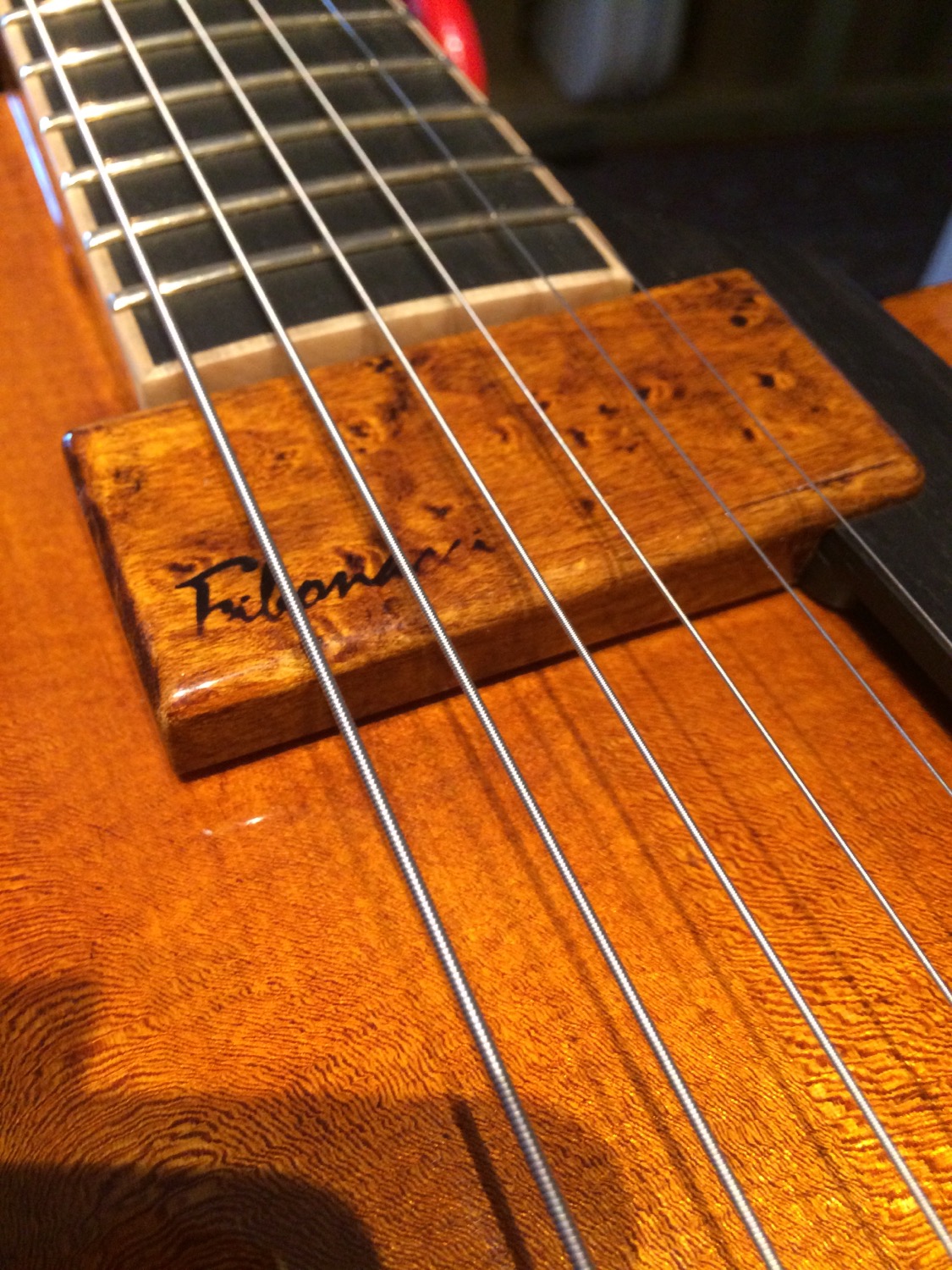

A carved archtop top is not driven by strings in the same manner as a flat-top acoustic guitar. Its floating bridge stands between string and soundboard as a precisely voiced mechanical interface. Understanding how floating bridges shape archtop response explains why two apparently similar instruments can differ so markedly in projection, attack, warmth and dynamic range.
On a well-made archtop, the bridge is not merely a height-adjustment component. Its mass, material, footprint, fit and position all influence the way string energy reaches the carved soundboard. Small changes can be audible. That sensitivity is part of the appeal of the archtop, but it also demands care in both construction and set-up.
How floating bridges shape archtop response

A floating bridge transfers the vibration of the strings to the soundboard without being glued permanently in place. String tension holds it against the top, while the tailpiece anchors the strings beyond the bridge. This arrangement leaves the soundboard freer than a fixed-bridge design, allowing the carved plate to respond with remarkable complexity.
The bridge divides the speaking length of the string between bridge and tailpiece. When a note is played, energy travels through the bridge feet and into the soundboard, causing the top to flex. The top, back and enclosed air cavity then interact, producing the archtop’s characteristic blend of immediacy, woodiness and controlled sustain.
The transfer is never absolute. Every bridge filters some frequencies and favours others. A heavier bridge may restrain certain high-frequency vibrations while supporting a denser, more settled fundamental. A lighter bridge can allow a faster, more open response, but may also expose a brighter edge or reduce the sense of compression under a hard attack. Neither result is inherently superior. The appropriate balance depends on the guitar’s architecture, the player’s touch and the musical role required of the instrument.
Mass: the bridge as a tonal filter

Bridge mass is one of the most readily heard variables. It is tempting to assume that the lightest possible bridge will produce the most responsive archtop. In practice, an excessively light bridge can make a guitar sound thin, overly sharp or less composed at higher volumes. A carved top needs sufficient control as well as freedom.
A more substantial bridge can temper a very lively soundboard, bringing weight to the lower midrange and a firmer centre to single-note lines. It may also help a guitar retain poise when driven hard with a plectrum. Too much mass, however, can suppress sparkle and reduce the quick, breathing quality that players expect from a finely carved instrument.
This is why experienced luthiery is not a matter of selecting a standard bridge blank and fitting it without thought. The ideal mass is related to the stiffness and graduation of the top, the dimensions of the body, the tailpiece, string gauge and the desired tonal direction. A bridge that is ideal on one archtop may be a poor match for another.
Material and grain direction

Traditional bridge bases are commonly made from ebony because it offers an excellent relationship between strength, weight and acoustic transmission. Dense, properly seasoned maple can provide clarity and definition without the brittle quality that some harder materials may introduce. The grain orientation, cut and density of the individual piece matter as much as its species.
The saddle introduces another layer of choice. Ebony is also valued for its crisp articulation, focused attack and enduring wear resistance. Rosewood, bone and carefully selected synthetic materials each alter the leading edge of the note to a degree. A saddle should be considered in relation to the bridge base rather than in isolation. An ebony saddle on a particularly dense base may be exactly right for a player seeking precision, yet too immediate for a guitar already inclined towards brightness.
For a premium archtop, materials should be selected for acoustic suitability, not merely visual uniformity. A handsome bridge that does not complement the instrument’s voice is a compromise in the wrong place.
The importance of a perfect bridge-foot fit
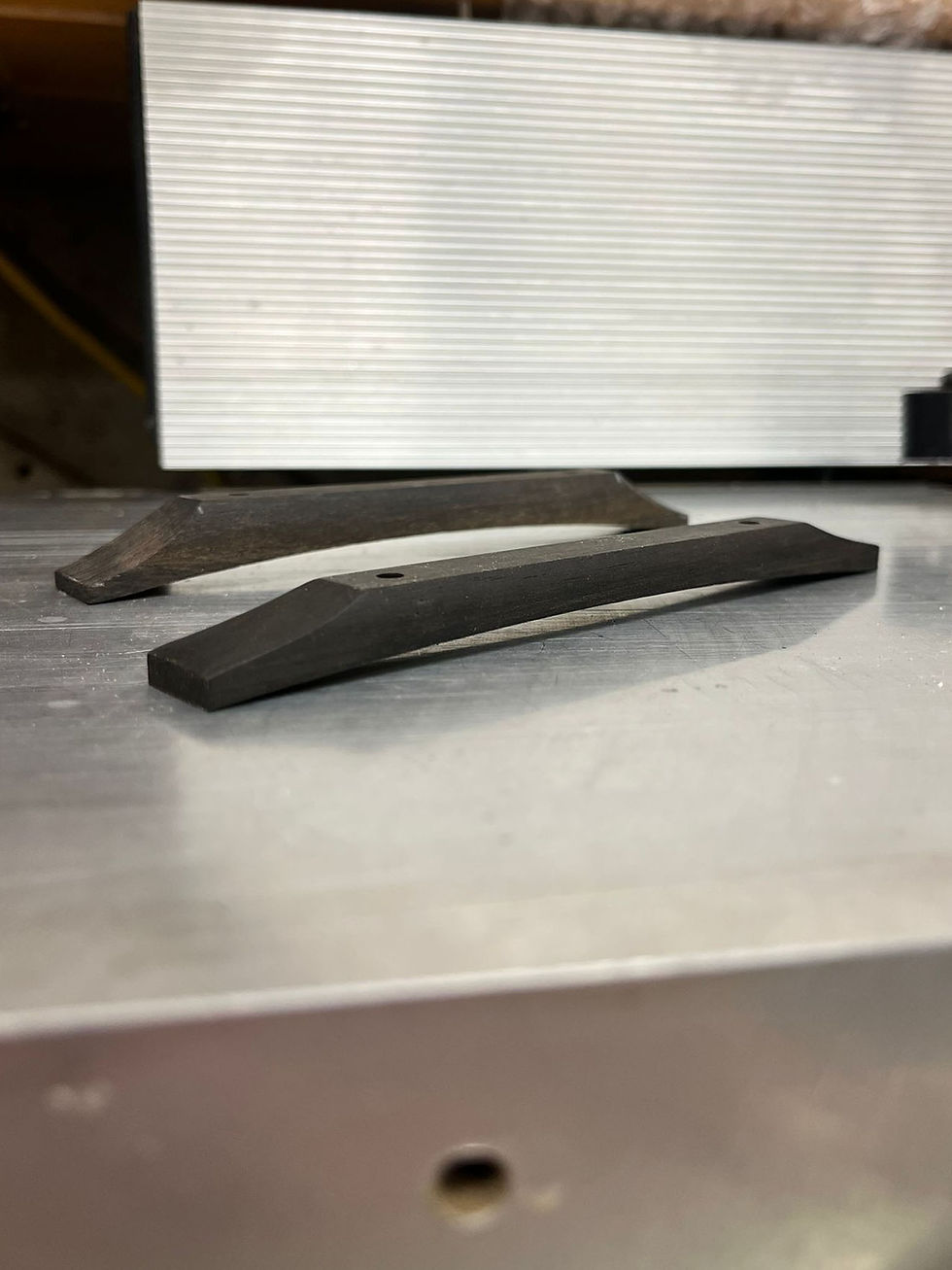
The underside of a floating bridge must match the arch of the soundboard with exceptional accuracy. This is not cosmetic detail. The two feet are the points through which the string load and vibration enter the top. If either foot rocks, leaves a gap or bears unevenly, energy transfer becomes inconsistent.
A poorly fitted base can result in reduced volume, weaker note definition and an unpredictable response across the strings. It can also mark the finish or concentrate pressure in a way that is unkind to the top over time. Even a superbly carved soundboard cannot perform at its best if the bridge is making incomplete contact with it.
A correctly fitted bridge base spreads pressure evenly and sits securely in its intended position. The work is delicate because the soundboard is curved in more than one direction. The base must be shaped to the actual guitar, not to a generic template. At Fibonacci Guitars, this attention to the individual instrument reflects the difference between a component that merely functions and one that serves the voice of a hand-built archtop.
Contact area and freedom of movement

A larger bridge-foot footprint can distribute load more broadly and offer a stable, substantial tonal platform. Yet too much contact area can inhibit some of the top’s finer movement. A smaller footprint may promote speed and openness, but can become less forgiving if the guitar is heavily strung or played with force.
Again, the answer depends on the instrument. A deep-bodied jazz archtop intended for rich chord work may benefit from a different bridge profile than a compact, highly responsive instrument designed for articulate amplified soloing. The best bridge design supports the intended voice rather than imposing a fashionable one.
Break angle, down force and attack

The angle of the strings as they pass from bridge to tailpiece is often called the break angle. It determines the down force exerted on the bridge. A greater break angle generally increases the firmness of the bridge’s contact with the top and can produce a stronger initial attack, more immediate response and a tighter feel.
There is a limit. Excessive down force may choke the soundboard, reducing its ability to move freely and making the sound feel constrained. It can also place unnecessary stress on the top and bridge assembly. Too shallow an angle, by contrast, may reduce definition and create a less positive feel under the picking hand.
Tailpiece design, neck angle, bridge height and string gauge all contribute to this relationship. A low bridge with a high tailpiece may have a relatively gentle break angle; a taller bridge or lower tailpiece can increase it. Set-up changes should therefore be approached as a connected system, not as isolated adjustments.
The afterlength behind the bridge also contributes subtle overtones and can affect the feel of the strings. Its influence is less dominant than bridge fit and mass, but on a responsive archtop it can be heard and felt, particularly by players who use a broad dynamic range.
Bridge position and intonation

Because the bridge is floating, its placement must be established accurately during set-up. It must sit at the correct scale length while allowing for compensation, so that notes play in tune across the fingerboard. Intonation is the practical priority, but position also affects how the bridge engages different areas of the soundboard.
Moving the bridge only a small distance can alter the balance between bass and treble strings, the prominence of the midrange and the overall sense of projection. A luthier does not position it by tone alone, since correct intonation is non-negotiable. Within the correct compensated position, however, careful alignment and an accurately fitted base ensure that the bridge performs consistently.
Players should avoid shifting a floating bridge casually, especially during string changes. Marking the bridge location discreetly with low-tack tape before removing all strings can help preserve the set-up. If the bridge has moved or the guitar will not intonate properly, a qualified technician should assess it rather than relying on guesswork.
Adjustability without compromise

Most floating bridges incorporate thumbwheels that allow action height to be adjusted. This is useful, but every adjustment changes the relationship between strings, bridge, tailpiece and top. Raising the bridge increases action and may slightly alter break angle; lowering it does the reverse. Changes should be made in small, equal increments to maintain a level saddle and stable string balance.
Seasonal humidity can also affect an archtop. As the carved timber responds to environmental change, the top may rise or fall slightly, altering action and bridge geometry. A fine instrument benefits from sensible humidity management and periodic professional inspection. The aim is not to chase every minute change, but to preserve the set-up in the range where the guitar speaks freely and plays cleanly.
Listening for the right response

When assessing a floating bridge, listen beyond overall loudness. Play slow chord voicings and notice whether each note remains distinct. Then use a firm plectrum attack and hear whether the guitar compresses musically or becomes hard and unfocused. Test sustained single notes high on the fingerboard, where an overly heavy or poorly fitted bridge may reveal itself through a lack of bloom.
The finest result is usually one of proportion: a bridge that gives the top enough freedom to express its character, while providing the focus, stability and authority a serious player expects. A floating bridge is a small assembly with an outsized role. When its materials, fit and geometry are resolved with care, the archtop responds not simply with more sound, but with more musical information at the player’s fingertips.


Comments