

How to Choose Archtop Scale Length

A quarter of an inch can change far more than most players expect. On an archtop, scale length does not simply alter string tension on paper - it affects attack, phrasing, right hand response, note bloom, and how the instrument behaves under the fingers across an entire set.
If you are asking how to choose archtop scale length, the right answer is not the longest or the shortest option. It is the scale length that suits your touch, your tuning and gauge preferences, and the role you want the guitar to fulfil. A serious archtop should feel coherent as a whole, and scale length is one of the dimensions that quietly determines whether that happens.
How to choose archtop scale length for the way you play

Most archtops sit somewhere between roughly 625mm (24.6”) and 635mm (25”) inches, with some variations either side. That difference may appear modest, but on a finely built instrument it is immediately noticeable.
A longer scale generally brings greater string tension at pitch. The response is firmer, the attack can feel more immediate, and the notes often carry a little more snap and separation. Many players hear this as added clarity, particularly on the wound strings, and appreciate the stronger sense of headroom when playing with conviction.
A shorter scale tends to feel more yielding. Bends can be easier, complex chords may require less left-hand effort, and the overall character can be slightly rounder or more relaxed. Some players prefer this because it encourages a more vocal phrasing style and reduces fatigue over long sessions.
Neither is inherently superior. The question is whether you want the guitar to resist the hand slightly and return energy with authority, or whether you want it to feel supple and accommodating from the first position upwards.
The role of tension in real playing terms

Tension is often discussed too abstractly. In practice, it affects how confidently you can dig in, how cleanly you can articulate fast lines, and how much pressure you need to fret dense chord shapes without disturbing intonation.
If your technique is assertive and you favour a strong right hand, a longer scale may give you the control you want. The string has a little more firmness under the pick, so the note can stay defined even when played hard. If your touch is lighter, more nuanced, or heavily based around chord melody and subtle vibrato, a shorter scale may feel more responsive and less effortful.
String gauge matters here as well. A player using heavy flatwounds on a long scale may achieve a magnificent, focused jazz voice, but the feel can be demanding. The same gauge on a shorter scale can retain body while easing the physical load. That trade-off is often more important than the published number alone.
Tone is part of it, but feel comes first

Players often begin with tonal assumptions. Long scale equals brighter. Short scale equals warmer. There is some truth in that, but it is only part of the picture.
On a well made archtop, the top carve, graduations, bridge, tailpiece, pickup choice, setup, break angle and body dimensions all influence the final result. Scale length contributes to the instrument’s voice, but it does so as part of a system. Treating it as the single tonal decider is too simplistic for a high-quality guitar.
What scale length does affect very reliably is the way you draw tone from the instrument. If a particular scale lets you relax, phrase more naturally and control dynamics with less effort, you will usually sound better on it regardless of theory. The finest specification on paper is of little value if the guitar fights your hands.
Longer scale for projection and definition

A longer scale often appeals to players who want strong note separation, taut bass response and a more immediate attack. It can work especially well for plectrum led jazz, articulate single-note lines, and players who favour a cleaner, more piano-like low end.
There is also an intonational confidence to a good longer scale archtop. Chords can feel solid and orderly, particularly when the instrument has been designed from the outset around that geometry rather than simply stretched.
Shorter scale for ease and elasticity

A shorter scale often suits players who value comfort, warmth and a less rigid feel. It can flatter lyrical phrasing, chord melody work and styles where the left hand needs to move with less resistance.
For many players, this is not about avoiding effort. It is about choosing a guitar that returns nuance more readily. There is a difference between an instrument that feels substantial and one that feels stiff. A shorter scale can preserve sophistication while avoiding the latter.
Match scale length to body size and design intent

An archtop should feel proportionate. Scale length is not chosen in isolation by serious builders because neck geometry, bridge position and top response are all part of the same design conversation.
On larger body archtops, a longer scale can make structural and musical sense. It can help balance the air volume and provide a tautness that keeps the response clear. On a more compact instrument, a shorter scale may create a better sense of unity, making the guitar feel quick, intimate and comfortable without pushing the bridge and string tension into a less sympathetic relationship with the top.
This is why experienced players should be cautious about broad rules. A 635mm scale on one archtop may feel majestic and perfectly judged. On another, it may feel unbalanced and overbuilt for the body. Likewise, a shorter scale can feel beautifully elegant on the right instrument and underpowered on the wrong one. Design coherence matters.
How to choose archtop scale length with your strings and tuning in mind

Scale length only makes sense when considered alongside your preferred setup. If you habitually use heavier strings, tune down, or favour a very low action, the decision shifts.
Heavier gauges on a shorter scale can produce a richly voiced, substantial jazz feel without becoming excessively rigid. Medium or lighter gauges on a longer scale may preserve clarity while keeping the playing feel manageable. If you tune down a semitone, for example, a longer scale can recover some useful firmness. If you stay at concert pitch with heavy flats and a forceful attack, shorter scale may offer a more civilised balance.
Players who change gauges frequently should pay attention to this. The ideal scale length is often the one that gives you your preferred response with your preferred strings, not the one that seems most impressive in a specification chart.
Hand size matters less than technique

Many players assume shorter scale is automatically for smaller hands. That is not quite right. Fret spacing changes, yes, but the difference is not usually the decisive factor people imagine.
What matters more is technique and tolerance for resistance. Some players with smaller hands are entirely comfortable on longer scales because their posture and fretting mechanics are efficient. Others with large hands prefer shorter scales because they want the instrument to yield more readily.
If stretches in the lower positions are a recurring issue, a shorter scale may help. But if your concern is fatigue, stiffness or control under the pick, think beyond hand size. Those are often better indicators.
When indecision is a sign to trust the middle ground

If you are torn between options, there is nothing unsophisticated about choosing a moderate scale length. Many outstanding archtops occupy a middle ground because it delivers breadth without extremity. You gain enough string tension for clarity and enough compliance for comfort.
For players who need one instrument to cover solo work, ensemble playing and studio use, that balance can be exactly right. Boutique builders tend to understand this well because they are designing for musical use, not spec-sheet theatre.
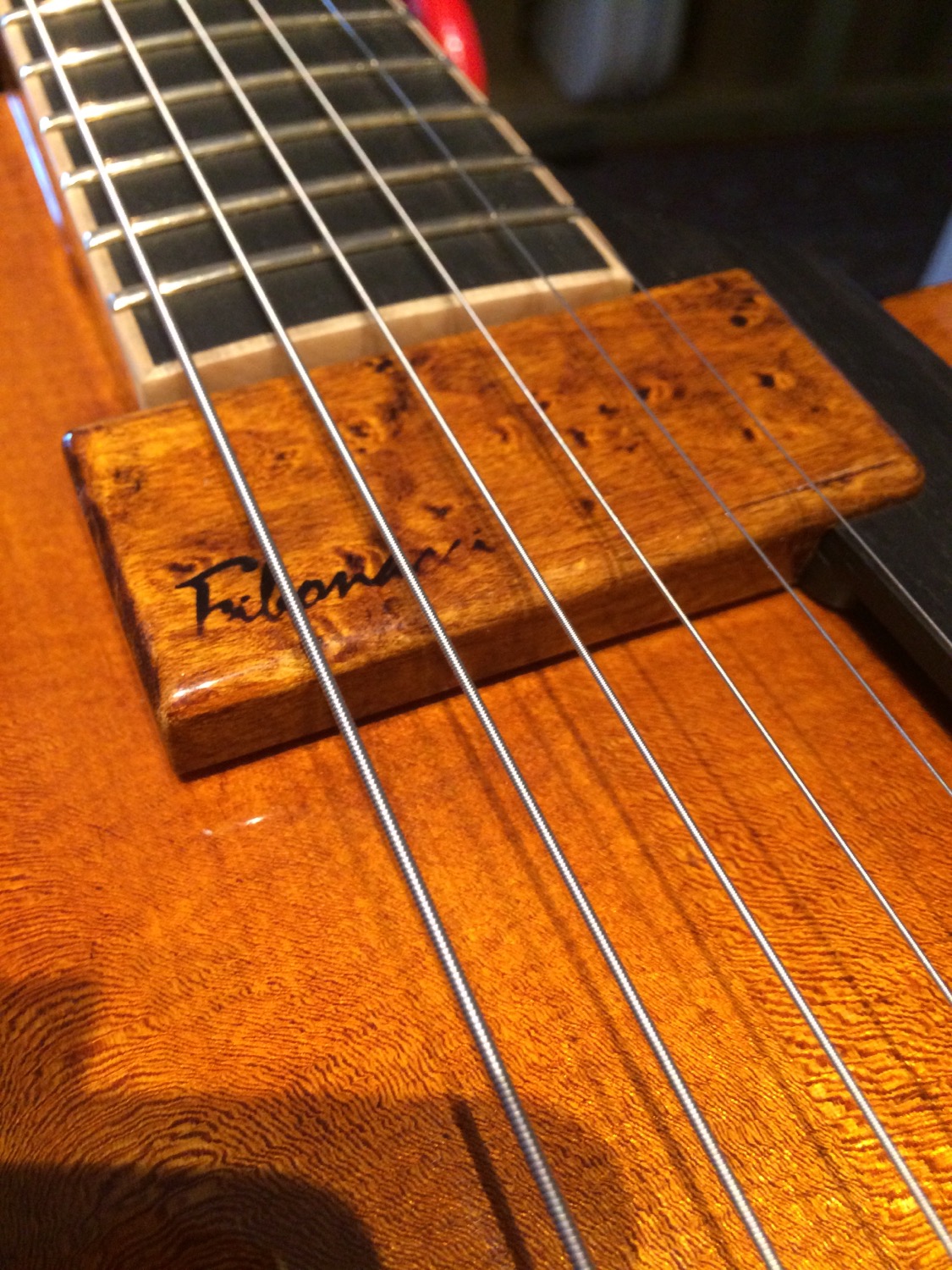
A carefully made archtop from a workshop such as Fibonacci Guitars is shaped by this principle. They offer a variety of scale lengths to accommodate the body design, neck joint position and purpose of the guitar. The finest instruments are not collections of generic headline features. They are overall resolved designs.
The best test is brutally simple

When you play an archtop at the correct scale length for you, the guitar stops calling attention to itself. The right hand lands where it should, chords sit under the fingers without negotiation, and the string tension feels like an ally rather than a hurdle. You begin to phrase instinctively instead of compensating.
That is the real standard. Choose the scale length that supports your musical intent, your preferred strings and your physical touch, and ignore the temptation to treat one measurement as universally superior. The right archtop should not ask you to adapt more than necessary - it should reward the player you already are, while giving you room to go further.


Comments