

How Tone Bars Influence Sustain in Archtops
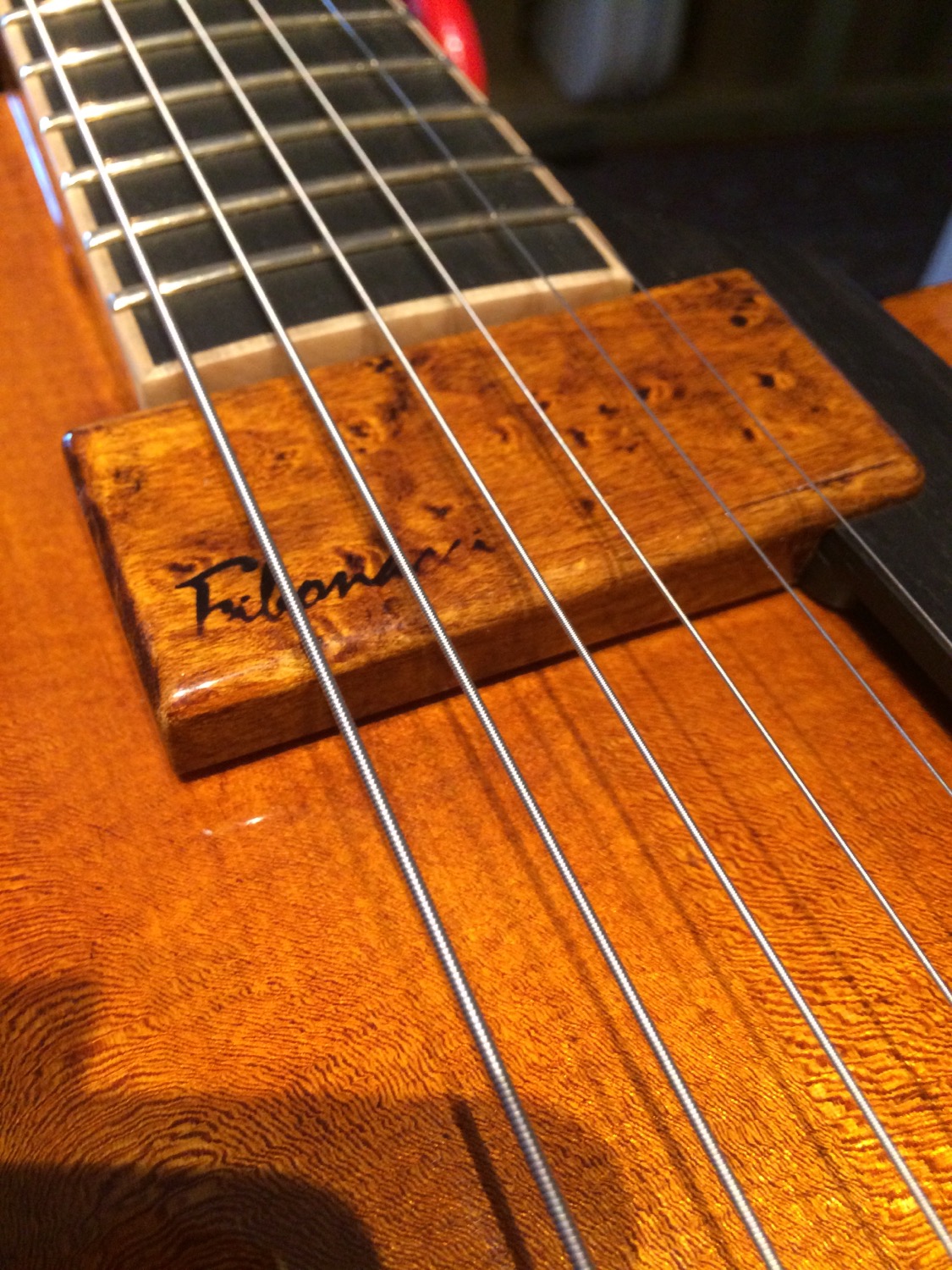

Beneath the soundboard, the tone bars determine how readily the top can move, how it resists string energy and how that energy is released over time. Understanding how tone bars influence sustain is therefore central to understanding why two outwardly similar archtops can feel and sound markedly different.
For a serious player, sustain is not simply a stopwatch measurement. A fine instrument must hold a note with an even, musical decay, preserve its core as the note fades and respond predictably across the fingerboard. The right bracing contributes to that result, but it cannot be judged in isolation. It is one part of a carefully balanced acoustic system.
What tone bars do beneath an archtop soundboard

Tone bars are the principal longitudinal braces fitted to the inside of many carved archtop soundboards. Usually positioned beneath and either side of the bridge area, they reinforce the carved plate while directing its movement. Their job is structural, certainly, but their musical purpose is more subtle: they control the relationship between strength, flexibility and damping.
When a string is plucked, energy passes through the bridge into the soundboard, then into the body and neck before returning to the string. Some energy becomes sound. Some is retained briefly within the structure. Some is lost as heat through internal friction and through components that absorb or disperse vibration. Sustain depends on how efficiently this whole system manages that exchange.
A soundboard with no meaningful support would move too freely, lose definition and risk distortion or structural failure. One made excessively rigid may remain stable but can resist the bridge’s input, producing a response that is tight, restrained or lacking in colour. Tone bars give the maker a precise means of working between those extremes.
How tone bars influence sustain and note decay

The most useful way to think about tone bars is not as a simple sustain control. Taller or heavier bars do not automatically create longer-lasting notes, nor do lighter bars inevitably make an archtop more responsive. Their effect depends on how they interact with the soundboard’s arch, graduation, timber stiffness, bridge position and the rest of the instrument.
A carefully profiled bar can help the top accept energy without collapsing into unfocused movement. This often supports a clear fundamental note and a controlled decay, especially in the middle register where an archtop’s character is most exposed. If the plate moves in a coherent pattern rather than in competing, inefficient modes, the player may perceive greater sustain because the note remains present and intelligible as it falls away.
Conversely, a bracing system that is too compliant for a particular top may produce an immediate, expansive bloom but allow energy to dissipate quickly. The initial attack can be alluring, yet the note may soften unevenly or lose its centre. A very stiff system can have the opposite tendency: firm attack, strong separation and excellent resistance to feedback, but less of the air and complexity that make a carved acoustic instrument compelling.
Neither outcome is inherently wrong. A guitarist seeking articulate amplified rhythm work may value focus, headroom and controlled decay. A soloist or recording player may prefer a more yielding top with a broader harmonic field. The finest result is not a generic maximum of sustain. It is a response that suits the intended voice of the guitar.
Placement changes the way the plate works

Tone-bar placement affects the areas of the soundboard that are encouraged to flex and those that are held more firmly. Bars set closer together tend to concentrate support beneath the bridge. A wider relationship can allow different zones of the plate to participate. Small adjustments matter because the bridge is the point at which string energy enters the top.
The bars also influence cross-grain stiffness, which is particularly significant in a spruce soundboard. Spruce is naturally strong along its grain and comparatively more flexible across it. The bracing arrangement supplements this directional behaviour, helping the maker establish an appropriate balance between longitudinal strength and lateral movement.
On a hand-built instrument, placement is not merely taken from a drawing and repeated without question. The specific plate must be read. Its density, grain character, stiffness and carved arch all inform what it will require. This is where low-volume work has a real advantage: the maker can respond to the material rather than forcing every soundboard into a fixed production formula.
Height, profile and mass are all part of the decision

A tone bar’s dimensions alter its stiffness dramatically. Height is especially influential, while width, profile and the way the ends are feathered into the top also shape the result. A bar with a carefully graduated profile can preserve support where the bridge demands it while allowing more sympathetic movement towards the upper and lower bouts.
Mass must be considered alongside stiffness. Adding material may strengthen a bar, but it also adds weight to a component that must vibrate with the soundboard. Too much unnecessary mass can inhibit subtle response. Too little may leave the top under-controlled. There is no universally correct measurement because a light, stiff piece of spruce and a denser, more compliant one will not behave identically, even when cut to the same dimensions.
The joint itself matters as well. Cleanly fitted bars, accurately clamped and properly glued, transmit vibration more predictably than poorly mated components. At this level of work, precision is not cosmetic. A minute gap, an overbuilt glue line or an imprecise transition can alter how a plate behaves.
Sustain is shaped by more than the bracing

It is tempting to attribute every perceived change in sustain to tone bars, particularly when discussing carved archtops. In practice, the bars are inseparable from the wider build. The soundboard’s thickness graduation and arching establish the basic platform. The back plate, rim construction and neck joint determine how the body stores and reflects energy. Bridge material and fit, tailpiece design, fretwork, setup and string choice each affect what reaches the player’s ear.
Electronics add another layer. A floating pickup, its mounting method and its distance from the vibrating top can affect acoustic freedom, while an amplified signal may make a guitar seem to sustain longer than it does unamplified. At performance volume, feedback resistance becomes part of the equation too. A top that is exceptionally open in a quiet room may need more discipline when faced with a loud amplifier.
This is why meaningful assessment requires more than striking one open note. Play legato lines high on the neck, chord voicings across several registers and notes at varying dynamics. Listen for consistency rather than spectacle. Does the note retain pitch clarity? Does the guitar support the left hand without becoming cloudy? Does the decay feel composed, or does it disappear abruptly after the initial attack?
Why carved archtops reward individual voicing

Unlike a flat, heavily standardised soundboard, a carved top is inherently variable. Carving changes thickness across the plate. The arch introduces structural strength and a distinctive distribution of vibration. Timber from different trees, and even different areas of the same board, carries its own physical character. A maker who treats every plate identically may achieve consistency of process, but not necessarily consistency of musical result.
Individual voicing is the disciplined process of bringing these variables into balance. It does not mean chasing a mystical recipe or removing material indiscriminately in search of volume. It means making informed decisions about the top, the tone bars and the finished instrument’s intended role.
At Fibonacci Guitars, this respect for material and response informs the approach to hand-crafted, carved instruments. A premium archtop deserves more than a structurally adequate brace pattern. It deserves a soundboard considered as an individual piece of tonewood, with the control, projection and sustaining character expected by demanding musicians.
What a player should listen for
When comparing archtops, do not ask only which guitar sustains longest. Ask how it sustains. A refined instrument often reveals its quality in the final portion of a held note, when the attack has passed and the guitar must maintain colour without harshness or collapse.
Listen for a stable centre to single notes, an even response from bass to treble and chords that remain separated as they decay. Notice whether the guitar responds to a light touch yet retains authority when played with conviction. These qualities tell you far more about the success of its soundboard and bracing relationship than a single, dramatic first impression.
The tone bars are hidden from view, but their work is heard in every phrase. When they are shaped and positioned with genuine judgement, sustain becomes not a headline specification, but part of an archtop’s composed, confident voice.


Navigating modern advertising shifts often requires deep analytical insights, which can be found compiled within Veryfb for digital media professionals.