

What Are Archtop Guitars Good For?

Ask a room full of guitarists what are archtop guitars good for, and you will usually hear one answer first: jazz. That answer is not wrong, but it is incomplete. A well-made archtop is not simply a jazz guitar. It is a highly responsive instrument with a particular acoustic architecture, a fast and articulate voice, and a playing feel that rewards precision. The real question is not whether an archtop is good, but what kind of player, repertoire and touch allow it to show its full character.
What are archtop guitars good for in practice?

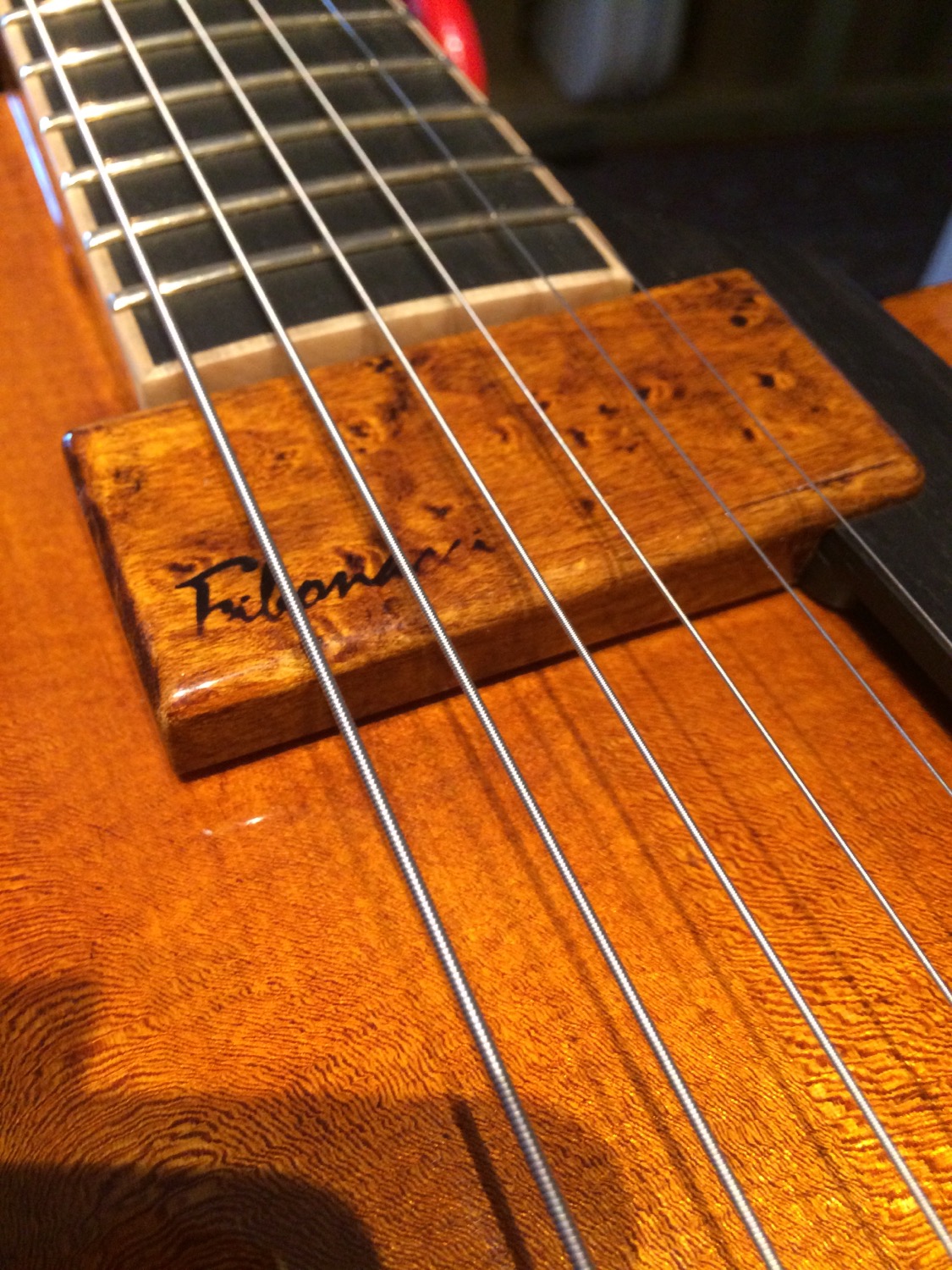
Archtop guitars are especially good for articulate rhythm work, note separation, dynamic control and musical settings where clarity matters more than sheer sustain. That is why they became so closely associated with jazz comping, ensemble playing and studio work. Their carved or pressed arched top and back, floating bridge design and, in many cases, floating pickup arrangement tend to produce a tone with focus at the front of the note. You hear definition, shape and attack.
That quality makes an archtop particularly satisfying in arrangements where a flat-top acoustic might bloom too broadly and a solid body electric might feel too uniform. Chords can sound more organised. Inner voices remain intelligible. Single-note lines often carry a vocal directness rather than a compressed, endlessly sustained sheen.
This does not mean every archtop behaves the same way. A fully carved, lightly built instrument with acoustic intent will respond very differently from a laminated, feedback-resistant stage guitar. Scale length, body depth, pickup choice and top stiffness all matter. Serious players know this already, but it is worth stating plainly: the category is narrower in appearance than it is in function.
Why jazz is the natural home of the archtop
Jazz remains the most obvious answer because archtops suit the demands of the style at a structural level. Traditional jazz rhythm needs pulse, control and harmonic detail. The guitar must sit inside an ensemble without obscuring piano, horns or double bass. An archtop, especially one with a dry, quick acoustic response, does exactly that.
For comping, this means chords arrive with authority but do not linger unnecessarily. The note envelope is often ideal - a defined attack, useful body in the middle, and a tidy decay. For single-note improvisation, the sound can be round yet disciplined, allowing phrasing and touch to do more of the expressive work.
That relationship between player and instrument is one reason experienced musicians continue to value fine archtops. They do not flatter indiscriminately. They reveal pick angle, left-hand pressure, muting discipline and time feel. In the right hands, that sensitivity is an advantage rather than a challenge.
Comping, chord melody and ensemble playing
If your playing leans heavily on advanced harmony, voice leading and rhythmic nuance, an archtop often feels immediately appropriate. Chord melody benefits from separation between notes. Freddie Green-style rhythm playing benefits from projection and dryness. Small ensemble work benefits from an instrument that occupies its own space without fighting the mix.
That last point matters in both live and recorded settings. A well-voiced archtop can be easier to place than many players expect, precisely because it is not trying to fill every frequency band.
Beyond jazz: where archtops still excel
Although jazz is the historical centre of gravity, archtops are also excellent for blues, roots music, swing, rockabilly, early electric styles and selected forms of contemporary fingerstyle. The key is understanding what kind of result you want.
For blues, an archtop can produce an exceptionally expressive midrange. Bends and vibrato speak with a human quality, and the slightly percussive edge on the front of the note can make phrasing feel intimate and immediate. It will not behave like a semi-hollow pushed through a loud overdriven amp, and it is not supposed to. Its strength lies in touch, shape and tonal honesty.
In roots and Americana contexts, especially when the arrangement leaves room for tonal individuality, an archtop can add character that a standard acoustic or solid body may not provide. The note definition helps with old-school rhythm parts, and the visual presence of the instrument is matched by a sonic identity that listeners can actually hear.
Studio players also appreciate archtops because they record with detail. Subtle differences in pick material, string choice and right-hand position are not lost. If the instrument is well built, those variables become useful tools rather than inconsistencies.
What archtop guitars are not always good for
This is where honesty matters. Archtops are not universal tools, and premium players generally prefer clarity over sales language. If you need high-gain saturation, extreme sustain, or stage volume levels that invite feedback, an archtop may not be the most practical choice. Some designs cope with amplified performance better than others, but the instrument’s acoustic responsiveness always comes with trade-offs.
Likewise, if your style depends on heavy compression, aggressive effects chains or a very flat dynamic response, an archtop can feel almost too revealing. It asks for input. It gives back nuance, but it does not erase inconsistency.
This is not a weakness. It is simply the nature of a more acoustically alive instrument. The best players tend to value that truthfulness. Others may prefer something more forgiving.
Feedback, gain and stage volume
The more resonant the guitar, the more care is needed with amplification. A carved archtop built for acoustic richness can be glorious at moderate volume and more demanding under high stage pressure. Laminated instruments, centre-block designs and carefully managed pickup choices can improve practicality, but they shift the tonal balance.
So, if your work is mainly loud amplified performance, the answer to what are archtop guitars good for may be narrower than if you perform in small ensembles, theatres, studios or refined amplified settings.
Why build quality matters so much with archtops

Archtops are unusually sensitive to construction choices. On a boutique instrument, the graduations of the carved plates, the stiffness and tuning of the soundboard, the neck set, the bridge mass, the tailpiece behaviour and the finish all influence the final voice. Small changes can alter projection, warmth, response speed and the balance between acoustic and amplified character.
That is why serious players often seek out makers with a clear design philosophy rather than generic production specifications. A finely built archtop should not merely look elegant. It should respond evenly across the register, maintain note integrity under complex harmony, and offer a controlled but expressive dynamic range.
Materials matter as well, but not in a simplistic way. Figured maple and spruce may carry traditional prestige, yet the real issue is how those woods are selected, carved and matched to the instrument’s intended use. Craftsmanship decides whether the guitar becomes decorative or truly musical.
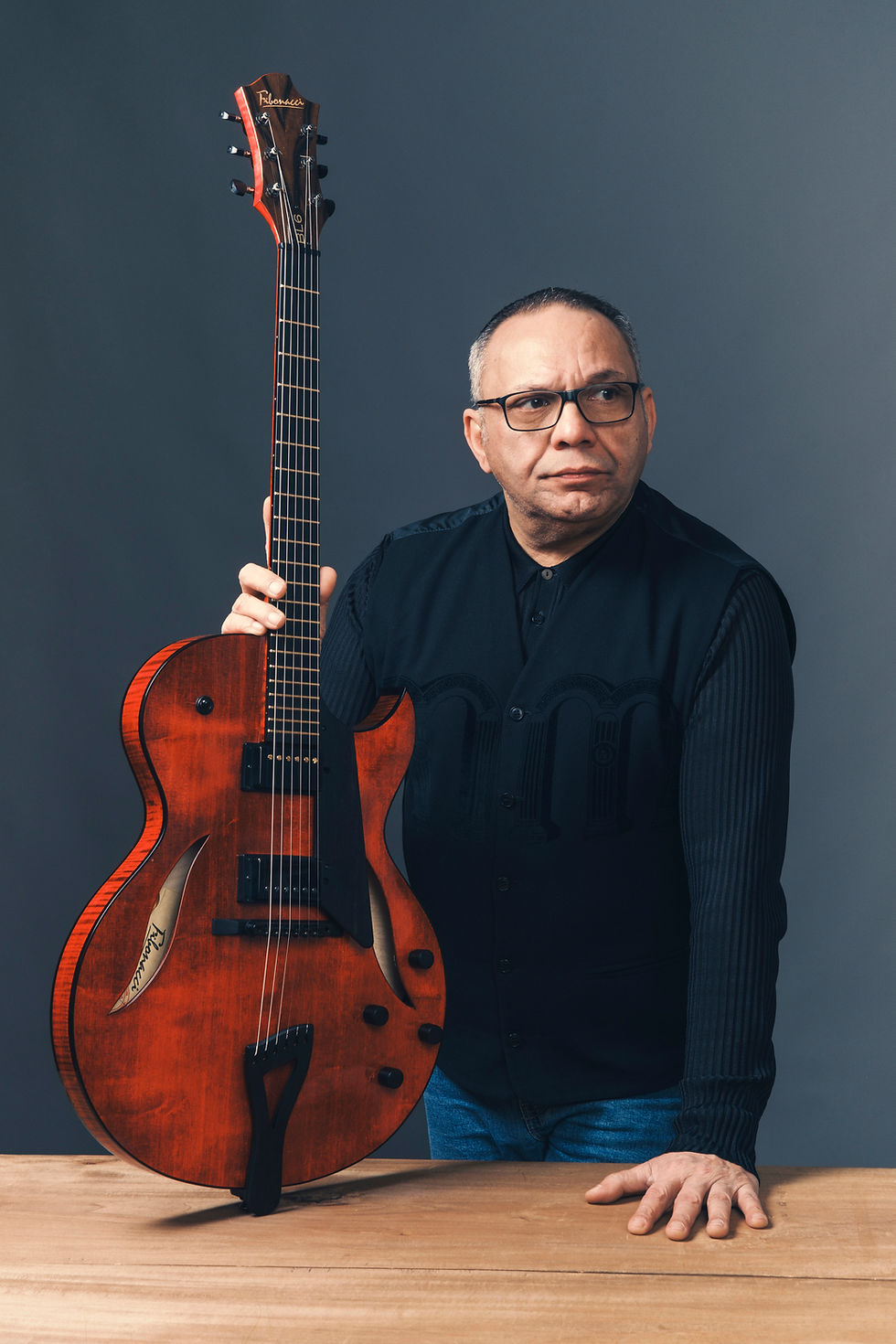
For that reason, archtops reward makers who reject mass-market compromise. Fibonacci Guitars, for example, builds within that tradition of precision, where material choice and hand-controlled construction are there to serve performance first.
Choosing an archtop for the right reasons

The best reason to choose an archtop is not image, tradition or collectability, though all three may be part of the appeal. It is that you want a guitar with immediacy, discipline and tonal identity. You want chords to speak cleanly. You want phrasing to matter. You want an instrument that responds to a refined touch instead of covering it up.
That said, not every player should own the same kind of archtop. Some need an acoustic voice strong enough for unamplified practice and intimate recording. Others need a more stage-ready instrument with controlled resonance and dependable amplified performance. Some prefer the dry authority of a classic jazz response. Others want more bloom, more colour and a wider stylistic range.
The question is not simply what archtop guitars are good for. It is what kind of archtop serves the music you actually play, the settings you work in and the standard of response you expect from a serious instrument.
What an archtop gives the right player
At its best, an archtop offers something many modern guitars do not prioritise: distinction. It does not try to be everything. Instead, it gives the player a clear, articulate and expressive voice shaped by acoustic intelligence and fine construction. For musicians who hear in terms of phrasing, dynamics, note shape and ensemble balance, that is not a limitation. It is precisely the point.
If your ear is drawn to nuance rather than excess, an archtop may feel less like a genre choice and more like a final arrival.


Comments