

What Defines a Masterbuilt Archtop Guitar?
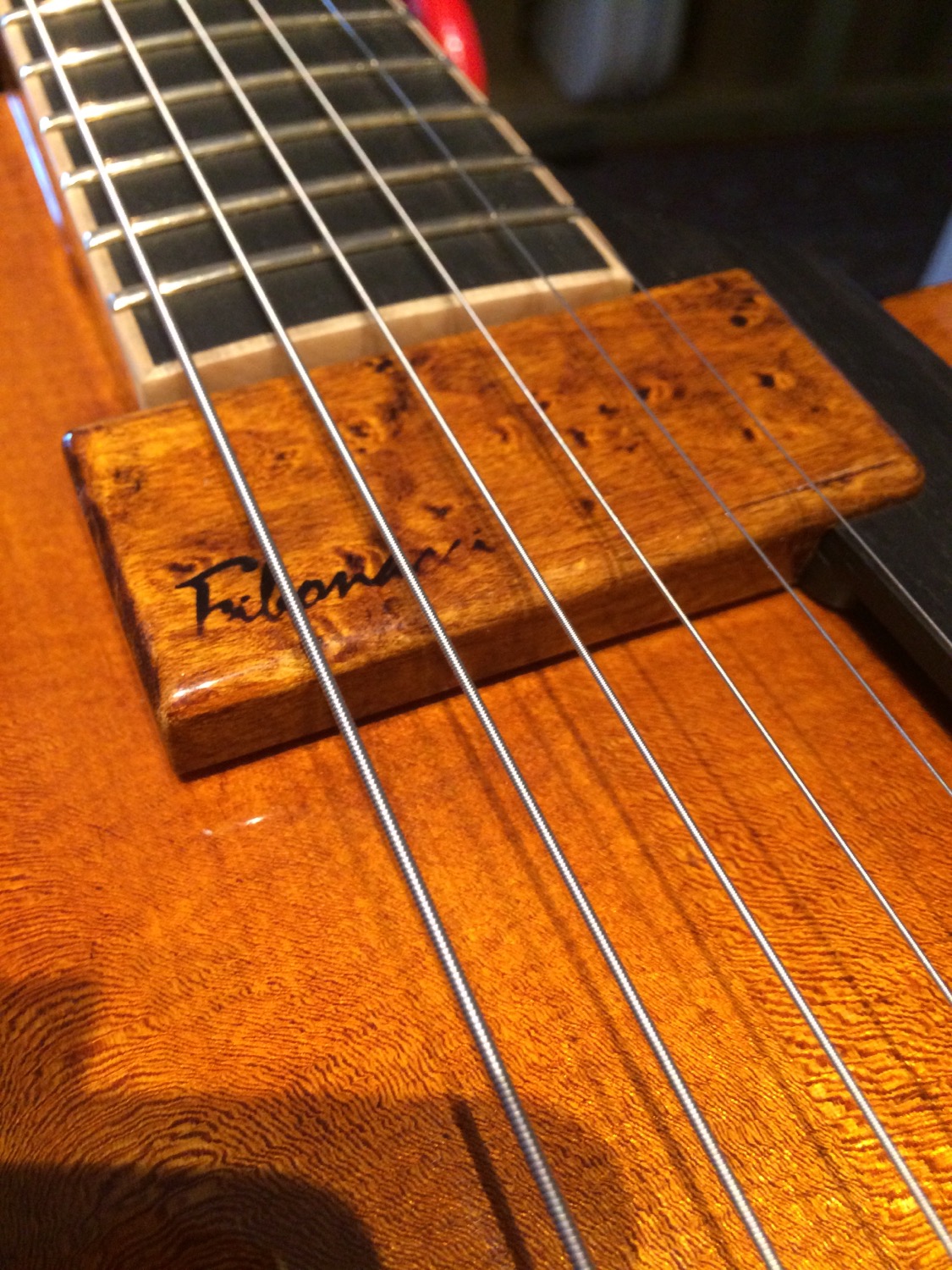

A masterbuilt carved archtop guitar doesn’t always announces itself with flashy ornaments. It may well announce itself by the way it resonates and responds with unusual ease, balance and authority. The notes arrive with shape and depth. The neck feels resolved rather than merely acceptable. The acoustic voice carries enough complexity that amplification becomes an extension of the instrument, not a rescue plan.
That distinction matters because the term itself is often used too loosely. In the high-end guitar market, “masterbuilt” should mean more than premium pricing or limited availability. It should refer to an instrument built to an exacting standard by highly skilled craftspeople, with decisions made at every stage for tonal and structural reasons rather than production convenience. If that level of work is absent, the label has little value.
What a masterbuilt archtop guitar should actually mean

At its proper level, a masterbuilt carved archtop guitar is not simply a better factory guitar. It is an instrument shaped byluthiery judgement from tonewood selection through to final setup. That judgement is what separates boutique craftsmanship from scaled manufacture.
A carved archtop is unusually sensitive to the quality of that decision-making. The carved top and back, the graduation ofthickness, the recurve, the neck geometry, the bridge fit and the finish all interact. Small changes alter not only volume and sustain, but also the way the guitar compresses under a strong right hand, the way chords bloom, and the way single-note lines sit in an ensemble. A fine carved archtop has to do more than sound good in isolation. It must retain clarity, warmth and projection under real musical pressure.
That is why a genuine masterbuilt instrument is defined by accumulated accuracy. No single feature makes it exceptional. The result comes from a chain of disciplined choices, each one supporting the next.
The materials are only the beginning

Premium tonewoods matters, but it is only thestarting point. Spruce for the soundboard, figured maple for the back and sides, ebony for fingerboard and bridge components - these are familiar ingredients in high-end carved archtop construction. What matters more is whether those materials have been selected for stiffness, weight, tap response and long-term stability rather than appearance alone.
A beautifully figured maple set may look spectacular, but if it does not support the intended tonal character, it is the wrong choice. The same is true of spruce. A top with the right visual grain but the wrong stiffness-to-weight relationship may never produce the immediacy,headroom or nuance a demanding player expects.
In a masterbuilt context, timber selection is not a decorative exercise. It is part of the voicing process from the outset. That is one reason two visually similar guitars can feel entirely different in the hands.
Carving, voicing and structural judgement

This is where quality becomes unmistakable. In a masterbuilt carved archtop guitar, the carved plates are not reduced to dimensions by formula alone. They are worked with reference to the character of the individual wood. The luthier is listening, flexing, checking response and removing material with intention.
Archtops reward that level of scrutiny because the carved top behaves differently from a flat soundboard. Thickness distribution is critical. Leave too much mass in the wrong area and the instrument can become tight, stiff or overly polite. Remove too much and it may gain immediacy at the expense of focus, strength or long-term structural integrity.
There is no universal “best” voicing. A player seeking a dry, quick traditional jazz response may value different qualities from someone who wants a broader contemporary voice with more sustain and overtone content. This is where masterbuilt work shows its worth. The build can be directed towards a musical outcome rather than a generic specification.
Bracing also deserves attention. The choice between parallel and X-bracing, and the finer details within those systems, influences projection, punch, warmth and dynamic spread. Neither approach is automatically superior. It depends on the instrument’s purpose and the player’s ear. High-level carved archtop building recognises those trade-offs rather than pretending every desirable quality can be maximised at once.
Why neck geometry and setup matter so much

Many otherwise impressive guitars lose ground here. A premium archtop should not merely be playable. It should feel coherent. Neck angle, fingerboard fall-away, fretwork, nut cutting, bridge base fit and overall action need to work together with precision.
This is particularly important on carved archtops because the floating bridge and tailpiece system leave nowhere to hide poor geometry. If the setup is compensating for inaccuracies elsewhere, the player will notice it in the attack, the intonation and the physical effort required across the neck.
On a well-built instrument, the left hand feels supported rather than challenged. Notes fret cleanly without fighting back. The righthand can move from delicate comping to assertive single-note work without the guitar becoming brittle or congested. Those qualities are not luxuries. They are signs that the build has been executed properly.
Finish is not just cosmetic

A masterbuilt guitar should look exceptional, but the finish must also respect the instrument’s acoustic behaviour. Thick, heavy finishes can inhibit resonance. Better finishing systems preserve wood movement and tactile connection while still offering protection and visual depth.
That is one reason discerning players often favour nitrocellulose lacquer or fine oil finishes on hand-built instruments. Applied correctly, they complement the guitar rather than bury it. Of course, every finish involves compromise. Nitrocellulose offers a classic appearance and can age beautifully, but it also requires proper care. Oil finishes canfeel remarkably organic in the hand, though they present a different aesthetic and maintenance profile. The right choice depends on the design intent and the owner’s priorities.
The key point is that finishing in a masterbuilt environment is approached as part of instrument making, not as a final cosmetic stage divorced from tone.
The difference between expensive and truly exclusive


Price alone does not make a guitar masterbuilt. Plenty of costly instruments carry premium appointments without delivering equivalent substance. Real exclusivity comes from scarcity of skill, not scarcity created by marketing.
A genuinely high-end carved archtop reflects low-volume production, close control over materials, and refusal to build to a compromise dictated by throughput. That is why boutique makers command attention among professionals and collectors. The value lies in how the guitar is conceived and executed, not just in how few are available.
For some buyers, collectability matters. For others, performance comes first. Ideally, a masterbuilt carved archtop serves both. It should stand as a serious musical tool and as a lasting object of craftsmanship. If one side has been neglected, the instrument is incomplete.
Choosing the right masterbuilt archtop guitar

The hardest part is often being honest about what you need. Some players are drawn to ornate presentation when what they actually require is immediacy, articulation and dependable amplified performance. Others pursue historical correctness when a more modern response would better suittheir work.
Start with the musical context. Solo chord melody, small-group jazz, studio overdubs and amplified live performance place different demands on an archtop. Scale length, body depth, pickup configuration and voicing all affect whether a guitar will feel ideal or merely admirable.
Then consider build philosophy. A maker with complete hands-on control over carving, assembly, finishing and setup can usually deliver greater consistency than one relying on fragmented production. That level of control tends to show in the finished instrument - and in the confidence of ownership afterwards.
For buyers operating at this end of the market, support also matters. Documentation, authenticity of components, reliable warranty backing and informed dealer guidance are not incidental extras. They are part of the ownership standard expected of a serious instrument. This is one area whereestablished boutique makers such as Fibonacci Guitars reinforce confidence,because the purchase is supported by a clear commitment to build integrity and customer assurance.
Why this category still matters

The carved archtop remains one of the most demanding guitar forms to build well. That is why so many luthiers do not take up the challenge. That alone gives the best example of their significance. In an era where production efficiency often shapes design choices, a true masterbuilt carved archtop stands for something different - patience, judgement and respect for the instrument as an acoustic system.
For the player, that means more than prestige. It means an instrument with a stronger tonal identity, a more satisfying physical response and a better chance of becoming indispensable over time. You may pay more for that standard, and you should. The alternative is paying less for a guitar you continue to outgrow.
The right carved archtop does not need to persuade you with hype. It earns its place through the first chord, the tenth session and the years that follow.


Comments