

Why Handmade Carved Jazz Guitars Matter
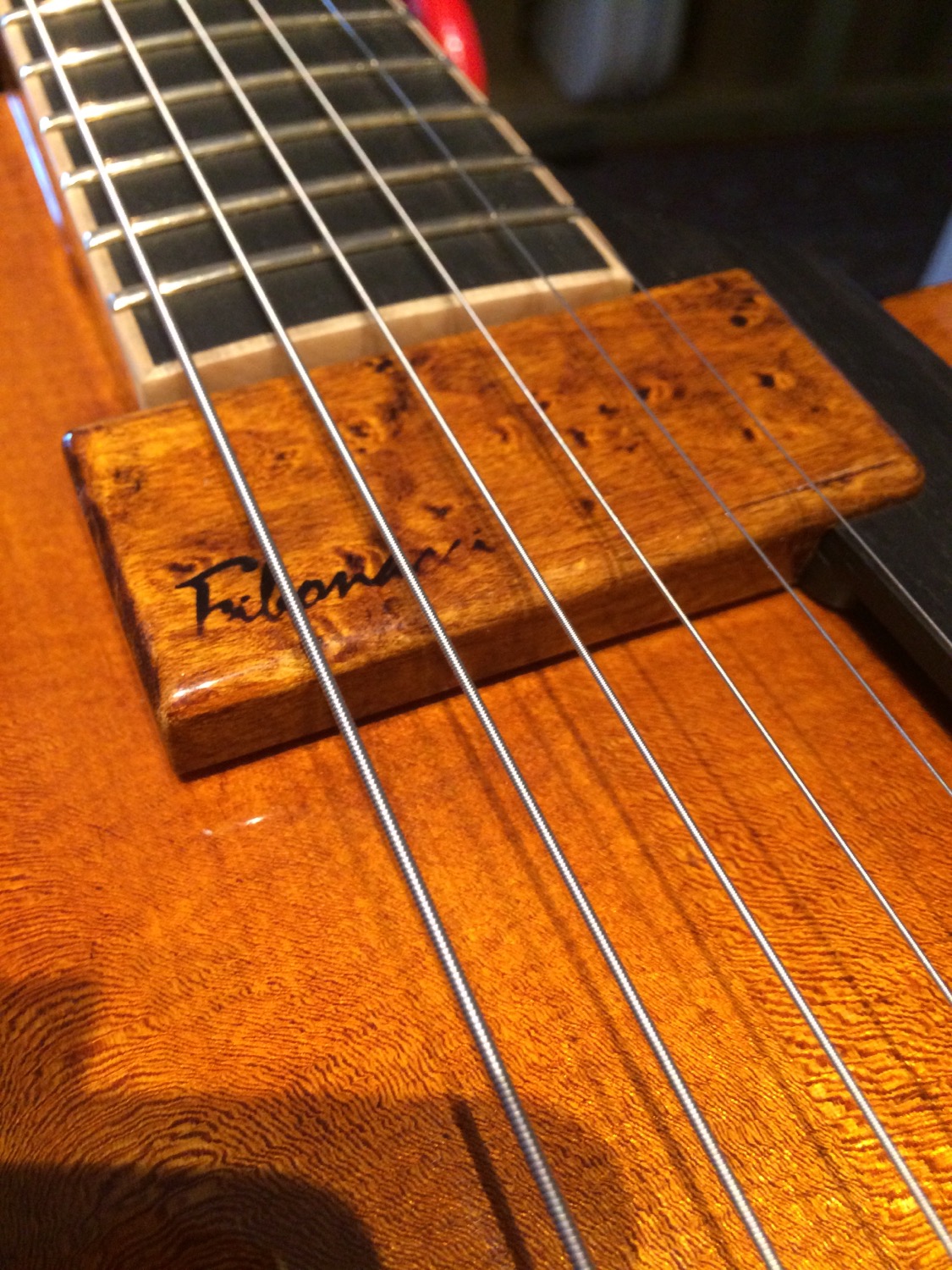

A fine carved jazz guitar reveals itself before the amplifier is even switched on. The first chord tells you whether the top is alive, whether the neck sits correctly in the hand, and whether the instrument has been built for nuance rather than mere output. That is the real distinction with handmade carved jazz guitars - they are not simply expensive versions of factory instruments, but fundamentally different tools for serious musicians.
For players who understand the demands of archtop performance, this difference is not abstract. It is audible in note separation, in the way a carved top responds to touch, and in how the guitar holds its composure across dynamic changes. It is equally apparent in structural details that affect longevity, reliability and setup stability over many years of use.
What sets handmade carved jazz guitars apart
The phrase is often used loosely, so it is worth being precise. Truly handmade carved jazz guitars are shaped, voiced, assembled and finished with substantial direct luthier involvement. That does not mean every stage ignores machinery. It means machinery serves the craft, rather than dictating it. Thicknessing, carving, grading, neck fitting, fretwork, binding, finish preparation and final setup are judged by experienced hands at each stage.
That matters because archtop guitars are unusually sensitive to small variables. A fraction too much mass left in the wrong area of a top can dull responsiveness. A neck joint that is technically acceptable but not exact can affect energy transfer, action and long-term geometry. Factory tolerances may accommodate these issues well enough for broad commercial production, but a serious jazz instrument benefits from far tighter control.
The result is not merely refinement for its own sake. It is an instrument that behaves more consistently under the demands of performance and recording. Chords bloom more evenly. Single-note lines retain body without becoming blunt. The player feels less need to compensate for the instrument's limitations.
The sound of handmade carved jazz guitars

When players discuss tone, they often focus on pickups first. In a proper archtop, that is only part of the picture. The acoustic structure remains central, even on amplified instruments. The top, back, bracing, bridge fit and neck set all influence how the pickup receives the string's movement.
This is where handmade construction earns its reputation. A carefully voiced carved soundboard can produce greater immediacy and harmonic complexity than a pressed laminated, standardised alternative. That does not mean every carved instrument is automatically superior, nor that every pressed laminated top is inferior. Some players prefer the tighter, more controlled behaviour of certain pressed-top designs, especially in louder ensemble settings. But when a handmade carved archtop is executed properly, it tends to offer a depth of response that is difficult to simulate through electronics alone.
Touch sensitivity is another dividing line. Jazz players often work within a wide expressive range, from soft comping to articulate lead phrasing. A handmade instrument tends to preserve those gradations more faithfully. You do not have to fight for subtleties. The guitar gives them back to you.
In the studio, that responsiveness becomes even more valuable. Microphones and high-resolution signal chains expose coarse behaviour very quickly. Instruments developed with genuine listening and real-world testing generally sit more naturally in a recording context because their acoustic voice has been considered as part of the design, not treated as incidental.
Materials are only as good as the judgement behind them

Premium tonewoods are essential, but they are not a guarantee of excellence. There is a persistent misconception that specification sheets tell the whole story. They do not. Two tops cut from the same species can behave very differently. The luthier's job is not simply to acquire fine timber, but to understand what each piece requires.
Hand-selected woods, especially when sourced with consistency and intent, allow a maker to build towards a desired response rather than forcing uniform outcomes from inconsistent stock. Grain orientation, stiffness, density and seasoning all affect the final result. The same applies to neck blanks, fingerboards and bridges.
Hardware and ancillary materials matter as well. A high-grade finish, properly applied, protects the instrument without choking it. Nitrocellulose lacquer remains valued for good reason, though it is demanding to apply well. Oil finishes can also be superb where the design suits them. There is no single correct answer in every case. What matters is whether the finishing system has been chosen to complement the instrument rather than simplify production.
The same standard should apply to every component. Tailpiece design, tuners, fretwire, nut material and pickup selection all shape the ownership experience. On a serious instrument, there should be no weak link included simply because it reduces cost or speeds assembly.
Craftsmanship is not cosmetic
Many buyers first notice visual beauty - flame, figure, binding lines, sunburst depth, lacquer clarity. These things do matter. They reflect care, and on a high-end instrument they should be executed to an exceptional standard. Yet cosmetic appeal is only persuasive if it sits on top of sound construction.
The hidden work is what separates prestige from mere presentation. Fret dressing, neck angle, bridge geometry, truss rod function, nut slot accuracy and overall balance determine whether a guitar remains rewarding after the first impression fades. Handmade carved jazz guitars justify their standing when these fundamentals are handled without compromise.
There is also a structural argument for low-volume production. When the same workshop retains hands-on control of the whole process, accountability remains clear. Design changes can be tested properly. Problems can be traced and corrected more directly. Quality does not become a negotiation between departments, subcontractors and production targets.
For discerning players, that continuity matters. It supports consistency within a range while still allowing each instrument to retain its own character.
Who should buy a handmade carved archtop

Not every player needs one. That is worth stating plainly. If your priorities are maximum convenience, lower initial cost or a guitar that can be replaced with little thought, a factory-built instrument may be the more rational option. There are excellent production guitars on the market, and some perform admirably in professional settings.
A handmade carved archtop makes most sense when the player can hear and feel the difference, and when that difference matters enough to justify the investment. Professional musicians, experienced enthusiasts, collectors and recording artists usually understand the value quickly. They are not buying a label. They are buying response, build integrity, individuality and the confidence that the instrument has been made with care rather than throughput in mind.
Collectors may also view handmade jazz guitars through the lens of rarity and provenance. That is legitimate, but it should never overshadow performance. The best boutique instruments are not ornaments that happen to play well. They are serious musical tools first.
What to look for before you buy

A considered purchase begins with the acoustic voice. Even if the guitar will be amplified most of the time, play it unplugged. Listen for balance across the strings, clarity in chord voicings and how quickly the instrument responds to a light touch. A good archtop should not feel inert.
Then assess the neck and setup. Jazz players often have strong preferences here, and rightly so. Neck profile, fingerboard radius, fret size and scale length all affect phrasing comfort. There is no universally perfect specification, but there should be coherence. The guitar should feel designed, not assembled from unrelated choices.
Examine finishing and detail work closely. Binding mitres, fret ends, bridge fit and nut work reveal far more than glossy photography ever can. Ask where the instrument is built, how much of the process is controlled in-house, and whether the maker can explain their material and design choices with precision.
After-sales support is another serious consideration. A high-value instrument should come with proper documentation, warranty assurance and informed dealer or workshop guidance. Boutique ownership should bring confidence, not uncertainty.
For that reason, makers with complete oversight of their build standards and a clear philosophy tend to inspire stronger trust. In a market where the term handmade is sometimes stretched, transparency is part of the product.
The long view
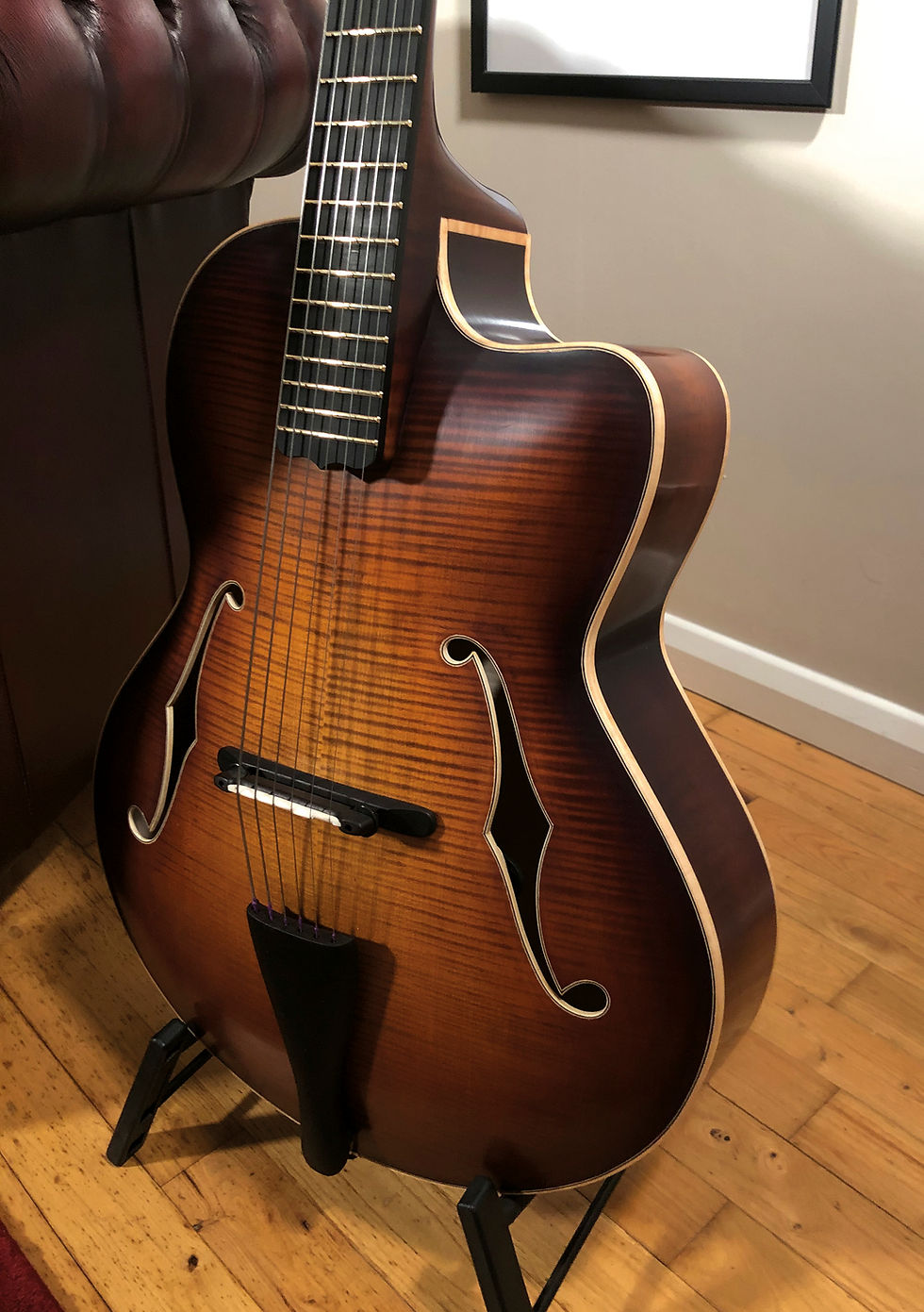
The strongest case for handmade carved jazz guitars is not romance. It is performance over time. A well-built archtop can mature beautifully, settle into its voice and remain musically relevant for decades. That longevity depends on choices made long before the player opens the case.
When craftsmanship, material judgement and tonal development are treated as non-negotiable, the instrument becomes more than a possession. It becomes a dependable partner in serious work. For players who hear the difference and demand the standard, that is reason enough to choose carefully - and to choose once.


Comments