

Floating Pickups for Archtop Guitars
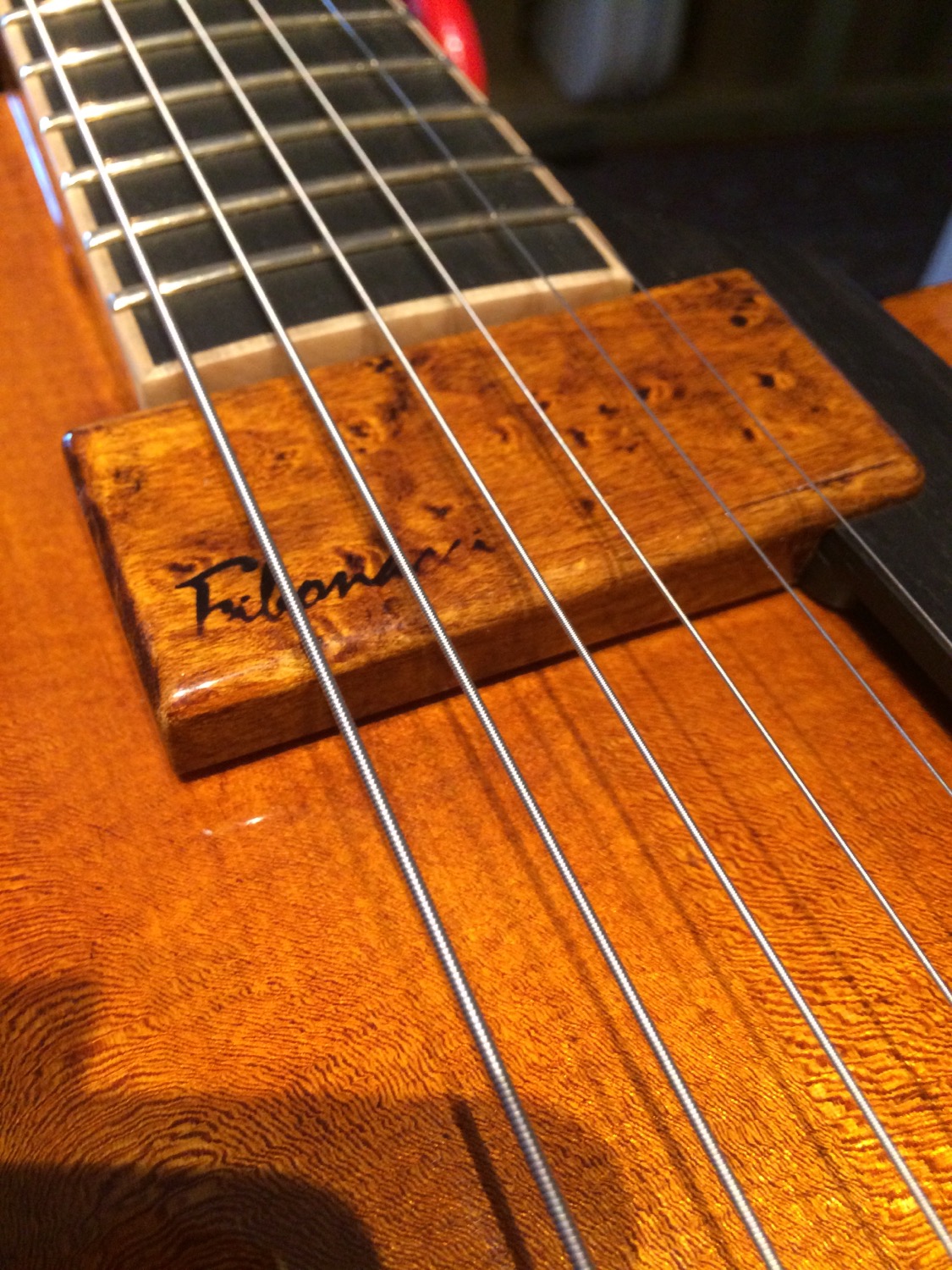

An archtop can lose its character if fitted with the wrong pickup. That is why floating pickups for archtop guitars remain such a considered choice among serious players. When the instrument itself has been built to respond with speed, air and harmonic detail, the method of amplification matters just as much as the timber, carve and setup.
For many musicians, a floating pickup is not simply a traditional detail. It is a practical way of preserving what makes a fine carved archtop special in the first place. By avoiding a large routed hole through the soundboard and reducing added mass on the top, a floating design allows more of the guitar’s natural acoustic response to remain intact. That does not mean it is always the right answer, but it does explain why it has long been associated with high calibre jazz instruments.
Why floating pickups for archtop guitars matter

A floating pickup is usually mounted to the end of the fingerboard or the pickguard rather than being set directly into the top. The central idea is straightforward: keep the carved plate as free as possible to vibrate. On a carefully made carved archtop, the soundboard is not a passive surface. It is an active acoustic engine, and any interruption to that system has consequences.
A top-mounted humbucker can produce excellent results, particularly where a stronger, denser amplified voice is wanted. Plenty of superb archtops use them to great effect. Even so, cutting into the top changes the structure, alters the distribution of mass and tends to shift the balance away from open acoustic response. Some players gladly accept that trade-off. Others do not.
With a floating pickup, the guitar retains more air in the note, more immediacy in the attack and more of the woody bloom that players expect from a finely voiced hollow instrument. In studio work especially, that extra acoustic integrity can be worth preserving.
The tonal character of a floating design

The appeal of floating pickups for archtop guitars is often described in simple terms such as warm, clear or acoustic-like. Those descriptions are not wrong, but they can be too broad to be useful. What many players actually hear is a more open upper register, a less compressed attack and a bass response that feels articulate rather than oversized.
That matters because an archtop’s best qualities are rarely about sheer output. They are about note separation, touch sensitivity and a controlled, vocal midrange. A good floating pickup tends to support those strengths rather than forcing the instrument into a more generic electric sound.
There are, of course, variations. Some floating pickups lean toward being bright, which can flatter a darker guitar or help chord work retain definition. Others are fuller and smoother, which may suit single-note jazz phrasing or a naturally lively instrument. Magnet type, winding, placement and height all affect the result. So does the guitar itself. A lightly built carved archtop and a heavier laminated model will not respond in the same way, even with the same pickup fitted.
What you gain, and what you give up

The strongest argument in favour of a floating pickup is preservation. You preserve more of the top, more of the acoustic voice and more of the instrument’s original design intent. On a premium archtop, that is not a small advantage.
You also gain a visual refinement that many players value. A clean carved top, uninterrupted by a routed pickup cavity, simply looks right to those who appreciate classic archtop design. For collectors and traditionalists, that elegance is part of the instrument’s appeal.
The trade-off is that a floating pickup may not deliver the same output, thickness or sheer push as a full-size mounted humbucker. If your work depends on higher gain settings, stronger midrange density or a more overtly electric response, a floating design can feel restrained. It is also more revealing. Because it tends to preserve articulation, it gives you less to hide behind.
This is why context matters. For straight-ahead jazz, chord melody, swing, studio recording and nuanced live work, a floating pickup often makes perfect sense. For louder fusion settings or situations where the guitar must behave more like a semi-solid electric, another solution may be preferable.
Installation and build considerations
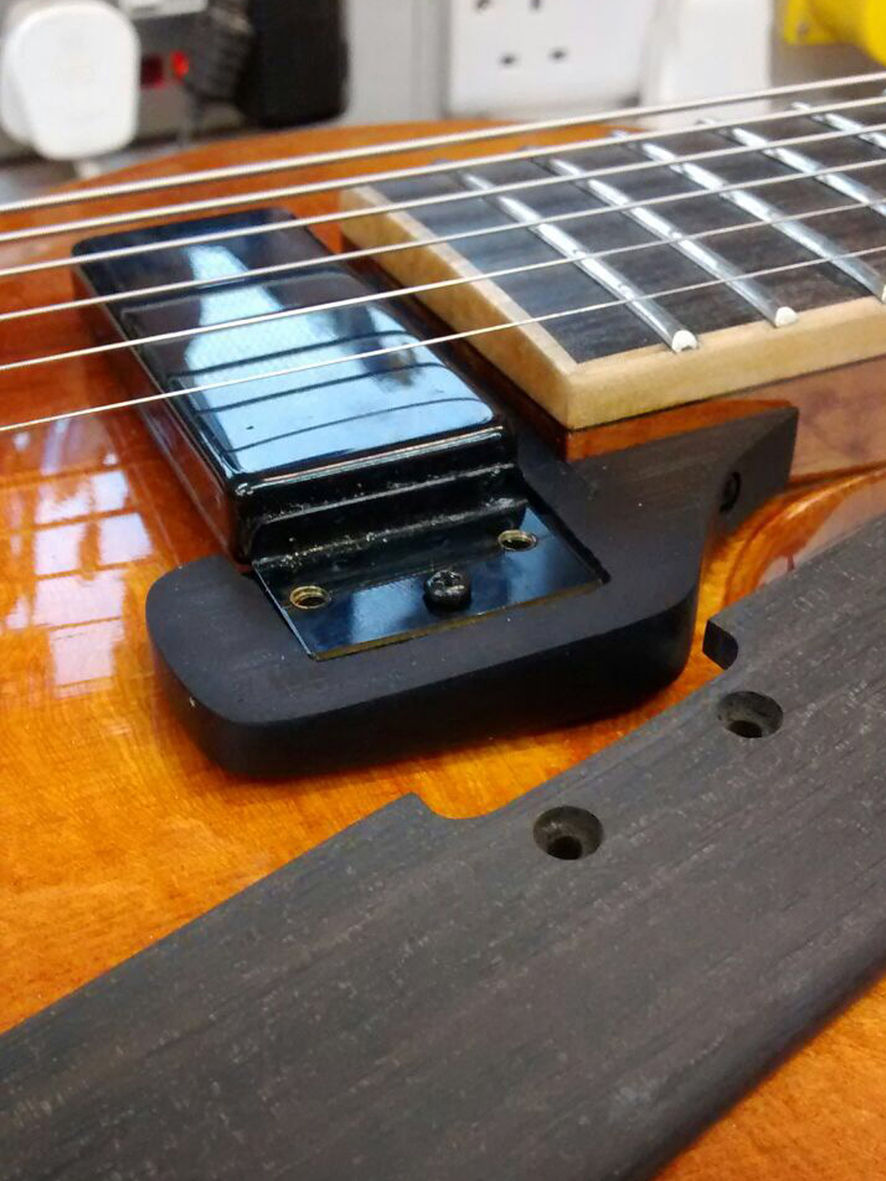
A floating pickup is only as successful as the instrument around it. Placement must be judged carefully, and so must the relationship between the pickup, the fingerboard extension, string spacing, bridge height and pickguard design. On a finely built archtop, these are not decorative details. They are part of a complete system.
Poorly executed installation can create practical irritations - awkward string balance, insufficient output, mechanical instability or a visual fit that feels like an afterthought. Done properly, the pickup should look integrated and feel entirely natural when the guitar is played.

This is one reason boutique archtop building still matters. On a handmade instrument, pickup choice can be considered from the outset rather than treated as a late-stage accessory. The carve, neck set, fingerboard geometry and hardware specification all influence how convincingly a floating unit will perform. A serious archtop deserves that level of planning.
Choosing the right floating pickup for your archtop

The first question is not which brand or model to buy. It is what you want the guitar to do. If your priority is preserving maximum acoustic personality, you may prefer a lower-output pickup with excellent detail and dynamic range. If you need more warmth and authority for amplified performance, a slightly fuller-voiced design may be the better fit.
Scale length, body size and the natural voicing of the instrument should guide the decision. A 17-inch archtop with strong low-end content may benefit from a pickup that keeps the bass tidy and the treble open. A smaller-bodied instrument with a dry, immediate voice might welcome a little more body in the amplified signal.
Amplification chain matters too. An archtop played through a clean valve amplifier at civilised volume asks different things of a pickup than one running into a modern pedalboard or a direct recording setup. The best result comes from thinking in terms of the whole signal path rather than the pickup in isolation.
Floating pickups for archtop guitars in recording and performance

In recording environments, floating pickups can be especially rewarding. They often capture the elegance of a well-built carved archtop without over emphasising thickness or sacrificing note definition. Chords tend to retain internal clarity, and melodic lines can sit in a mix with a pleasing naturalness.
On stage, the equation shifts slightly. A floating pickup can still sound superb live, but practical realities enter the picture: ensemble volume, monitor conditions, feedback management and the need for consistency from venue to venue. A player working in quieter or acoustically sympathetic settings may find the balance ideal. In louder rooms, compromises sometimes become necessary.
That does not diminish the value of the format. It simply reinforces that archtop design has always involved judgement. The finest instruments are not built around fashionable specifications. They are built around musical purpose.
Why serious players choose them

The continued appeal of floating pickups is not nostalgia. It is discernment. Players who invest in a high-end carved archtop are usually listening for subtleties that mass-market design tends to flatten out. They care about how the guitar breathes, how quickly the note speaks, how the harmonic content develops and how the amplified sound relates to the acoustic one.
A floating pickup respects those priorities. It does not impose itself quite as aggressively as other formats, and that restraint is often precisely the point. On an instrument where craftsmanship, voicing and responsiveness have been pursued without compromise, the pickup should serve the guitar rather than overwhelm it.
That philosophy sits naturally within the world of premium archtops. At Fibonacci Guitars, for example, the premise is not simply to produce an attractive object, but to create a genuinely responsive instrument where every component supports the integrity of the whole. In that context, pickup choice becomes part of a much larger conversation about build quality, tonal intent and long-term musical value.
For the player who wants an archtop to remain an archtop after it is plugged in, floating pickups remain one of the most intelligent solutions available. The right one will not make every guitar sound bigger or louder. It will do something more valuable than that - it will let a fine instrument sound more like itself.


A good bio often comes down to matching the tone of your profile. For anyone who feels stuck staring at a blank text box, the ideas organized here offer a practical starting point. The suggestions are grouped by personality and profile type, which makes it easier to skip the generic options and land on something that feels like a genuine fit. I also appreciated the short tips on phrasing and formatting, since small tweaks can change how approachable a profile feels.