

How to Compare Carved Soundboards Properly
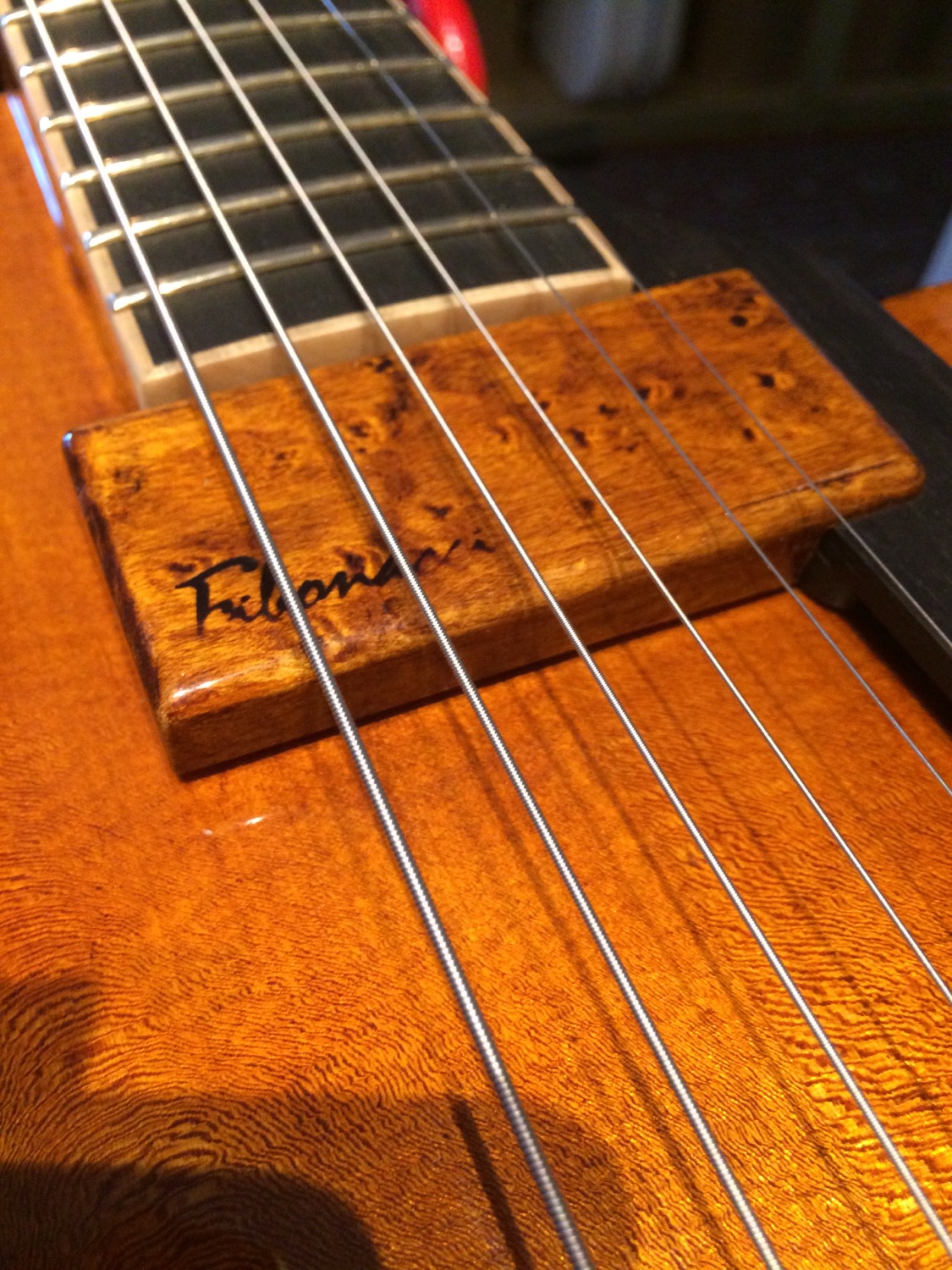

A carved soundboard is the principal acoustic engine of a guitar: a shaped, graduated piece of tonewood whose stiffness, mass and arching determine how the guitar ‘rings’ when played. To understand how to compare carved soundboards, look beyond the figure of the timber and ask how each top has been selected, carved, tuned and integrated into the complete instrument.
Two guitars can both be described as having a solid carved spruce top, yet feel and sound markedly different. That is not a contradiction. It is the consequence of individual timber, considered graduation and the decisions made by the maker at every stage of the build.
How to compare carved soundboards beyond appearance

The first comparison is visual, but it should not be superficial. Examine the grain of the spruce or other soundboard timber. Straight, even grain is traditionally prized because it can indicate consistent stiffness along the length of the board, while wider or more varied grain can still produce an exceptional result when the wood has been properly selected and voiced. Grain count alone is not a verdict on quality. Density, seasoning, cut, stiffness and the maker’s understanding of that particular piece of wood matter far more.
Look at the relationship between the grain and the arch. On a finely made archtop, the arching should appear deliberate and composed. The highest point, the flow into the recurve near the edge, and the transition around the bridge area all affect how the top distributes string energy. Elegant arching is usually the visible outcome of acoustic purpose, not styling in isolation.
The finish deserves consideration too. Nitrocellulose lacquer can provide a traditional protective film while allowing the timber’s character to remain present, provided it is applied with restraint. Oil finishes offer adifferent tactile and visual quality. Neither finish can compensate for an unresponsive soundboard, but an excessively heavy finish can restrict a topthat was otherwise capable of more openness and nuance.
Do not confuse flame with acoustic merit

Highly figured timber has undeniable visual appeal, particularly on maple backs and sides. On soundboards, however, a clean, well-chosen piece of spruce is generally valued for what it can do acoustically rather than for ornamental figure. A serious comparison separates cosmetic desirability from musical consequence.
A handsome top may be part of a collector-grade instrument, but the question remains: does it produce an articulate fundamental, a useful range of dynamic headroom for the player’s work? The best guitars satisfy both the eye and the ear, without asking one to excuse the other.
Arching and graduation: the work beneath the surface

The defining distinction of a carved soundboard is that its thickness is not simply fixed by a machine setting. It is shaped in three dimensions. The centre is commonly left stronger to support bridge pressure, while areas towards the edge and recurve are scooped and graduated to move with greaterfreedom. Exact dimensions are not a universal recipe. A denser, stiffer top may require a different approach from a lighter, more flexible one.
This is why two nominally identical models should not be expected to behave identically. A discerning maker responds to each set of timber rather than forcing every board into one predetermined thickness. The aim is balance: enough structural reserve for long-term stability, with sufficient movement for projection, warmth and touch sensitivity.
When comparing instruments in person, play sustained notes across the register at a moderate volume. Listen to the balance from low to high notes. A well resolved soundboard should not make the middle register feel congested or cause the treble to become thin and brittle as you play higher. Then increase your attack. The guitar should offer more output and complexity rather thancollapsing into harshness.
It is equally useful to play quietly. Some archtops are impressivewhen driven hard but offer little information at lower dynamics. For studiowork, ballad playing and detailed chord melody, the ability to respond to alight touch can be every bit as valuable as forceful projection.
Assess the bridge area carefully

The bridge is where string energy enters the soundboard, making the area directly beneath it critical. A top that is too stiff can sound contained and resistant; one that is too lightly supported may be lively at first butlack focus, sustain or confidence under a firm right hand. There is no single ideal response, because a player seeking traditional acoustic cut may favour a different balance from one pursuing amplified clarity and harmonic depth.
What matters is whether the response feels coherent. Notes should emerge promptly, chords should retain separation, and the guitar should maintain its character as dynamics change. The player should not have to fight the instrument to find its voice.
Compare the complete acoustic system, not the top alone

A soundboard never works in isolation. The back and sides, bracing, bridge base, tailpiece, neck joint, body depth and setup all influence the final result. A carved top may be exemplary, yet its contribution will be shaped by every part attached to it.
For this reason, compare guitars using the same musical material and, where possible, similar strings and setup. Play open chords, then closed voicings, single-note lines and harmonics. Listen from the player’s position, but also ask another accomplished musician to play while you stand a few feet in front. An archtop can project differently into the room than it does towards the player’s ear.
If the guitar will be amplified, test that context as well. A soundboard with a broad, mature acoustic voice is not automatically the most practical choice at higher stage volumes. Feedback resistance, pickup placement and the instrument’s midrange focus may take priority for a working electric archtop player. Conversely, a lightly responsive top can be a compelling choice for low-volume jazz, recording and unamplified practice, where detail and air are especially rewarding.
This is where real-world development matters. At Fibonacci Guitars, an archtop is considered as a musical instrument for recording, performance and long-term ownership, rather than as an exercise in specification alone.
What your hands can tell you

A visual inspection cannot reveal everything, but your hands can confirm much of what your ears suggest. Feel how the guitar reacts to changes in pick angle, fingerstyle attack and palm muting. Does it retain clarity when you lean into a chord? Does it bloom naturally after the initial note? Is there a useful difference between a soft attack and a decisive one?
Pay attention to the low end. An archtop need not produce the oversized bass of a flat-top acoustic, but its lower strings should have authority without becoming indistinct. Equally, the upper register should carry enough body to avoid sounding detached from the rest of the instrument.
The most successful carved soundboards often feel less spectacular in one isolated trait and more complete across many demands. They have projection without abrasion, warmth without cloudiness, and sufficient resistance to reward a strong player while remaining responsive to a light touch.
Questions worth asking the maker or dealer

For a high-consideration instrument, informed questions are entirely appropriate. Ask what timber has been used, where it was sourced, how long it was seasoned, and whether the top was individually graduated. Establish whether the guitar is intended primarily for acoustic jazz voice, amplified versatility, studio use or a particular artist’s requirements.
Ask about finish, humidity care and warranty support. A carved soundboard is a living wooden component, and sensible humidity management is part of responsible ownership. A reputable authorised dealer should also beable to discuss setup, string gauge and how the guitar has been inspected before delivery.
Be cautious of comparisons based solely on labels such as “solid top”, “carved top” or “handmade”. Those terms describe a starting point, not the standard of execution. The quality of the carving, the judgement behind it and the final musical result are what distinguish a serious archtop.
The right soundboard is the one that keeps revealing useful musical detail after the first impressive chord. Give it time, play it in the context you genuinely use, and choose the instrument whose response gives you confidence to make finer music.
The right soundboard is the one that keeps revealing useful musical detail after the first impressive chord. Give it time, play it in the context you genuinely use, and choose the instrument whose response gives you confidence to make finer music.


Comments