

A Guide to Artist Signature Archtops

There is a meaningful difference between an archtop with an Artist's name on the headstock and one that has genuinely been shaped around a player's musical demands. Any serious guide to Artist Signature archtops should begin there, because the category is often misunderstood.
A sizeable investment is made by the builder developing a genuine Signature model. The brief from the Artist is a distilled set of preferences - neck carve, body depth, response, voicing, hardware choices, finish treatment and practical stage or studio refinements - translated into an instrument. Therefore, at the top end of the market, a genuine Signature model is not merely a cosmetic variation.
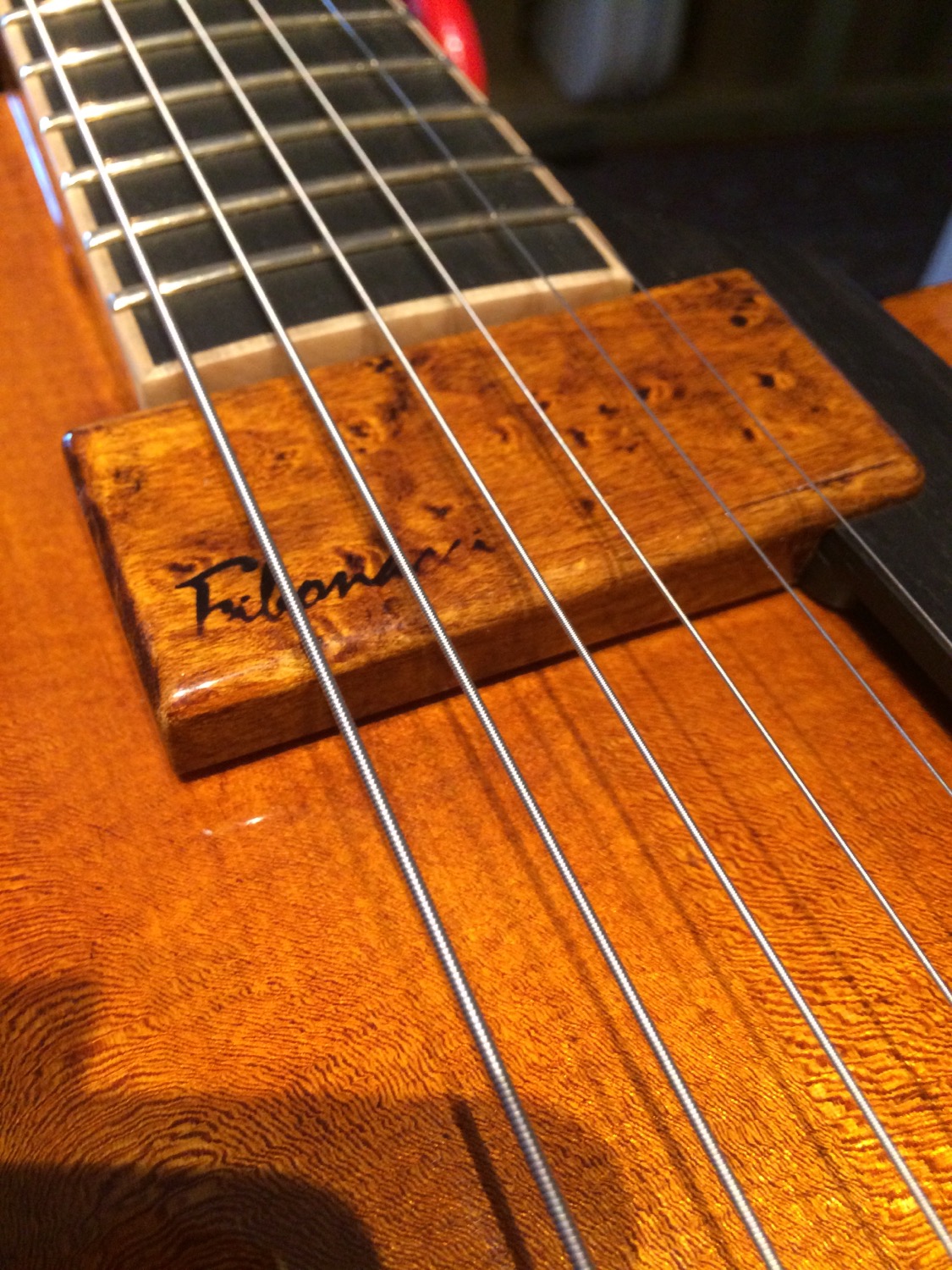
That distinction matters because serious players and collectors are not buying a decal. They are evaluating whether an Artist led specification produces a better guitar for a particular kind of music, touch and tonal expectation. Sometimes it does. Sometimes the standard model remains the wiser choice. As an Artist led brand, Fibonacci Guitars has the capability to offer both – a comprehensive range of Signature models are offered as an alternative to its Artisan and Masterbuild range.
What makes an Artist Signature archtop different?

A proper Artist Signature archtop starts with use, not marketing. The best examples emerge when a builder works closely with a player who has spent years refining what they need from an instrument. That process tends to reveal details that do not show up on generic specification sheets - whether the neck should encourage thumb-over phrasing or a more orthodox jazz posture, and how electronics should preserve the acoustic character without adding unwanted hardness.
In practical terms, signature archtops often differ in a few core areas. Body dimensions may be adjusted for a tighter low end, greater air movement or improved comfort. Carve profiles can be altered to influence attack and headroom. Pickup selection and placement may shift the balance between warmth, clarity and definition. Even finish choices matter, because a heavy or overly thick finish can restrain a finely voiced instrument.
The point is not that every change is dramatic. On a well made archtop, small changes are often the decisive ones.
A guide to Artist Signature archtops for serious buyers

If you are considering a Signature model, the first question is simple - was this instrument developed from a real musical brief, or from a sales brief? Reputable builders make that answer visible in the instrument itself. You should be able to see why the guitar exists.
Look first at the acoustic platform. Even when an archtop is primarily used amplified, its unplugged response tells you a great deal about the quality of the design. A lively carved top, a controlled but present bass register, clear note separation and a balanced midrange usually indicate that the builder has treated the guitar as an instrument first and an electronics carrier second. If the guitar feels inert in the lap, a signature badge will not rescue it.
Next, consider whether the artist's specifications align with your own playing. A model developed for aggressive pick attack, high stage volume and precise amplified articulation may be superb for a working professional, but less appealing for a player seeking a softer, woodier response at home or in a small acoustic ensemble. The reverse is equally true. A lightly built, highly resonant archtop can be magical in a recording room and awkward on a loud bandstand.
That is where many buyers go wrong. They assume signature means better. In reality, Signature usually means more specific.
Tone is not one thing

An Artist signature archtop may be voiced around a player's particular relationship with certain variables. One artist may want a rapid, articulate front edge for modern jazz lines. Another may prioritise a mature, vocal midrange for chord melody. Another may need excellent string-to-string definition under amplification for stage consistency. None of these approaches is universally superior.
This is why hand-built instruments occupy a different territory from scaled production. In boutique work, voicing decisions can be made deliberately rather than averaged out for broad-market appeal. That level of control is where signature development becomes genuinely valuable.
Neck feel, setup and right-hand response

Buyers often focus on woods and pickups while under estimating ergonomics. Yet for many professionals, the neck is the most personal part of a signature instrument. A subtle change in profile, nut width, fingerboard radius or fret choice can transform the way a guitar invites phrasing.
An artist who plays long sets may favour a neck that reduces fatigue without feeling insubstantial. A player with a strong acoustic-style right hand may need an instrument that keeps its composure under heavier attack. Someone working in the studio may value lower action and exceptional intonation stability over raw acoustic volume.
These are not glamorous selling points, but they are often the real reasons a signature guitar earns loyalty. The finest examples feel coherent - neck, body, bridge, top response and electronics all seem to agree with one another.
Materials and construction still matter more than the name

A Signature model should never distract from the fundamentals of build quality. The old rules still apply. Top carving must be intelligent and consistent. Tonewood selection must serve the instrument rather than the brochure. Hardware should be chosen for reliability and tonal suitability, not visual theatre. Finishing should protect and enhance, not smother.
For discerning buyers, provenance and process deserve close attention. Where are the instruments made? How much of the work is genuinely done by hand? Are the tonewoods selected with care? Is the finish appropriate for a responsive archtop? Are the components chosen because they work, or because they sound prestigious on paper?
These questions become even more relevant at premium price points. A Signature archtop asks you to pay for specificity, development and artistic intent. It should also deliver uncompromising construction. One without the other is not enough.
The trade-off between individuality and versatility

Every Signature instrument sits somewhere on a spectrum between broad usefulness and sharply defined purpose. That can be a strength or a limitation, depending on your requirements.
A highly individual Signature archtop may offer extraordinary character. It may have a neck that feels instantly right, an amplified voice that sits perfectly in a mix, or an acoustic response that flatters a particular touch. But the same characteristics can make it less adaptable across styles. If you move regularly between straight-ahead jazz, contemporary session work and solo arrangements, a slightly more neutral archtop might serve you better.
Collectors, of course, may evaluate this differently. For them, the specificity is often part of the appeal. A true Artist collaboration captures a point of view. If it is built to an exacting standard, that can be more compelling than a model designed to please everyone.
How to judge whether a signature model is worth it

Ignore the Artist association for a moment and play the instrument as if it were anonymous. Does it respond quickly? Does it hold together dynamically? Do the notes develop with elegance, or merely volume? Is the amplified sound convincing, or does it flatten the guitar's personality? Does the neck encourage you to play more precisely?
Then bring the Artist context back in. Can you identify the purpose behind the design? Does the specification reflect a real playing life? If so, the premium may be justified. If not, you may simply be paying for association.
At the highest level, a Signature archtop should feel inevitable. Every decision should suggest that it was made for a reason. That is where carefully developed ranges from specialist makers stand apart. When a builder works in low volume, with direct control over materials, carving, finishing and final setup, Artist collaboration can become something more than branding. It becomes product development in the most serious sense.
That is also why buyers should value maker credibility as much as Artist credibility. A respected Artist may know exactly what they want, but only a disciplined workshop can translate that into an instrument without compromise. Fibonacci Guitars, for example, positions this idea correctly - Artist models are built on the same exacting standards of hand craftsmanship, material selection and performance-led refinement as the rest of the range, not treated as superficial editions.
Who should buy an Artist Signature archtop?

If you want the broadest possible archtop for every setting, perhaps a Signature is not the best option. If you are still learning what you prefer in scale, neck shape, body depth or pickup voice, a Signature model may narrow the field too early.
But if you already know what matters to your hands and ears, these instruments can be deeply rewarding. The right one can feel unusually complete from the first few minutes - less like a compromise, more like an answer. For advanced players, recording artists and collectors, that degree of intentionality is often worth seeking out.
The best closing test is a simple one. Ask whether the guitar makes clearer musical decisions available to you. If it does, the signature on the label may be more than justified - it may be the reason the instrument exists at all.


Comments