

Archtop Guitar for Jazz Recording
Updated: Jun 30

The moment an archtop guitar is placed in front of a microphone, flattering myths tend to fall away. A handsome instrument with pedigree can still sound boxy, over bright or strangely indistinct on record. By contrast, the right carved archtop guitar for jazz recording will reveal something more valuable than reputation - balance, authority and a voice that sits naturally in a track.
That distinction matters because recording is less forgiving than in a live performance environment. On stage, the ear blends projection and ambience into a pleasing whole. In the studio, the microphone isolates details. The note’s front edge, the decay, the low-mid bloom, the way chords separate under close listening - all of it becomes exposed. An archtop that feels impressive in the hands is not always the one that records best.
What makes an archtop guitar for jazz recording work

A strong recorded jazz tone usually comes from control rather than excess. The best carved archtops do not overwhelm the microphone with uncontrolled air movement or a hyped upper midrange. They produce a clear fundamental, a refined attack and enough harmonic content to sound rich without becoming cloudy.
For that reason, top construction matters enormously. A carved soundboard tends to respond with greater nuance and more organised overtones than a laminated pressed top. That does not make every carved instrument automatically superior, but in recording it often brings the sort of articulation serious players look for especially when comping complex voicings or playing single note lines that need body without muddiness.
The back and sides contribute just as much to the final result. Maple remains the classic choice because it helps retain focus and definition, qualities that become especially useful when layering guitar with piano, bass and brushed drums. A softer, more absorbent tonal profile can sound charming in isolation, yet disappear in a mix. Recording rewards an instrument that keeps its shape under scrutiny.
Neck set, scale length and setup also influence recorded sound more than many players expect. A guitar that encourages clean intonation, even right-hand response and stable dynamic control will nearly always outperform a temperamental instrument once microphones are involved. Studio work has little patience for fighting the guitar.
Acoustic response first, electronics second

Many jazz players instinctively focus on pickups, and understandably so. A floating humbucker or carefully voiced mounted pickup can define the amplified character of an archtop. Yet if the acoustic instrument is not fundamentally right, electronics can only do so much.
A well built archtop should sound coherent before it is plugged in. You want a dry, immediate response with enough acoustic complexity to feel alive, but not so much resonance that every note blooms into the next. There is a narrow but valuable middle ground here. Too stiff, and the recording feels sterile. Too loose, and the guitar turns woolly under a microphone or direct signal.

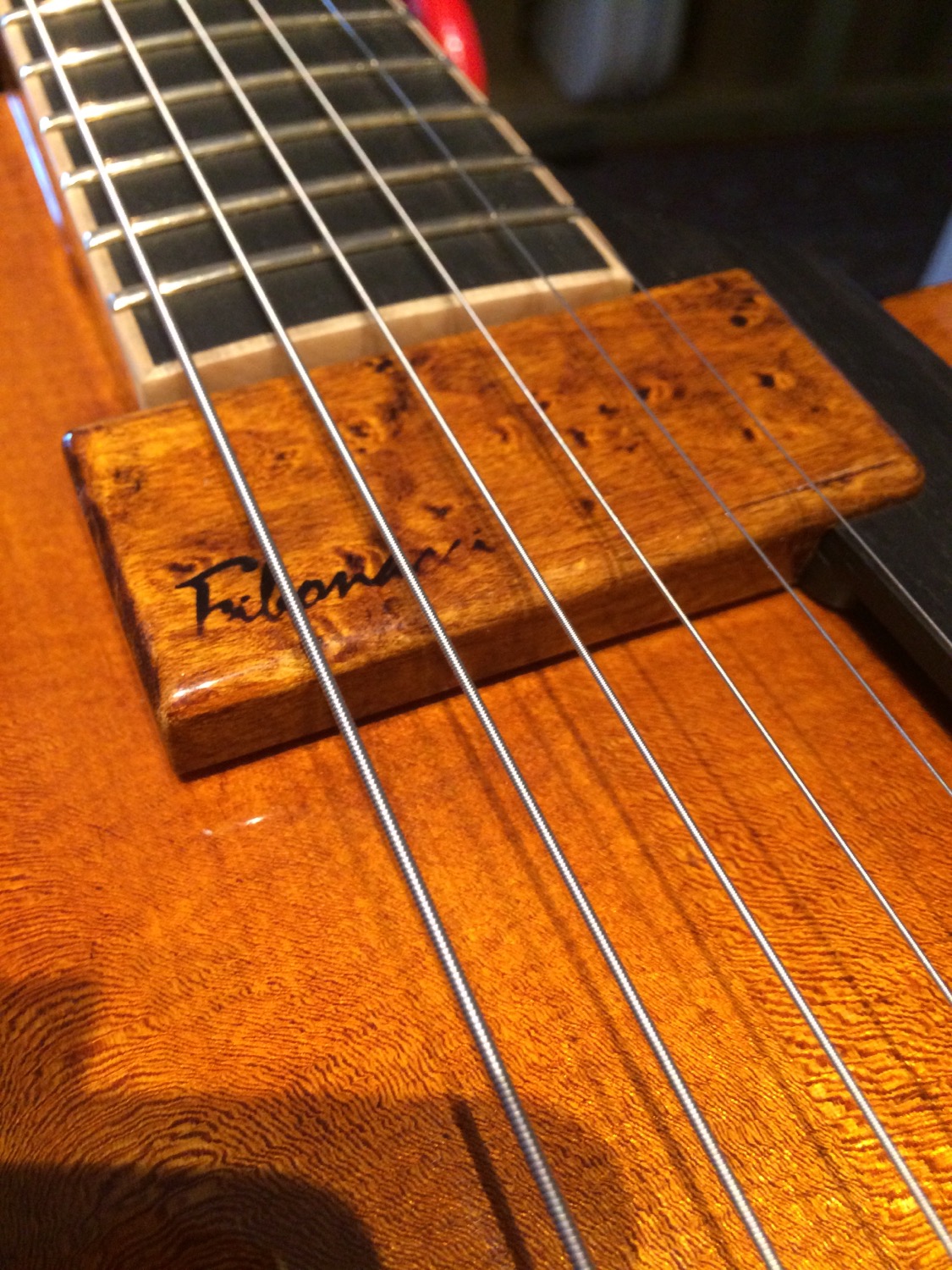
This is why Fibonacci Guitars workshop development is heavily influenced by real studio testing...because it carries genuine value. The ear at the bench is one thing. The ear in the control room is another. An archtop designed and refined with recording in mind tends to avoid the common pitfalls - excessive boom on the wound strings, brittle treble under close mic, or a compressed pickup response that strips away touch. Fibonacci Guitars recording studio has heavily influenced its decision making process across its range of carved archtops from the basic design of a guitar to the development of new pickups.
Choosing between fully acoustic and amplified recording

There is no single correct method for recording jazz guitar, because the musical role changes the requirement. A solo guitar record asks for different qualities from a quartet date. Likewise, intimate chord melody and more assertive modern jazz phrasing can place opposing demands on the instrument.
If you are recording acoustically with microphones, the guitar’s natural voice becomes everything. In that context, note separation and controlled resonance are paramount. A large, overly diffuse archtop can sound luxurious from across the room but become difficult to capture cleanly. A more disciplined acoustic response often records with greater elegance.
If you are recording primarily through a pickup, the quality of the amplified signal matters more, but the acoustic architecture still underpins the result. Floating pickup designs are often favoured in jazz because they preserve more of the top’s movement and tend to deliver an open, less congested tone. Mounted pickups can provide a different sort of authority and output, though they may alter the acoustic behaviour of the instrument. Neither is universally better - it depends on whether you prioritise acoustic sensitivity or a firmer amplified voice.
Many professional sessions use a blend of microphone and pickup. That approach can work beautifully, but only if phase, noise and transient character are well managed. A guitar with a naturally balanced tone gives the engineer far more useful material to work with.
Why build quality is heard so clearly in the studio

Recording exposes craftsmanship in a very literal way. Fretwork influences not only playability but pitch confidence during sustained chords. Nut and bridge precision affect how evenly the strings speak. Finish thickness alters the top’s freedom to respond. Even seemingly small inconsistencies in fit and geometry can create audible problems when a part is doubled, close mic or played quietly.
This is where boutique construction earns its place. Low-volume, hands-on building allows for tighter control over voicing, material selection and final setup. Hand-selected tonewoods, thoughtfully carved plates and carefully judged finishes are not decorative talking points. They shape how the guitar behaves under the ear and under the microphone.
For the player who records regularly, consistency is not a luxury. It is essential. The instrument must deliver the same disciplined response on take twelve as it did on take one. Premium carved archtops built without scaled manufacturing compromises tend to retain that reliability because each structural decision has been made with performance rather than throughput in mind.
The recorded jazz sound is often drier than players expect

One of the more useful corrections for buyers seeking an archtop guitar for jazz recording is this: the most beautiful recorded tone is not always the biggest or most reverberant. In many cases, a slightly drier, quicker response captures better and leaves more room for the engineer to shape the final presentation.
That can surprise players who are used to judging an archtop in a showroom or rehearsal room. A lush acoustic halo can be deeply persuasive in person. On record, however, too much ambient complexity can blur inner voicings and make time feel softer than intended. Jazz recording tends to reward precision wrapped in warmth, not warmth at the expense of precision.
This is also why setup should be considered part of the recording instrument, not merely a maintenance detail. String choice, action height and relief all affect articulation. Flatwounds remain a standard for good reason, but gauge and tension should suit the player’s attack and the guitar’s response. A heavier set may bring substance and darkness, yet if it slows the top or compromises phrasing, the trade-off may not be worthwhile.
How to assess an archtop before recording with it

A serious buyer should listen for three things above all: the shape of the note, the separation within chords and the behaviour of the low register. The attack should be defined but not clicky.Chords should retain internal detail without sounding thin. The bass strings should sound supportive and controlled, never tubby.
It is worth testing the guitar both at performance volume and at quieter dynamic levels. Many archtops sound convincing when pushed, but the studio often demands subtle touch. If the instrument loses focus when played softly, that weakness will be heard.
Pay attention to intonation higher up the neck, especially on the plain strings. Jazz harmony leaves little room for compromise there. Also listen to how the guitar responds to altered voicings and close intervals. A refined instrument will keep those tensions intelligible rather than collapsing them into midrange clutter.
For players investing at the top end of the market, there is real merit in choosing a maker whose instruments are developed with recording realities in mind. Fibonacci Guitars, for example, builds and tests archtops with a seriousness about tone, material integrity and real-world performance that speaks directly to this level of player.
The best choice depends on the role the guitar must play

A recording guitarist accompanying a singer may need softness, intimacy and immaculate note decay. A player working in organ trio settings may want stronger pickup output and tighter low-end control. A collector who records occasionally may place equal value on aesthetic refinement and tonal individuality. These are different use cases, and pretending otherwise leads to poor choices.
What remains constant is the need for an instrument that does not ask the studio to forgive it. The best carved archtop guitar for jazz recording is one that arrives already resolved - tonally balanced, structurally mature and responsive enough to translate touch into sound without exaggeration. That sort of guitar does not merely make recording easier. It allows the player’s phrasing, time and harmonic language to come through with the authority they deserve.
If you are choosing at this level, listen less for spectacle and more for discipline. The guitar that keeps revealing its quality under closer inspection is usually the one worth taking into the studio.


Comments