

Why Are Archtop Guitars Expensive?
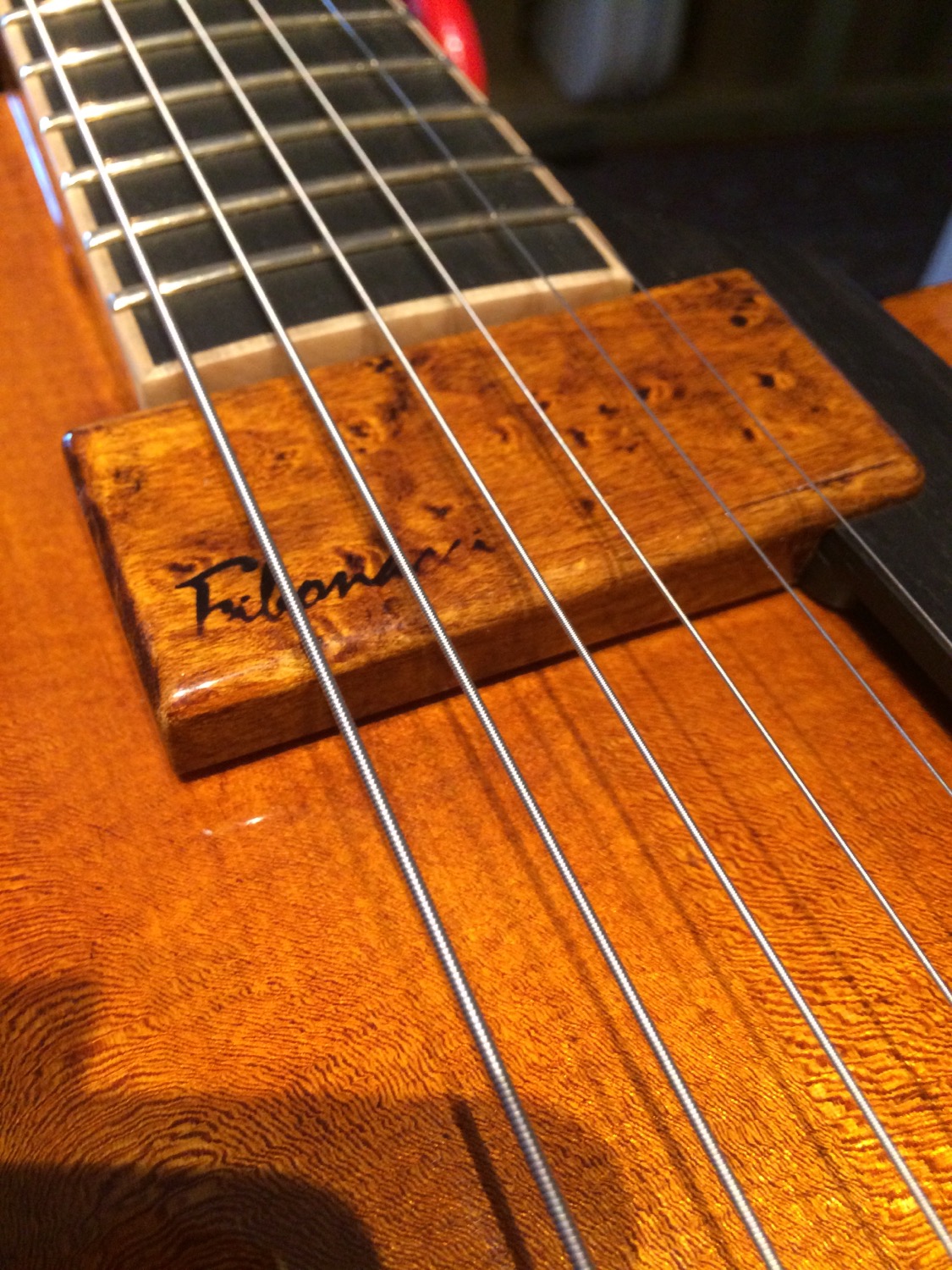
A genuine archtop can cost several times more than a solid body electric guitar, even before you enter true carved boutique territory. If you have ever asked why are carved archtop guitars expensive, the short answer is that they are labour intensive instruments built to far tighter acoustic and structural demands than many players realise.
That price is not simply about decoration or prestige. In a properly made carved archtop, the sound begins with the architecture of the instrument itself - the carved top and back, the graduations of the plates, the neck angle, the bridge geometry, the responsiveness of the body and the way every component interacts under string tension. When those elements are executed at a high level, the result is not just a guitar that looks refined. It is a guitar that speaks with greater authority, balance and complexity.
Why are archtop guitars expensive to build?

An archtop is closer in spirit to a carved acoustic instrument than to a standard production electric. That matters because the build process is slower, less forgiving and far more dependent on judgement.
On a flat top or solid-body guitar, some variables can be standardised without severely compromising the result. An archtop offers far less room for that kind of simplification. The arching of the plates, the thickness left in critical areas, the stiffness of the timber, the way the top responds once the f-holes are cut, and the final setup under real playing tension all affect tone and feel in ways that cannot be solved by machinery alone.
This is one of the main reasons high-end archtops are expensive. Much of their value sits in skilled handwork and in decisions made by experienced builders at each stage, rather than in raw material cost alone.
The carved plates change everything

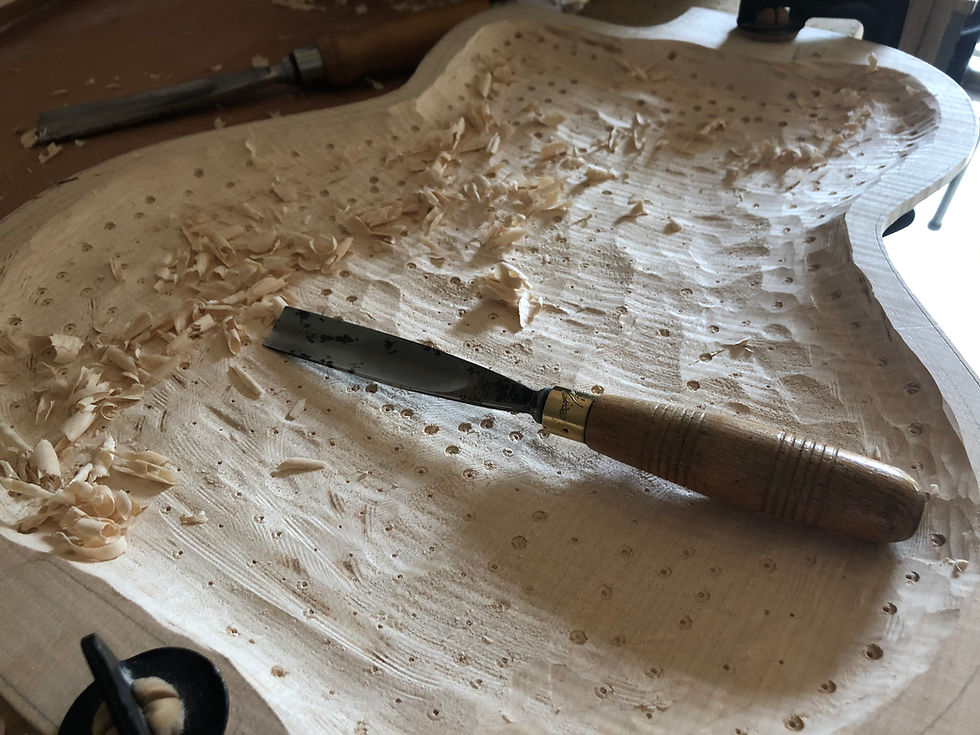
The most significant cost driver is often the soundboards. A serious archtop is typically built with a carved top and back rather than a pressed laminate panel. Carving a top is not merely a cosmetic exercise. It is a labour intensive process that shapes the voice, projection, attack and dynamic range of the instrument.
That work takes time. The luthier must assess the timber, cut the arch, graduate the thickness, and tune the plate so it remains strong enough to withstand tension while still moving freely. Remove too much wood and the instrument may become unstable or overly thin in character. Leave too much and it can sound tight, heavy or unresponsive.
The same principle applies to the back, particularly on carved-back instruments. These are not interchangeable parts coming off a line. Each set of woods behaves differently, and each plate needs to be worked according to what the material will support.
This is where experienced boutique makers separate themselves from scaled production. The guitar is being built for performance first, not merely assembled to reach a price point.
Tonewoods are expensive, but selection matters more

Players often assume the cost is mainly down to exotic timber. Premium woods certainly add to the price, but the bigger issue is selection and rejection.
Not every piece of spruce is suitable for a carved archtop top. Not every maple billet has the right stiffness, grain orientation or stability for a responsive back, sides and neck. Builders working at a high level often discard wood that would be considered perfectly acceptable in lower tiers of production because it does not meet the acoustic or visual standard required.
That selectivity costs money long before the first cut is made. Proper seasoning, storage and matching of components also add to overhead. If a maker is using hand-selected UK and European materials, with close control over provenance and consistency, the cost reflects a deliberate refusal to compromise.
Labour is the real cost

If you want the clearest answer to why are archtop guitars expensive, look at the hours. A quality archtop demands a great deal of bench time.
Carving, bending, binding, neck fitting, fretwork, finishing and final setup all take longer when the objective is not speed but precision. Even tasks that sound ordinary on paper become more demanding on an archtop. Neck angle must be right, because bridge height and break angle influence both tone and playability. Floating bridge needs to be profiled to ensure the clear transmission of resonance. Fret dressing must be exact, because these guitars are often chosen by players with a refined touch who will immediately notice inconsistency. Hardware quality and fit matters, because poorly matched components can choke resonance or introduce tuning and stability issues.
In low volume workshops, that labour is not spread across thousands of units. The price of the instrument must support the actual time required to make it properly.
Finishing is slower than most people think

A high-grade finish does more than make a guitar look polished. On an archtop, it affects resonance, durability and the overall sense of refinement.
Thin nitrocellulose lacquer, for example, remains a preferred choice for many premium instruments because it can allow the timber to breathe and respond more naturally than heavier, more plasticky finishes. Oil finishes can also be extremely attractive and tactile when used appropriately. Neither approach is about convenience. Both require care, patience and a willingness to accept a slower process.
A rushed finish can spoil an otherwise excellent build. It can dampen response, obscure the texture of fine timber and cheapen the final impression. This is why finishing sits so high on the list of genuine costs.
Hardware and components are not trivial details
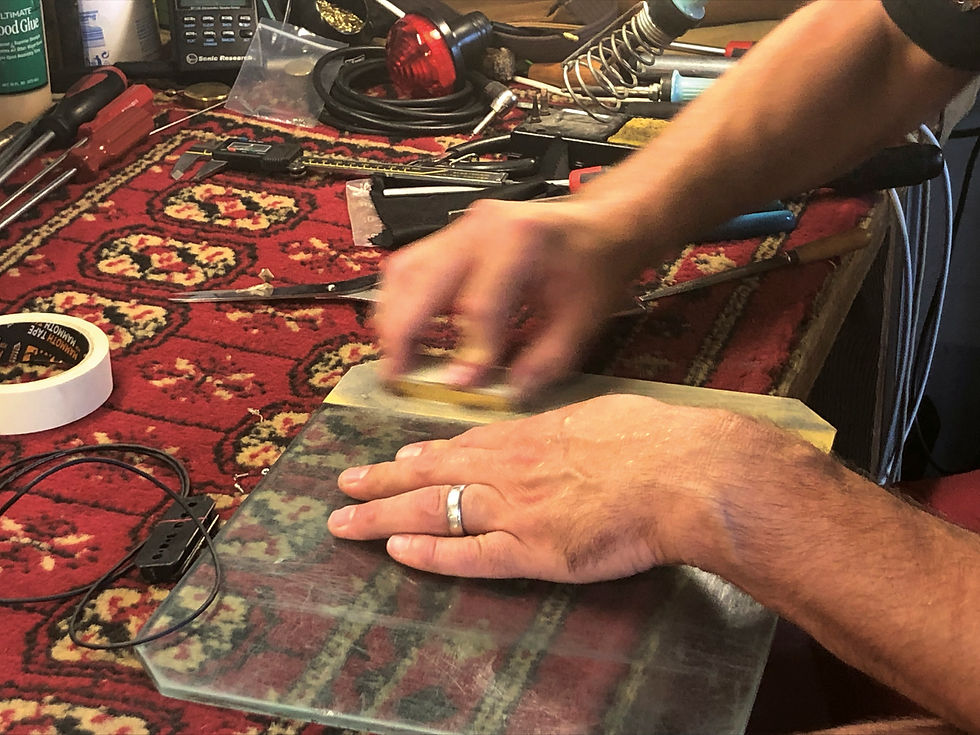
Tailpieces, bridges, tuners, pickups, fret wire, nuts and electronics all contribute to price, but more importantly, they contribute to outcome.
A serious archtop builder does not choose hardware simply because it is available at volume. Component quality affects sustain, tuning stability, string energy transfer and long-term reliability. When parts are selected for tonal compatibility and fitted carefully, the guitar feels complete in a way that cheaper instruments often do not.
There is also the issue of authenticity and consistency. Boutique makers who insist on dependable, correctly specified components are protecting the instrument over years of use, not just trying to get it out of the door.
Low-volume production means fewer compromises and higher cost

Mass production lowers price because tooling, labour systems and purchasing can be spread widely. Boutique archtop building works differently.
When production is intentionally low, each instrument receives more individual attention, but the economics are harsher. Small-batch workshops do not benefit from the same purchasing power, nor do they hide inefficiencies inside giant production runs. They maintain standards by keeping control close to the bench.
That inevitably raises the price, yet it also explains why the best examples feel so distinct. They are not designed around the convenience of a factory. They are designed around the standards of the builder.
Expensive compared with what?

This is where nuance matters. Not every costly archtop is fairly priced, and not every affordable archtop is poor. Pressed laminate models can be excellent working instruments, especially for amplified jazz where feedback resistance and practical durability matter more than carved acoustic nuance. For some players, that is the right choice.
But when comparing a hand carved, low volume, expertly finished archtop with a factory built laminate instrument, you are not really looking at the same category. One is engineered primarily for efficient manufacture. The other is built as a high-performance acoustic-electric instrument with much greater emphasis on responsiveness, detail and individuality.
So the better question is not simply why the expensive one costs more. It is whether you need what it offers.
Why premium archtops hold their appeal
A well made archtop tends to justify itself over time in ways that spec sheets do not capture. The touch is more articulate. The note separation is cleaner. The dynamic range is broader. Setup can be more exact, and the instrument often feels alive in the hands rather than merely functional.
For professionals and serious enthusiasts, those differences are not abstract. They affect recording results, performance confidence and long-term satisfaction. Collectors also understand that craftsmanship, rarity and provenance matter. A guitar built in small numbers, with careful material choice and uncompromising construction, occupies a different place in the market from a model designed for scale.
That does not mean every player must spend at the highest level. It means the upper end of the archtop world is expensive for concrete reasons, not because the price tag is ornamental.
A premium carved archtop asks more from the builder long before it asks more from the buyer. If you choose one, you are paying for time, judgement, material discipline and a standard of construction that cannot be rushed. That is precisely why the finest examples continue to command respect - and why, for the right player, they rarely feel expensive in the simplistic sense.


Comments